
Protective Metal Coating: How to Choose by Metal Substrate and Service Environment
Protective metal coating should be selected by metal substrate first, then by exposure environment, surface preparation, primer compatibility, and required service life. For EPC contractors, procurement managers, corrosion engineers, equipment manufacturers, and industrial coating distributors, the main mistake is treating “metal” as one surface. Carbon steel, aluminum, stainless steel, and galvanized steel fail in different […]
Epoxy vs Urethane Primer: Which Works Better for Industrial Steel?
Epoxy vs urethane primer is mainly a primer-layer decision, not a general coating-material debate. For industrial steel projects, epoxy primer is usually selected when adhesion, corrosion resistance, and barrier protection are the main goals, while urethane primer is considered in more specific repair, flexibility, or urethane-system situations. This guide is for EPC contractors, steel fabricators, […]
Epoxy Primer Over Rust: When It Works, When It Fails, and How to Prepare Steel
Epoxy primer over rust can work only in limited maintenance conditions where the rust is tight, dry, clean, and allowed by the coating specification. For maintenance managers, EPC repair teams, coating applicators, and procurement teams, the real decision is not whether epoxy primer is “strong,” but whether the rusted steel can provide a stable and […]
Industrial Epoxy Coating: Selection Guide for Steel, Tanks, and Pipelines
Industrial epoxy coating is usually selected when steel, tanks, pipelines, or equipment need strong adhesion, barrier protection, and chemical resistance in industrial environments. For EPC contractors, procurement managers, and corrosion engineers in the Middle East, Southeast Asia, and Central Asia, the key decision is not only “which epoxy product to buy,” but where the epoxy […]
Metal Corrosion Protection: Coating, Galvanizing and Cathodic Protection Compared
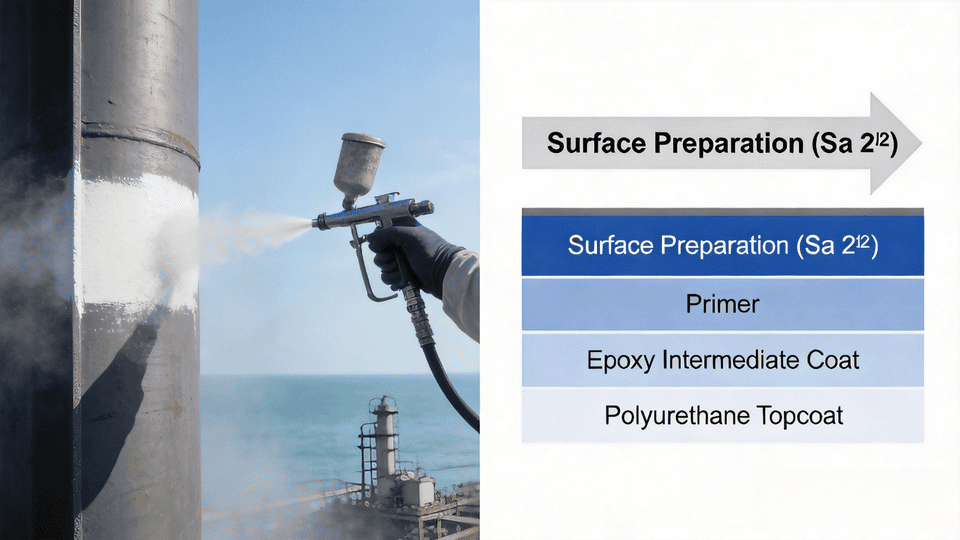
Metal corrosion protection is the process of selecting the right method to prevent steel, galvanized steel, aluminum, stainless steel, tanks, pipelines and equipment from losing performance through rust, pitting, underfilm corrosion or chemical attack. For EPC contractors, corrosion engineers, project owners and procurement teams, the key decision is not only which coating to buy, but […]
Rust Preventive Coatings for Steel: New Steel, Rusted Steel and Maintenance Guide
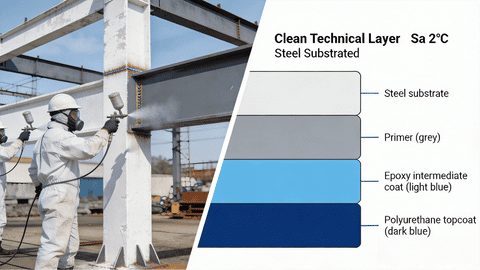
Rust preventive coatings for steel are coating systems used to reduce rust formation on new steel, stop rust creep on damaged areas, and extend the service life of existing steel structures during maintenance. For EPC contractors, steel fabricators, maintenance teams and procurement managers, the key decision is whether the steel is new, lightly rusted, heavily […]
Anti Corrosive Coating: Types, Uses and Selection for Industrial Projects
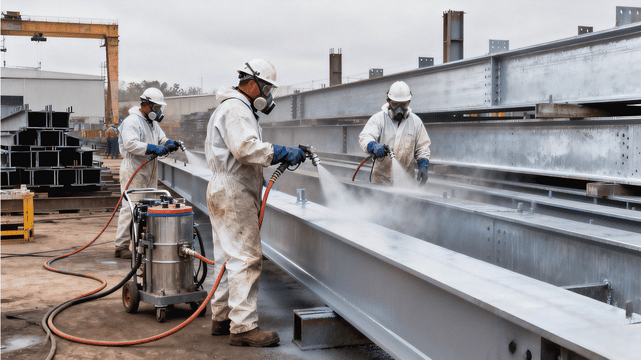
An anti corrosive coating is a protective coating system used to slow corrosion on steel structures, storage tanks, pipelines, machinery and industrial equipment exposed to moisture, salts, chemicals, UV, temperature change or immersion service. For EPC contractors, corrosion engineers, project owners and procurement teams, the main task is to match the coating type, surface preparation, […]
What Is 2K Epoxy Primer? Types, Uses & Complete Buyer’s Guide
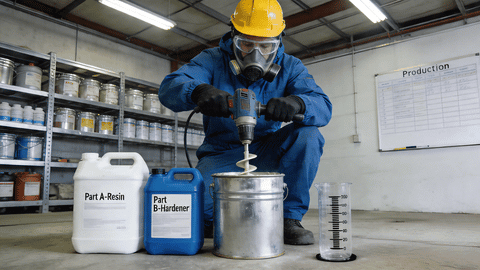
A 2K epoxy primer is a two-component primer that uses a separate resin (Part A) and hardener (Part B) to form a chemically cured, highly durable primer layer that outperforms many single-component primers in adhesion, corrosion resistance, and chemical resistance. Buyers usually search for 2k epoxy primer when they are trying to decide whether a […]
What Is Etch Primer? How It Works, When to Use It, and What to Apply Over It
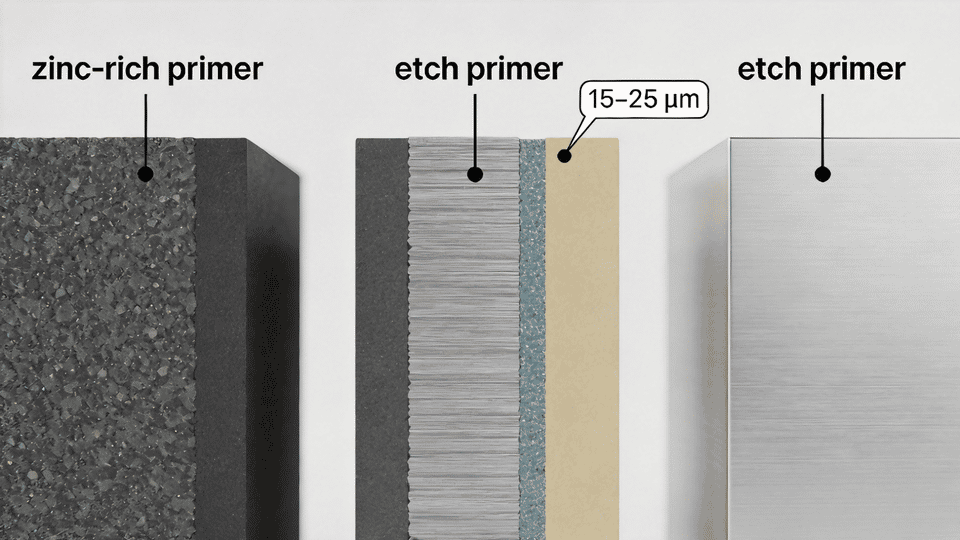
Etch primer is a single- or two-component primer that uses a dilute acid — typically phosphoric acid — combined with a film-forming resin to simultaneously clean, lightly corrode, and coat a metal surface in one application, creating a chemically bonded foundation for subsequent coating layers. This guide is for engineers and coating specifiers working with […]
What Is Coal Tar Epoxy Coating? Uses, Restrictions, and Modern Alternatives
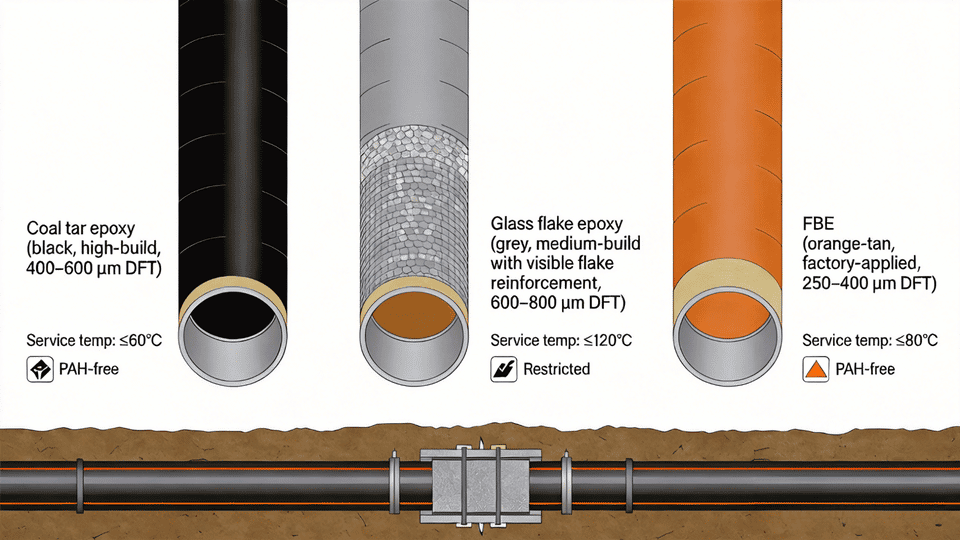
Coal tar epoxy is a two-component coating combining coal tar pitch with epoxy resin — historically the standard for buried pipeline, marine immersion, and water intake structures, now largely replaced by FBE and glass flake epoxy due to environmental restrictions on PAH compounds in certain jurisdictions. This guide covers what coal tar epoxy is made […]
Tank Lining Inspection: API 653, NACE Standards, and What You’re Actually Looking For
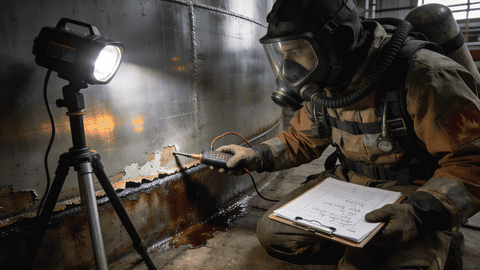
Tank lining inspection is one of those activities where the gap between ‘we inspected it’ and ‘we inspected it properly’ is very wide — and expensive. A cursory visual inspection on a drained tank might miss osmotic blistering that’s just beginning, underfilm corrosion at the floor-wall junction, or thin areas in the lining that will […]
Diesel and Fuel Storage Tank Lining: What Works, What Doesn’t, and Why
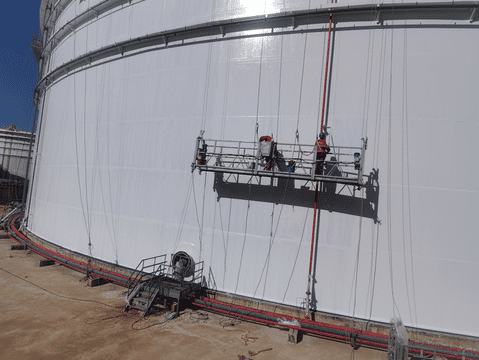
Fuel storage tank linings are a straightforward application until they aren’t. Diesel, petrol, jet fuel, heating oil, and fuel oil all look similar — they’re all petroleum-derived hydrocarbons — but they have meaningfully different solvent properties, aromatic content, and in some cases additive packages that affect coating compatibility. A lining that performs well in diesel […]