Rust preventive coatings for steel are coating systems used to reduce rust formation on new steel, stop rust creep on damaged areas, and extend the service life of existing steel structures during maintenance. For EPC contractors, steel fabricators, maintenance teams and procurement managers, the key decision is whether the steel is new, lightly rusted, heavily corroded, shop-primed, or already coated.
This guide focuses on practical steel rust prevention, not general coating theory. It explains how to inspect rusted steel, decide whether coating can be applied over existing corrosion, choose epoxy primer or zinc-rich primer, control DFT, and prepare better RFQ data for repair or recoating projects.
What Are Rust Preventive Coatings for Steel?
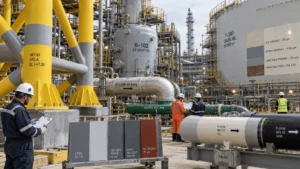
Rust preventive coatings for steel are primer-based or multi-layer coating systems designed to keep moisture, oxygen, salts and industrial pollutants away from carbon steel. In real projects, they are used on steel structures, machinery frames, supports, platforms, tank exteriors, pipelines and repair areas where rust has already started.
The most common rust prevention system includes:
- Surface cleaning or abrasive blasting
- Rust removal or old coating repair
- Epoxy primer or zinc-rich epoxy primer
- High-build epoxy coating when more barrier thickness is required
- Polyurethane topcoat for outdoor UV and weathering resistance
- DFT inspection and repair of thin areas
The key point is that rust prevention starts before coating application. If loose rust, mill scale, salt contamination or unstable old coating remains on steel, even a strong primer can fail through blistering, peeling or underfilm corrosion.
Why Steel Rust Starts at Edges, Welds and Damaged Areas
Steel rust often starts at edges, welds and damaged coating areas because these zones receive lower film build and collect moisture, salts or contaminants more easily. Flat steel surfaces may look acceptable while weld seams, bolt holes, corners and cut edges begin to corrode first.
Common rust starting points include:
- Weld seams with sharp profiles
- Gas-cut or sheared edges
- Bolt holes and fastener zones
- Corners and complex geometry
- Damaged coating from handling or erection
- Areas with standing water
- Poorly cleaned rust pits
- Old coating edges after spot repair
- Steel supports, brackets and contact points
Rust creep is the spread of corrosion from a damaged coating edge into the surrounding film. Once moisture and salts enter under the coating, corrosion can continue even when the visible damaged area is small.
For steel structures exposed to humidity, rain or coastal air, welds and edges should receive stripe coating before full spray application. Stripe coating improves film build on difficult geometry and reduces the risk of early rust bleed.
Choose Rust Preventive Coatings for New Steel vs Rusted Steel
Rust preventive coatings for steel should be selected according to the steel condition because new blasted steel, lightly rusted steel and heavily corroded steel need different surface preparation and primer strategies. A coating system that works on clean Sa 2.5 steel may not perform on pitted or poorly cleaned maintenance steel.
| Steel Condition | Surface Preparation Need | Suitable Coating Direction | Main Failure Risk | Buyer Decision |
|---|---|---|---|---|
| New blasted steel | Abrasive blasting, profile control, dust removal | Epoxy primer or zinc-rich epoxy primer | Flash rust, salt contamination | Define primer, profile and DFT |
| Shop-primed steel | Compatibility check and surface cleaning | Compatible epoxy repair or full system | Intercoat delamination | Confirm recoat window and primer type |
| Light tight rust | Mechanical cleaning or blasting where possible | Rust-tolerant epoxy primer if TDS allows | Hidden corrosion under film | Confirm surface tolerance and inspection |
| Loose rust or mill scale | Must be removed before coating | No direct coating recommended | Peeling, blistering, early failure | Blast or power-tool clean first |
| Old coating repair | Adhesion test and edge feathering | Maintenance primer + compatible repair system | Edge lifting and rust creep | Spot repair or full recoating decision |
| Deep pitting | Cleaning, pit repair and DFT review | High-build repair system or lining if needed | Pinholes, underfilm corrosion | Decide repair method before coating |
A common mistake is treating all rusted steel as the same. Light, tightly adherent rust may be manageable with selected maintenance systems, but loose rust, scale and active corrosion products must be removed before coating.
Can Coating Be Applied Over Rusted Steel?
Coating can be applied over rusted steel only when the remaining rust is tightly adherent, the product TDS allows that surface condition, and the expected durability is realistic. Heavy loose rust, mill scale, salt-contaminated corrosion products and flaking old coating should not be coated over.
In maintenance projects, the term “rusted steel coating” is often misunderstood. It does not mean applying coating over unstable rust. It usually means selecting a primer that can tolerate less-than-perfect field preparation after loose corrosion products have been removed.
Coating over rusted steel may be considered when:
- Rust is light and tightly adherent
- Loose scale has been removed
- Oil, grease and salts are cleaned
- Old coating edges are feathered
- The primer is designed for maintenance conditions
- The owner accepts a maintenance-level durability target
- DFT and repair areas can be inspected
Coating over rusted steel should not be considered when:
- Rust flakes can be removed by hand
- Mill scale remains on the steel
- Pitting is deep and contaminated
- Salt contamination is high
- The surface is wet or sweating
- Old coating is lifting at the edges
- Immersion service is required
For long-term industrial projects, abrasive blasting is usually preferred when access, safety and schedule allow it. For smaller repair areas, power-tool cleaning may be used, but the coating specification should clearly define the acceptable preparation level.
Prepare Rusted Steel Before Primer Application
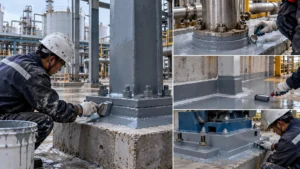
Rusted steel must be cleaned, stabilized and inspected before primer application because primer performance depends on bonding to a sound surface. The main purpose of preparation is to remove loose corrosion products, contaminants and weak old coating, not simply to make the steel look cleaner.
Key preparation steps include:
- Remove oil, grease and chemical contamination before mechanical cleaning.
- Remove loose rust, scale and weak old coating.
- Grind sharp edges and rough weld spatter.
- Feather old coating edges in repair zones.
- Clean pits and crevices as far as practical.
- Remove dust after blasting or grinding.
- Check steel temperature and dew point before coating.
- Apply primer within the allowed time before flash rust returns.
For steel surface cleanliness, ISO 8501-1 is commonly used for visual assessment of rust grades and preparation grades. For abrasive blast-cleaned surfaces, ASTM D4417 provides field methods for measuring surface profile.
Surface preparation should be documented in maintenance projects. Photos before and after cleaning, DFT readings, repair maps and adhesion checks help prevent later disputes about coating failure.
Compare Epoxy Primer, Zinc-Rich Primer and Maintenance Primer
Epoxy primer, zinc-rich primer and maintenance primer serve different rust prevention roles, so they should not be selected only by price. The best choice depends on steel condition, exposure environment, surface preparation level and whether the work is new construction or repair.
| Primer Type | Best Use Case | Surface Requirement | Main Benefit | Limitation |
|---|---|---|---|---|
| Epoxy primer for steel | General industrial steel, equipment, tank exterior | Clean steel, preferably blasted or well-prepared | Strong adhesion and barrier protection | Usually needs topcoat outdoors |
| Zinc-rich epoxy primer | New or blasted steel in C4–C5 conditions | Abrasive blasted clean steel | Sacrificial protection for exposed steel defects | Not suitable for poor surface preparation |
| Rust-tolerant maintenance primer | Repair areas and lightly rusted field steel | Loose rust removed, tight rust only if TDS allows | More practical for maintenance repair | Lower durability than full blasting systems |
| High-build epoxy primer/intermediate | Repaired steel needing added barrier thickness | Clean and stable substrate | Higher film build and moisture barrier | Excess DFT may cause curing defects |
| Shop primer repair system | Fabricated steel after handling damage | Compatibility with existing primer | Practical repair after transport or erection | Risk of intercoat incompatibility |
Zinc-rich primer is not a good choice for poorly cleaned rusted steel because zinc particles need contact with clean steel to provide sacrificial protection. If the steel cannot be blasted, a maintenance epoxy primer may be more realistic, but the expected service life should be adjusted.
HUILI’s anti-rust primer coating series can support primer selection for new steel, maintenance repair and anti-corrosion coating systems.
Control DFT on Rusted Areas, Welds and Edges
DFT control is critical on rusted areas, welds and edges because these zones often receive uneven film thickness and fail earlier than flat steel surfaces. A repair area may pass visual inspection but still fail if the primer is too thin on welds or too thick in pits.
Important DFT checks include:
- Primer DFT on flat steel
- Primer coverage inside cleaned pits
- Stripe coat coverage on welds and edges
- Total system DFT after repair
- Feathered old coating transition zones
- Maximum DFT in heavy repair areas
- Recoat interval between primer and topcoat
- Final curing before exposure
Excessive DFT is not always better. If a high-build coating is applied too thick in one coat, it may trap solvent, cure slowly, crack, wrinkle or lose adhesion depending on product chemistry and site conditions. The correct DFT range must come from the product TDS and project specification.
For critical repair work, pull-off adhesion testing may be specified. ASTM D4541 is commonly used for pull-off strength testing of coatings on metal substrates.
Prevent Rust Creep During Maintenance Recoating
Rust creep can be reduced during maintenance recoating by removing weak coating edges, feathering repair zones, cleaning corrosion products and sealing exposed steel with a compatible primer. If old coating edges are left loose, new coating may fail from the same boundary.
A practical repair sequence may include:
- Mark damaged or rusted zones
- Remove loose coating beyond visible rust
- Feather edges of remaining sound coating
- Clean rust pits and weld seams
- Confirm compatibility with existing coating
- Apply stripe coat on edges and welds
- Apply repair primer to exposed steel
- Build required DFT with compatible coats
- Inspect repair zones before service
Spot repair is suitable only when the surrounding coating is still sound. If rust creep is widespread, if adhesion is weak, or if coating breakdown appears across many areas, full recoating may be more reliable than repeated small repairs.
HUILI’s guide to steel structure coating inspection can help maintenance teams structure inspection points before recoating.
Match Rust Prevention Strategy to Steel Applications
Rust preventive coatings for steel should be matched to the asset because a steel frame, tank exterior, machinery base and pipeline support do not fail in the same way. Each application has different access, surface preparation, mechanical damage and inspection needs.
Steel Structures
Steel structures need rust prevention around welds, edges, platforms, bolted connections and outdoor exposure areas. For new structures, blasting plus epoxy or zinc-rich primer may be suitable. For existing structures, maintenance repair often starts with rust mapping and coating adhesion checks.
For outdoor structural steel, HUILI’s steel structure coating systems can help buyers match primer and topcoat selection to site exposure.
Machinery and Equipment
Machinery and equipment need rust prevention that also considers abrasion, oil contamination, cleaning chemicals and handling damage. Maintenance coating should focus on stable adhesion, practical repair, and compatibility with existing coatings.
Common risk areas include:
- Bases and mounting points
- Edges and brackets
- Bolted joints
- Areas exposed to cleaning chemicals
- Outdoor stored equipment
- Damaged transport areas
Tank Exteriors and Supports
Tank exteriors and supports often rust at the chime area, weld seams, roof edges, nozzles and areas where water or chemicals collect. Repair work should separate external atmospheric corrosion from internal lining needs.
A tank exterior repair system may use epoxy primer, high-build epoxy and polyurethane topcoat, but internal tank lining requires a different review based on stored medium and immersion service.
Pipelines and Pipe Supports
Above-ground pipelines often rust at supports, clamps, welds, field joints and damaged insulation areas. Rust prevention should focus on access points and local coating damage, not only straight pipe sections.
Buried pipelines require a different approach because soil exposure and possible cathodic protection must be reviewed. Maintenance coating for above-ground pipe supports should not be copied directly to buried service.
Decide Between Spot Repair and Full Recoating
Spot repair is suitable when rust is local, the surrounding coating is sound, and the remaining system has enough service life. Full recoating is more suitable when rust is widespread, old coating adhesion is poor, or multiple areas show blistering, cracking or underfilm corrosion.
| Condition Found During Inspection | Spot Repair Suitable? | Full Recoating More Suitable? | Reason |
|---|---|---|---|
| Local rust at welds or edges | Yes | Not always | Damage is limited and repairable |
| Widespread chalking and thin topcoat | Sometimes | Often | Weathering may affect large areas |
| Blistering in many locations | Rarely | Yes | Underfilm contamination may be widespread |
| Loose old coating edges | Only after removal | Often | Edge lifting can continue after repair |
| Deep pitting and active corrosion | Sometimes after repair | Often | Steel condition may need broader treatment |
| Poor adhesion in pull-off test | No | Yes | New coating needs sound base |
| Repeated failure in same zones | No | Yes | Original cause was not corrected |
A maintenance coating plan should not be based only on visible rust percentage. Adhesion, old coating compatibility, surface contamination, access, safety and future maintenance intervals all affect the decision.
Prepare RFQ Data for Steel Rust Prevention or Recoating
A complete RFQ for rust preventive coatings for steel should describe the steel condition, existing coating, rust level and repair expectation. Without this information, the supplier can only recommend a general primer instead of a suitable maintenance coating system.
Prepare the following information before requesting a recommendation:
- Asset type: steel structure, equipment, tank exterior, pipe support, platform or machinery
- Steel condition: new steel, light rust, heavy rust, pitted steel, old coated steel or shop-primed steel
- Existing coating: epoxy, polyurethane, alkyd, unknown coating, or no coating
- Rust distribution: local edges, welds, widespread rust, pits, or underfilm corrosion
- Surface preparation method: blasting, power tool cleaning, hand tool cleaning or spot repair
- Exposure environment: indoor, outdoor, coastal, industrial, chemical splash, high humidity
- Required durability: short maintenance, medium-term repair, or long-life recoating
- Application method: brush, roller, airless spray, workshop application or site repair
- DFT requirement: primer and total system if already specified
- Inspection requirement: DFT, adhesion, visual standard, salt test or repair records
- Documents needed: TDS, SDS, method statement, coating system proposal or RFQ sheet
Photos of rusted areas, welds, edges and old coating defects are especially useful. For maintenance projects, clear photos often help the technical team decide whether spot repair, full recoating or additional surface preparation is needed.
FAQ
Can rust preventive coatings for steel be applied over rust?
Rust preventive coatings for steel can be applied over rust only when the rust is tightly adherent, loose corrosion products are removed, and the primer TDS allows that surface condition. Loose rust, scale, salt contamination and lifting old coating must be removed before coating.
For long-term industrial service, abrasive blasting is usually preferred when access and project conditions allow it.
What surface preparation is required before applying primer to rusted steel?
Rusted steel normally requires degreasing, removal of loose rust, edge grinding, old coating feathering and dust removal before primer application. For heavy-duty protection, abrasive blasting to a specified cleanliness grade is preferred; for maintenance repair, power-tool cleaning may be used only when the coating system allows it.
Surface cleanliness and profile should be checked before primer application, especially in C4–C5 or coastal environments.
Is epoxy primer enough to prevent rust on steel?
Epoxy primer can help prevent rust on properly prepared steel, but it is usually not enough as a complete outdoor system. Outdoor steel commonly needs an epoxy intermediate coat or polyurethane topcoat for additional barrier thickness, UV resistance and weather durability.
For rusted maintenance steel, primer selection must also consider surface tolerance and compatibility with the existing coating.
When should zinc-rich primer be used for rust prevention?
Zinc-rich primer should be used when clean blasted steel needs sacrificial corrosion protection in aggressive atmospheric environments such as C4, C5, coastal or heavy industrial exposure. It is not normally the best primer for poorly cleaned rusted steel because zinc particles need contact with clean steel.
For maintenance work where blasting is limited, a compatible maintenance epoxy primer may be more practical.
Why does rust come back after recoating steel?
Rust often comes back after recoating because loose rust, soluble salts, weak old coating edges or low DFT areas were not properly corrected before application. Rust creep usually starts at welds, edges, pits and damaged coating boundaries.
If the original cause is not removed, repeated spot repair may fail in the same area.
Should I choose spot repair or full recoating for rusted steel?
Spot repair is suitable when rust is local and the surrounding coating is still sound. Full recoating is more suitable when rust is widespread, adhesion is poor, blistering appears in many areas, or old coating breakdown is no longer limited to isolated defects.
A simple visual inspection is not enough; adhesion, DFT, rust distribution and coating compatibility should also be reviewed.
Request a Rust Prevention Coating Recommendation
Rust preventive coatings for steel should be selected according to steel condition, rust level, surface preparation method, exposure environment and maintenance target. New blasted steel, lightly rusted steel, old coated steel and pitted repair areas require different primer and inspection decisions.
To request a practical recommendation, send your steel photos, rust condition, existing coating information, surface preparation method, exposure environment, required durability, DFT requirement and RFQ documents through the industrial coating project inquiry form.
HUILI can help review whether your project needs epoxy primer, zinc-rich primer, maintenance primer, high-build epoxy repair or a full recoating system for steel structures, machinery, tank exteriors, pipelines and industrial equipment.