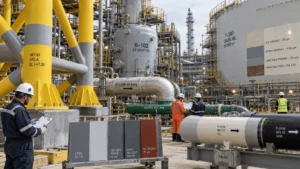
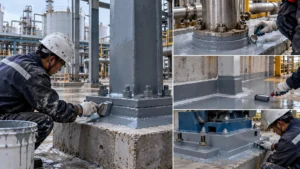
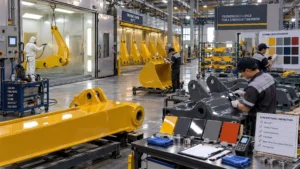
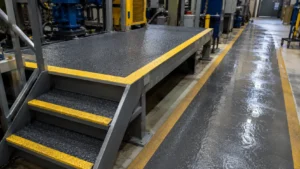
Industrial epoxy coating is usually selected when steel, tanks, pipelines, or equipment need strong adhesion, barrier protection, and chemical resistance in industrial environments. For EPC contractors, procurement managers, and corrosion engineers in the Middle East, Southeast Asia, and Central Asia, the key decision is not only “which epoxy product to buy,” but where the epoxy layer fits in the full coating system.
After reading this guide, you should be able to compare epoxy primer, high-build epoxy intermediate coat, epoxy lining, and pipeline epoxy coating by application, limitation, DFT range, and RFQ data. This helps avoid common specification mistakes such as using an atmospheric epoxy primer for immersion service or leaving epoxy exposed outdoors without a weather-resistant topcoat.
What Is an Industrial Epoxy Coating?
Industrial epoxy coating is a two-component protective coating system used as a primer, intermediate coat, or lining for steel structures, tanks, pipelines, and industrial equipment. It normally uses epoxy resin with a curing agent to form a dense film that resists moisture, chemicals, and mechanical wear better than many single-component coatings.
In industrial projects, epoxy is rarely selected as a decorative layer only. It is usually part of a system that may include surface preparation, primer, high-build barrier coat, polyurethane topcoat, or internal lining. The correct system depends on whether the asset is exposed to atmosphere, immersion, chemicals, soil, or mechanical abrasion.
Why Epoxy Is Used in Industrial Coating Systems
Epoxy is used because it provides strong adhesion, high film build, and barrier protection against water, salts, and many industrial contaminants. In field projects, we often see epoxy specified where carbon steel requires long-term protection in C3–C5 atmospheric environments, tank interiors, pipeline sections, and machinery surfaces.
A protective epoxy coating can help reduce corrosion risk by limiting oxygen, water, and ion movement to the steel surface. For steel structures, a typical epoxy layer may work together with zinc-rich primer and polyurethane topcoat. For tank interiors, epoxy may become the main lining layer, but only when the resin type and curing system match the stored medium.
Where Epoxy Fits in a Primer–Intermediate–Topcoat System
Epoxy fits into a coating system as the adhesion layer, the barrier layer, or the immersion-resistant lining layer. Epoxy primer is mainly used to bond to prepared steel and support the next coat, while high-build epoxy intermediate coat adds dry film thickness and corrosion barrier performance.
For outdoor steel, epoxy is often not the final weathering layer because UV exposure can cause chalking and color change. A polyurethane topcoat is commonly used over epoxy when color retention, gloss retention, and weathering resistance are required. For tank interiors or selected pipeline services, epoxy lining may be specified without a decorative topcoat because the performance requirement is immersion resistance rather than UV stability.
Industrial Epoxy Coating Types and Where They Are Used
The right industrial epoxy coating type depends on whether the project needs adhesion, barrier thickness, chemical resistance, or immersion protection. Using one epoxy product for every steel, tank, or pipeline condition is a common cause of premature blistering, underfilm corrosion, and coating delamination.
| Epoxy Type | Main System Position | Typical Application | Key Technical Value | Main Limitation |
|---|---|---|---|---|
| Epoxy primer | Primer | Steel structures, machinery, above-ground pipelines | Adhesion and initial corrosion barrier, often 40–80 μm DFT | Usually needs intermediate coat or topcoat for severe outdoor exposure |
| High-build epoxy coating | Intermediate coat | C3–C5 steel structures, infrastructure, industrial equipment | Adds barrier thickness, often 100–200+ μm DFT per coat depending on TDS | Limited UV resistance if left exposed outdoors |
| Epoxy tank lining | Internal lining | Water tanks, oil tanks, selected chemical tanks | Immersion resistance and lower permeability at higher film build | Requires stricter surface preparation and holiday detection |
| Glass flake epoxy | Heavy-duty barrier coat or lining | Splash zone, marine steel, tanks, severe industrial exposure | Improved permeation resistance due to flake reinforcement | Requires controlled mixing, application, and film thickness |
| Solvent-free epoxy | Thick-film lining | Confined tank interiors, selected immersion service | High film build and lower solvent emission | Pot life, application window, and curing control are critical |
| Pipeline epoxy coating | External or internal pipeline protection | Buried, above-ground, or process pipeline sections | Barrier protection and abrasion resistance depending on system | System must match soil, temperature, and service medium |
For broad industrial projects, buyers often start from an epoxy anti-corrosion coating series and then narrow the selection by asset type, surface preparation, exposure, and inspection requirement.
Choose Industrial Epoxy Coating by Asset Type
Asset type decides whether epoxy should work mainly as a primer, a high-build barrier coat, or an internal lining. A steel bridge member, an external tank shell, a potable water tank interior, and a buried pipeline may all use epoxy, but they should not use the same specification logic.
Epoxy Coating for Steel Structures
Epoxy coating for steel structures is usually used as a primer or intermediate barrier layer in a multi-coat system. For outdoor steel in industrial or coastal environments, many projects combine zinc-rich primer, epoxy intermediate coat, and polyurethane topcoat to balance adhesion, barrier protection, and weathering resistance.
For C3–C5 atmospheric exposure, coating selection should consider corrosivity category, target durability, surface preparation, and DFT. The ISO 12944 series is commonly used as a reference framework for corrosion protection of steel structures by protective coating systems.
For project pages involving bridges, workshops, power plant steel, pipe racks, and platforms, steel assets should be reviewed together with steel structure coating systems rather than selected from a single product name alone.
Epoxy Coating for Storage Tanks
Epoxy coating for storage tanks must be separated into external atmospheric coating and internal lining service. The external shell may use epoxy primer and high-build epoxy intermediate coat, while the internal tank surface may require a lining-grade epoxy system designed for water, oil, wastewater, or selected chemicals.
Epoxy coating for water tanks is not the same as general epoxy primer for steel. Water tank interiors require immersion compatibility, curing control, film continuity, and inspection such as holiday detection at the specified voltage range. For storage assets, the coating system should be reviewed with the stored medium, operating temperature, cleaning method, and expected inspection cycle.
For tank and pipe projects, specification teams can use storage tank and pipeline coating systems as the application reference before requesting product-level TDS.
Pipeline Epoxy Coating
Pipeline epoxy coating is selected based on whether the pipe is buried, above ground, insulated, submerged, or exposed to process chemicals. Above-ground pipelines often need epoxy primer or intermediate coat with a UV-resistant topcoat, while buried pipelines may require different external protection logic depending on soil, moisture, temperature, and mechanical damage risk.
Pipeline epoxy coating should also consider operating temperature and insulation. For insulated pipelines, the risk is often corrosion under insulation, where moisture trapped beneath insulation can drive hidden corrosion. In that case, the coating system should be checked against expected temperature cycling, inspection access, and maintenance interval.
Epoxy Coating for Machinery and Industrial Equipment
Epoxy coating for machinery and industrial equipment is usually selected for adhesion, impact resistance, and resistance to oils, cleaning agents, or workshop chemicals. Equipment frames, pumps, valves, and industrial housings may use epoxy primer plus polyurethane or acrylic polyurethane topcoat when appearance and outdoor durability matter.
For maintenance projects, the existing coating condition is critical. If old coating remains, compatibility and adhesion testing may be more important than simply increasing DFT. If the steel is heavily rusted, surface preparation and repair method should be decided before choosing the epoxy coating.
Check the Main Limits Before Specifying Epoxy Coating
Epoxy coating is strong for adhesion and chemical resistance, but it is not usually the final weathering layer for long-term outdoor UV exposure. Many specification problems occur because buyers treat epoxy as a universal coating instead of matching it to exposure and service conditions.
UV Exposure and Why Polyurethane Topcoat May Be Needed
Epoxy can chalk under UV exposure, so outdoor steel structures often need polyurethane topcoat for color retention and weathering resistance. Chalking does not always mean immediate corrosion failure, but it can reduce appearance quality and expose the system to faster degradation if the film becomes porous or under-specified.
For outdoor steel in coastal, industrial, or desert environments, epoxy should normally be evaluated as part of a full coating system. A zinc-rich primer may support corrosion protection, epoxy may provide barrier thickness, and polyurethane topcoat may provide UV resistance.
Immersion Service Requires Lining-Grade Epoxy
Immersion service requires lining-grade epoxy because constant water, oil, or chemical contact creates a different failure risk than atmospheric exposure. A standard epoxy primer may perform well under an intermediate coat on external steel, but it may blister, soften, or lose adhesion when used inside a tank without immersion approval.
For tank interiors, buyers should check chemical compatibility, service temperature, curing time before filling, holiday testing, and repair procedure. A lining system may require several hundred microns of total DFT depending on the stored medium and project specification.
Surface Preparation Controls Epoxy Performance
Surface preparation controls epoxy performance because epoxy needs a clean, profiled, and contamination-controlled substrate for long-term adhesion. Abrasive blasting to near-white or commercial blast grades is commonly required for severe service, and the surface profile should match the product TDS.
Surface profile measurement can be checked using methods such as ASTM D4417, which covers field measurement of blast-cleaned steel surface profile. In real projects, salt contamination, oil residue, dust, and condensation are frequent causes of early coating failure even when the product itself is suitable.
Specify DFT, Recoat Window, and Inspection Requirements
DFT, recoat interval, and inspection requirements should be confirmed from the TDS and project specification before epoxy coating is purchased or applied. Industrial epoxy coatings are two-component systems, so film thickness, temperature, humidity, and pot life directly affect curing and final performance.
Typical DFT Logic for Epoxy Systems
Typical epoxy DFT depends on whether the layer is a primer, intermediate coat, or lining. As a general engineering reference, epoxy primer may be around 40–80 μm DFT, high-build epoxy intermediate coat may be around 100–200+ μm DFT per coat, and epoxy lining systems may require several hundred microns depending on immersion service.
These ranges are not a substitute for the TDS. The final DFT should match the selected product, surface profile, service condition, and inspection requirement. Over-application can cause solvent entrapment or curing problems, while under-application can reduce barrier protection and shorten service life.
Recoat Interval and Pot Life
Recoat interval and pot life are critical because two-component epoxy systems continue reacting after mixing. At higher temperatures, pot life may shorten significantly, while low temperatures may slow curing and extend the time before handling, recoating, or immersion.
For large tank, pipeline, or steel structure projects, applicators should plan batch size, coating area, ventilation, humidity, and inspection access before mixing. Missing the maximum recoat interval may require surface abrasion before the next coat, while recoating too early can trap solvent or disturb curing.
Inspection Points for Industrial Epoxy Coating
Inspection should confirm surface preparation, mixing ratio, wet film thickness, dry film thickness, curing, adhesion, and visible defects. For tank lining or immersion service, holiday detection is especially important because pinholes can become direct paths for water or chemicals to reach the substrate.
Common inspection issues include missed edges, low DFT on welds, poor stripe coating, amine blush, solvent popping, sagging, dry spray, and contamination between coats. For complex steel structures, stripe coating on welds, bolts, edges, and corners can be as important as the main spray application.
Compare Epoxy Coating Options Before Sending an RFQ
A useful RFQ should compare epoxy coating options by substrate, exposure, service temperature, stored medium, DFT target, and required durability. Asking only for “epoxy price per kg” often leads to the wrong comparison because one system may require different film build, surface preparation, topcoat, or inspection.
Buyer Data Needed for Accurate Selection
Accurate epoxy coating selection needs project data, not just a product name. Before contacting epoxy coating manufacturers, prepare the following information:
- Asset type: steel structure, tank, pipeline, equipment, or concrete surface
- Substrate: carbon steel, galvanized steel, stainless steel, or concrete
- Project type: new construction, maintenance, repair, or recoating
- Exposure: indoor, outdoor, coastal, chemical, buried, insulated, or immersion
- Service medium: water, oil, wastewater, solvent, acid, alkali, or dry cargo
- Temperature range: normal ambient, elevated temperature, or thermal cycling
- Required durability: short-term maintenance, medium-term service, or long-term protection
- Surface preparation: abrasive blast, power tool cleaning, or existing coating condition
- Target DFT and inspection requirement
- Applicable standard, owner specification, or consultant requirement
- Drawings, dimensions, and estimated coating area
This data helps the manufacturer recommend the correct epoxy primer, intermediate coat, lining system, or topcoat combination.
When to Ask for TDS and System Compatibility Review
You should ask for TDS and system compatibility review when the coating will be used in immersion, chemical exposure, C4/C5 atmospheric exposure, or multi-coat systems. TDS review helps confirm mixing ratio, pot life, DFT, drying time, recoat interval, surface preparation, and compatible topcoats.
For industrial buyers, the best comparison is usually system-to-system rather than product-to-product. A lower unit price may not reduce total project cost if it requires more coats, longer curing time, higher surface preparation cost, or more complex inspection.
FAQ
Can industrial epoxy coating be used outdoors without a topcoat?
Industrial epoxy coating can be used outdoors for limited exposure, but long-term outdoor steel usually needs a polyurethane topcoat for UV resistance. Epoxy chalking can appear under sunlight even when the anti-corrosion barrier is still working, so C3–C5 outdoor systems often use epoxy as the primer or intermediate layer rather than the final finish.
What industrial epoxy coating is suitable for water tanks?
Water tanks usually require lining-grade epoxy rather than a standard epoxy primer. For immersion service, the system should be checked for water compatibility, curing time before filling, holiday detection, and total DFT that may reach several hundred microns depending on the project specification.
Is epoxy coating for steel different from epoxy tank lining?
Epoxy coating for steel is different from epoxy tank lining because atmospheric steel systems focus on adhesion, barrier protection, and topcoat compatibility, while tank linings focus on immersion resistance and film continuity. A steel structure epoxy intermediate coat may be around 100–200+ μm DFT, but a tank lining system may require higher total DFT and holiday testing.
What DFT range is typical for industrial epoxy coating systems?
Typical DFT depends on system position: epoxy primer may be around 40–80 μm, high-build epoxy intermediate coat may be around 100–200+ μm per coat, and epoxy lining systems may require several hundred microns. Final DFT must be confirmed from the TDS, ISO 12944 system design where applicable, and the project coating specification.
What information should I send to epoxy coating manufacturers before asking for price?
You should send asset type, substrate, exposure, service medium, temperature range, surface preparation, DFT target, drawings, and required standard before asking for epoxy coating price. Without these details, epoxy coating manufacturers cannot accurately compare primer, intermediate coat, lining, or topcoat systems for the same project.
Request an Industrial Epoxy Coating Recommendation
The fastest way to select the right industrial epoxy coating is to send the project environment, substrate, exposure, DFT target, and drawings for technical review. HUILI can review whether your project needs epoxy primer, high-build epoxy intermediate coat, epoxy lining, polyurethane topcoat, or a more specific coating system.
For RFQ or TDS support, send your asset type, operating environment, surface preparation condition, service temperature, chemical or water exposure, required durability, drawings, coating area, and applicable standard through the industrial coating project inquiry form.