
When corrosion is treated as a maintenance issue instead of an engineering risk, steel structures start losing thickness, coating integrity, and load-bearing confidence much earlier than owners expected. AMPP and NACE-linked corrosion studies estimate the global cost of corrosion at about $2.5 trillion, or roughly 3.4% of global GDP, and note that existing corrosion control practices could reduce a meaningful share of that loss.
We see this across oil and gas facilities, power plants, marine assets, infrastructure, and storage terminals, where steel is exposed to moisture, salts, pollutants, and process chemicals every day. Without proper steel protection from corrosion, assets that should serve for decades can face major repair, shutdown risk, or premature replacement within only a few years.
This guide explains the major industrial methods used for steel protection from corrosion and how modern coating systems extend service life in aggressive environments.
Why Steel Corrodes in Industrial Environments
Steel corrodes because it is thermodynamically unstable in many service environments, especially where water, oxygen, and contaminants remain on the surface. In industrial settings, corrosion is accelerated not only by weather, but also by salts, acidic pollutants, condensation cycles, and process leaks.
Electrochemical Corrosion Process
Corrosion is an electrochemical reaction in which iron returns to a lower-energy oxide form. When steel is exposed to oxygen and moisture, anodic and cathodic sites develop on the surface, and rust forms as the reaction products accumulate.
What to specify / what to do
- Identify whether the structure is in atmospheric, splash, immersion, buried, or chemical service.
- Separate cosmetic weathering from actual corrosion risk at joints, edges, welds, and water traps.
- Specify protection based on the real exposure zone, not on a generic “outdoor steel” label.
Why it works / why it fails
Protection works when the system blocks water, oxygen, ions, or electrochemical current flow. It fails when contaminants, poor adhesion, thin edges, or coating damage allow the corrosion cell to keep operating under or through the film.
Major Factors That Accelerate Steel Corrosion
The fastest steel loss usually appears where moisture is persistent and contamination is not controlled. Marine spray, chloride salts, industrial emissions, and wet-dry cycling are common accelerators in refineries, coastal terminals, chemical plants, and infrastructure.
What to specify / what to do
- Check whether the site is coastal, industrial, chemical, or inland dry service.
- Identify contamination sources, especially salts, sulfur compounds, and standing water.
- Review corrosion severity by environment before choosing a system.
Why it works / why it fails
Corrosion accelerates when the electrolyte on the surface becomes more conductive and remains longer. That is why chlorides, condensation, and acidic fallout make steel deteriorate faster than in clean, dry indoor conditions.
A practical way to classify atmospheric exposure is to use ISO 12944 corrosivity categories, which are commonly referenced from C1 through CX, with immersion categories also used for buried or submerged exposure. For project teams that need a coating-oriented explanation of those categories, see ISO 12944 Corrosion Protection Explained.
Field Note: On real projects, the biggest early mistake is not “choosing a bad paint,” but underestimating the environment. A steel frame in a hot dry yard is not exposed like a steel frame beside a desalination unit, cooling tower, marine berth, or acid process area.
Main Methods for Steel Protection From Corrosion
There is no single universal method for corrosion protection of steel. The right choice depends on environment, geometry, maintenance access, lifecycle target, and whether the asset is atmospheric, buried, immersed, or chemically exposed.
| Method | How It Protects | Best Fit | Main Limitation |
|---|---|---|---|
| Protective coatings | Creates barrier protection and, in some systems, sacrificial zinc action | Steel structures, tanks, pipelines, equipment | Depends heavily on surface prep and application quality |
| Galvanizing | Zinc sacrifices itself to protect steel | Fabricated steel, utility structures, outdoor components | Size limits, repair complexity, appearance constraints |
| Cathodic protection | Shifts electrochemical behavior using anodes or impressed current | Buried pipelines, tanks, offshore, submerged steel | Usually needs integration with coatings and monitoring |
| Corrosion-resistant alloys | Uses more resistant metal chemistry | Severe chemical or high-purity service | Higher capital cost |
Protective Coatings
Protective coatings are the most widely used industrial solution because they are adaptable, repairable, and cost-effective across many steel assets. A typical atmospheric system may use primer, epoxy build, and a UV-resistant topcoat, while more severe service may require thicker build coats or reinforced layers.
What to specify / what to do
- Match the coating family to the exposure, not just the substrate.
- Specify primer, build coat, and topcoat as a system.
- Define DFT ranges, edge treatment, and inspection hold points.
Why it works / why it fails
A coating system works by separating steel from the environment and resisting permeation long enough to meet the service target. It fails when the wrong resin family is selected, the film is discontinuous, or the surface was not prepared to support adhesion.
For a practical outdoor system example, see Epoxy Primer Polyurethane Topcoat System for Outdoor Steel Structures.
Galvanizing
Hot-dip galvanizing protects steel with a zinc layer that provides sacrificial action if the surface is damaged locally. It is widely used where long exterior exposure and limited maintenance access justify a metallic protection route.
What to specify / what to do
- Confirm component size and fabrication suitability before choosing galvanizing.
- Check whether later field repair, welding, or appearance constraints matter.
- Consider duplex systems where coating is applied over galvanized steel for longer life.
Why it works / why it fails
Galvanizing works because zinc corrodes preferentially and protects exposed steel at scratches or cut edges. It becomes less convenient when component size, field modifications, or appearance control make fabrication and repair more difficult.
Cathodic Protection
Cathodic protection is common on buried pipelines, storage tanks, and offshore or submerged steel. The two basic methods are sacrificial anodes and impressed current systems.
What to specify / what to do
- Use cathodic protection where buried or immersed steel justifies electrochemical control.
- Coordinate coating selection with the cathodic protection design.
- Review monitoring, isolation, and maintenance requirements early.
Why it works / why it fails
Cathodic protection works by changing the electrochemical condition of the steel so corrosion is suppressed. It fails when current distribution is poor, coating defects are excessive, or the system is treated as a substitute for a proper coating rather than a complement to it.
Corrosion Resistant Alloys
Corrosion-resistant alloys, including stainless and other alloyed steels, reduce reliance on coatings in selected services. They are usually chosen when the environment is highly aggressive, cleanliness is critical, or long-term chemical exposure makes coating maintenance impractical.
What to specify / what to do
- Compare capital cost against lifecycle maintenance and downtime.
- Review chemical compatibility, not just general corrosion resistance.
- Avoid using alloy upgrades where a correct coating system is more economical.
Why it works / why it fails
Alloys work because their metallurgy improves passive film stability or reduces corrosion rate in specific environments. They become uneconomical when the required benefit can be achieved more efficiently through coating plus good design and inspection.
Protective Coatings for Steel: Types and Materials
Protective coating for steel is not one product category but a family of materials with different roles. Good system design starts with understanding what each resin or pigment type is expected to do.
Epoxy Coatings
Epoxy coatings are used widely for steel corrosion protection because they combine adhesion, barrier build, and good chemical resistance. They are common in industrial steel, tank externals, structural members, and areas where thickness and toughness matter more than long-term gloss retention.
What to specify / what to do
- Use epoxy where barrier protection and build are the priority.
- Check cure conditions and recoat interval carefully.
- Protect exterior epoxies with a UV-resistant topcoat when needed.
Why it works / why it fails
Epoxies work because they form dense cross-linked films with strong adhesion. They fail when UV exposure, poor cure, or contamination weakens the film or allows moisture to move underneath it.
Zinc-Rich Coatings
Zinc-rich coatings are commonly used as primers where sacrificial protection is needed. They are especially relevant on bridges, offshore steel, heavy-duty plant structures, and complex steelwork in aggressive outdoor service.
What to specify / what to do
- Use zinc-rich primers where sacrificial behavior adds value.
- Check compatibility with intermediate and topcoat layers.
- Control surface cleanliness and profile carefully before application.
Why it works / why it fails
These coatings work because zinc electrically protects steel where the film is damaged or discontinuous. They fail when zinc loading, electrical continuity, or overcoating compatibility is not controlled.
Polyurethane Coatings
Polyurethane coatings are commonly used as finish coats on outdoor steel because they offer strong UV resistance and color durability. They are well suited for exposed structural steel, plant exteriors, and infrastructure that needs weather resistance and appearance retention.
What to specify / what to do
- Use polyurethane where sunlight and weathering matter.
- Apply over a compatible primer and intermediate system.
- Control mixing and cure conditions to protect final finish quality.
Why it works / why it fails
Polyurethane works because it resists UV degradation better than many epoxy top surfaces. It fails when used as a standalone answer to corrosion without enough primer and barrier build beneath it.
Fluorocarbon Coatings
Fluorocarbon coatings are selected where long-term weather resistance and color retention justify a higher-end finish. They are more common in landmark infrastructure, high-spec architectural steel, and premium exterior assets.
What to specify / what to do
- Use fluorocarbon where appearance life is a project driver.
- Confirm whether the added cost fits the service environment and asset value.
- Keep the full system logic intact, not just the finish coat.
Why it works / why it fails
Fluorocarbon systems work because they resist weathering and color loss exceptionally well. They are not a shortcut around primer, build, or surface preparation requirements.
Industrial Coating Systems for Steel Structures
Industrial steel protection depends on systems, not isolated products. A primer without enough build, or a topcoat without a suitable foundation, does not provide durable corrosion protection for steel.
| Example System | Typical Use | Strength | Watch Point |
|---|---|---|---|
| Epoxy zinc primer + epoxy intermediate + polyurethane topcoat | General outdoor industrial steel | Strong corrosion protection and UV durability | Needs good prep and layer compatibility |
| Epoxy primer + glass flake epoxy + polyurethane topcoat | More aggressive industrial or splash-prone areas | Higher barrier build and durability | Higher material and application complexity |
What to specify / what to do
- Define the full layer sequence, not just the finish coat.
- Set DFT ranges by coat and total system.
- Align the system with expected durability, inspection access, and maintenance strategy.
Why it works / why it fails
A multi-layer system works because each coat performs a different role, adhesion, sacrificial action, barrier build, or UV resistance. System performance fails when one layer is omitted, reduced, or applied outside its intended window.
For broader system selection on structural steel, see Anti-Corrosion Coating for Steel Structure: System Selection Guide.
Field Note: We often see specifications that name three coat types but do not clearly define where the thickness is needed most. Edges, welds, bolt areas, and water traps usually fail first, so system design has to consider geometry, not just average flat-panel thickness.
Surface Preparation: The Foundation of Corrosion Protection
Surface preparation often determines whether the coating achieves most of its intended service life or fails early. In practice, many coating problems blamed on “product quality” are actually preparation, cleanliness, or environment-control problems.
Common preparation methods include abrasive blasting, power tool cleaning, and chemical cleaning, but abrasive blasting remains the reference method for many high-performance systems. Sa 2.5 and comparable SSPC/NACE-style preparation levels are commonly specified when strong adhesion and long service life are required. For a detailed guide to preparation logic and standards language, see Surface Preparation for Industrial Coatings.
What to specify / what to do
- Define cleanliness level and anchor profile requirement.
- Check for dust, salts, oil, moisture, and flash rust before coating.
- Control dew point, humidity, and substrate temperature during application.
- Require repair of damaged prep before painting continues.
Why it works / why it fails
Preparation works because it creates the surface condition the coating is designed to bond to. It fails when contamination remains trapped at the interface, leading to osmotic blistering, adhesion loss, and underfilm corrosion.
How to Select the Right Steel Protection Method
Selection should begin with environment and failure consequence, not product preference. The best corrosion protection of steel is the method that matches the real service conditions and can still be inspected, repaired, and maintained economically.
Marine Environment
Marine steel needs strong salt resistance, durable barrier build, and good edge protection. Zinc-rich primer with epoxy build and polyurethane topcoat is a common choice for exposed atmospheric marine steel.
Industrial Atmosphere
Industrial atmosphere often combines moisture, pollutants, and moderate temperature cycling. Epoxy plus polyurethane systems are frequently used where UV durability and practical maintenance matter.
Underground or Buried Steel
Buried steel is often protected with coating systems designed for soil exposure and, where required, cathodic protection support. Bituminous or other buried-service systems may be used depending on project specification and service severity.
Chemical Exposure
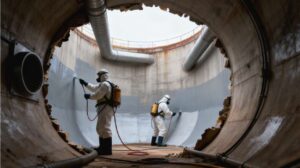
Chemical exposure requires tighter material selection because not all steel corrosion coating systems resist solvent, acid, alkali, or splash service equally. Glass flake epoxy or other reinforced chemical-duty systems may be suitable where permeation resistance is a priority.
What to specify / what to do
- Define the environment first: marine, industrial, buried, immersion, or chemical.
- Review maintenance access and repair practicality.
- Match the resin family and build level to the actual risk.
Why it works / why it fails
Selection works when environment, surface preparation, coating family, and inspection plan are aligned. It fails when one “standard system” is used across multiple exposures that behave very differently in service.
Common Mistakes in Steel Corrosion Protection
Most failures come from execution gaps, not from advanced chemistry. The common mistakes are predictable, and they are usually preventable.
- Poor surface preparation
- Incorrect coating thickness
- Incompatible coating layers
- Premature overcoating or delayed recoating
- Weak maintenance follow-up
- Ignoring edges, welds, and water-retaining details
Why it works / why it fails
Protection fails when the design intent is broken at the jobsite or in maintenance. Thin spots, contamination, incompatibility, and uncorrected damage create direct paths for moisture and corrosion cells to restart.
Field Note: Many specifications are technically correct on paper but still fail in service because they were written for flat test panels, not for real steelwork. Complex geometry, access limits, and plant shutdown pressure are where good specifications usually break down first.
Maintenance and Inspection of Steel Coating Systems
Even a good coating system needs periodic inspection if the owner wants predictable service life. Maintenance is most effective when it is planned before visible corrosion becomes widespread.
What to specify / what to do
- Inspect regularly based on environment severity and consequence of failure.
- Measure DFT on new work and critical repairs.
- Use adhesion testing where debonding is suspected.
- Repair coating damage before corrosion spreads under the film.
- Review recoat timing before weathered or chalked surfaces are overcoated.
Why it works / why it fails
Inspection works because early damage is cheaper to correct than widespread breakdown. Maintenance fails when coating defects are left open long enough for moisture to migrate laterally under the film.
Common checks include visual inspection, DFT measurement, adhesion testing, and repair verification. Holiday testing may also be used where continuity is critical, especially on higher-build or immersion-related systems.
Industrial Applications of Steel Protection Systems
Steel protection systems are used across a wide range of industrial assets, but the exposure logic changes by application. The protection method must follow the actual service environment.
- Steel structures in plants and process units
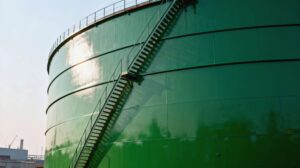
- Storage tanks and appurtenances
- Pipelines and pipe supports
- Bridges and infrastructure steel
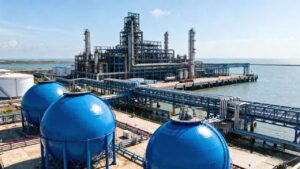
- Offshore platforms and marine terminals
What to specify / what to do
- Separate atmospheric, splash, buried, and immersion zones.
- Review access, shutdown frequency, and safety constraints.
- Choose a maintenance strategy that matches the asset’s importance.
Why it works / why it fails
Application-based design works because it respects how the asset is actually used and inspected. It fails when protection is chosen by habit rather than by environment, geometry, and consequence.
FAQ
How do you protect steel from corrosion?
The most common answer is to isolate steel from the environment or control the electrochemical reaction. In practice, that usually means protective coatings, galvanizing, cathodic protection, better material selection, or a combination of these methods.
What is the best coating for steel corrosion protection?
There is no single best coating for every case. The best system depends on environment, surface preparation, UV exposure, chemical exposure, and required service life.
Is galvanizing better than painting steel?
Not always. Galvanizing can deliver excellent long-term outdoor protection, but paint or multi-coat systems are often more flexible for complex industrial environments, repairs, color requirements, and higher-spec exposure control.
How long does steel coating last?
Service life depends on environment, preparation quality, coating family, and maintenance discipline. A well-specified industrial system can last much longer than a poorly prepared system even when the products look similar on paper.
What coating thickness is required for steel protection?
Required thickness depends on the system design and the exposure severity. Atmospheric steel, marine exposure, chemical areas, and reinforced barrier systems do not use the same DFT logic.
Can surface preparation affect corrosion protection performance?
Yes, significantly. Surface preparation is one of the strongest predictors of adhesion, barrier continuity, and real service life.
Selecting the correct steel protection from corrosion strategy requires more than choosing a paint name from a datasheet. If you are planning a project and need technical support on environment classification, surface preparation, coating build, or system selection, send your project details to our team through Contact.

 Chinese