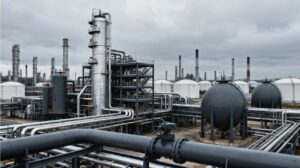
Outdoor steel structures degrade fast under UV, humidity, rain, industrial fallout, and (in many regions) salt-laden air, so a two-coat “primer + topcoat” plan must be selected carefully. HUILI presents itself as an industrial protective coatings manufacturer with solutions for steel structures and heavy-duty corrosion protection, which makes this system-level selection guide a strong match for your buyers’ needs.
When this system is the right choice (and when it isn’t)
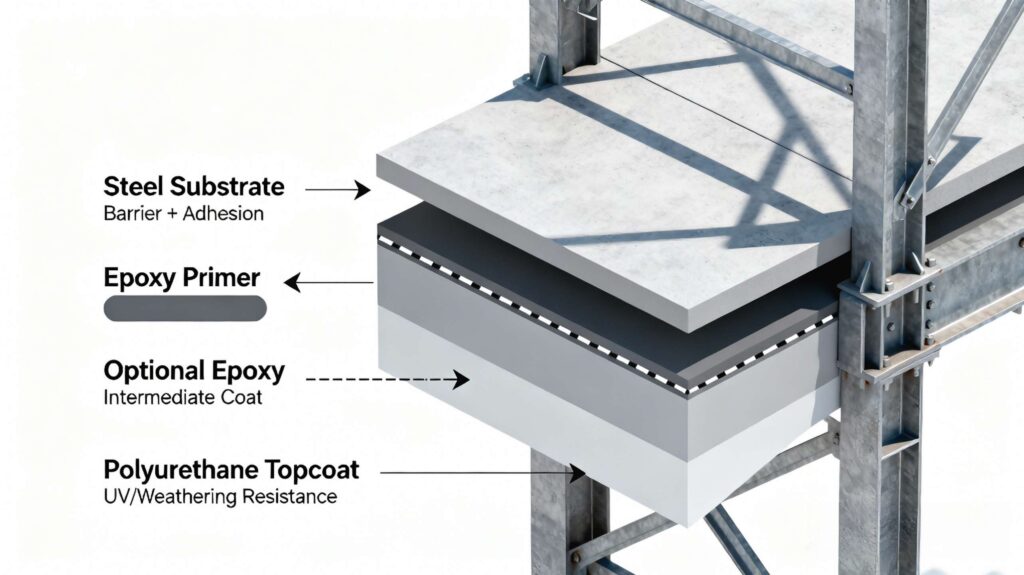
An epoxy primer + polyurethane topcoat system is typically chosen when you need strong adhesion and corrosion resistance from epoxy, plus UV/weathering durability from polyurethane. HUILI’s polyurethane anti-corrosion coatings are described as heavy-duty protection with excellent weather resistance and long-term corrosion & UV performance, which matches the “outdoor durability” requirement for many projects.
This system may not be sufficient if the steel is in very aggressive exposure (severe coastal, offshore splash zone, chemical immersion) without an intermediate barrier layer and a stricter specification. In those cases, a 3-coat system (primer + epoxy intermediate + polyurethane topcoat) is usually a more reliable baseline for long service life.
Step 1: Define exposure (Middle East vs Southeast Asia vs Central Asia)
Before selecting products, write down the exposure profile because it drives the topcoat type, film build, and maintenance interval.
- Middle East (common profile): high UV + heat, dust/sand abrasion, occasional marine influence in coastal industrial zones.
- Southeast Asia (common profile): high humidity + frequent rain + condensation risk, coastal salt influence in many industrial areas.
- Central Asia (common profile): larger temperature swings and seasonal weathering, plus industrial pollutants in certain zones.
Practical outcome: the harsher the UV and weathering, the more important it is to use a UV-stable polyurethane topcoat and control film thickness and curing conditions.
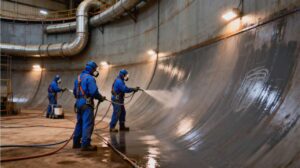
Step 2: Surface preparation requirements (don’t “value-engineer” this)
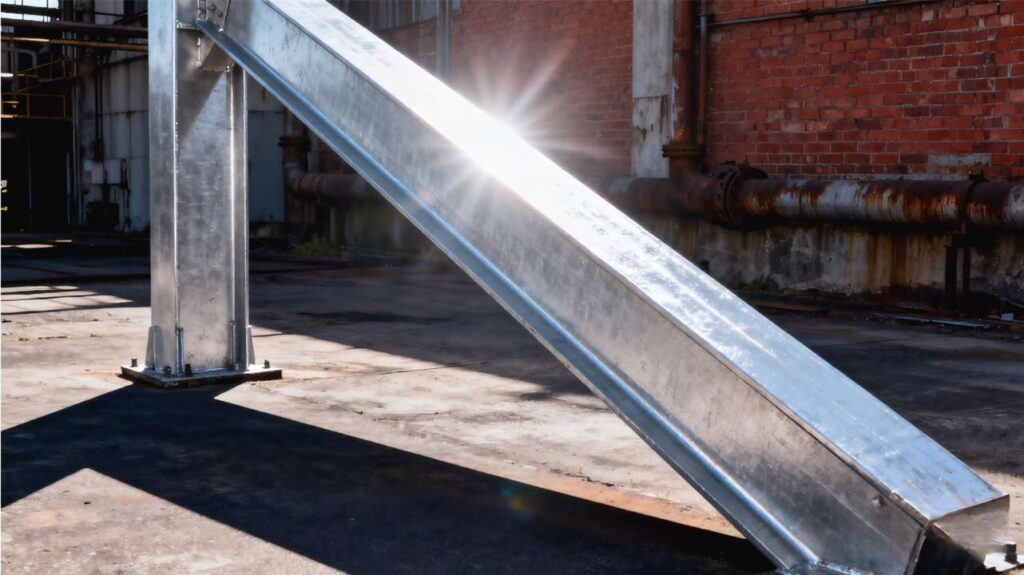
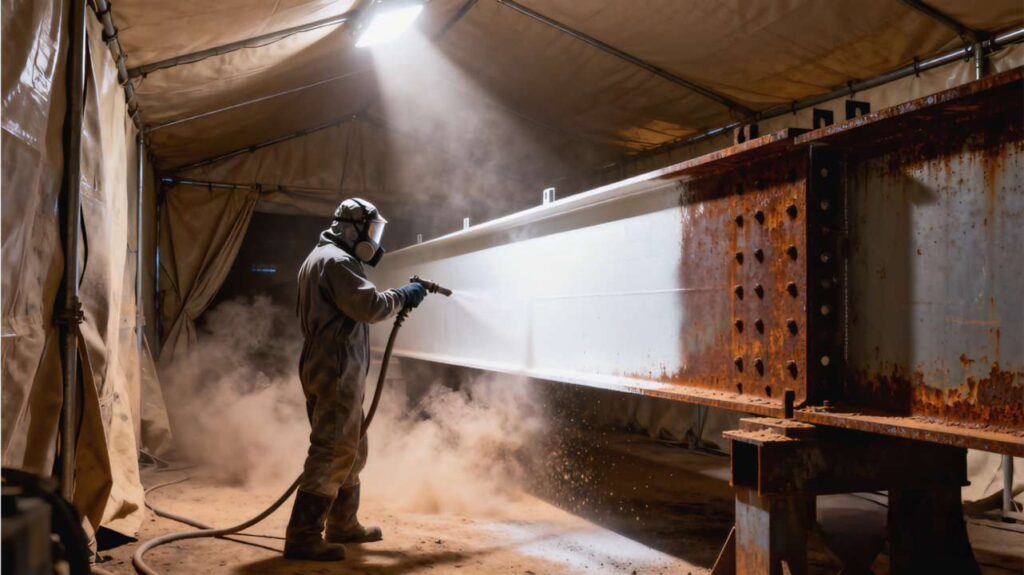
Epoxy primers depend heavily on proper surface preparation for long-term adhesion and corrosion resistance. If surface preparation is weak, failures like early rusting, underfilm corrosion, and peeling often appear regardless of brand.
Recommended practice in specifications:
- State the cleaning method (remove oil/grease first).
- Define the substrate condition (new steel vs maintenance repaint).
- Define whether spot repairs are allowed or full preparation is required.
Step 3: Epoxy primer selection (what to specify)
The epoxy primer’s role is to provide adhesion and a corrosion-resistant base layer. Selection should be based on exposure severity, application conditions, and compatibility with the next layers.
What to include in your spec/RFQ for the epoxy primer:
- Substrate: carbon steel / galvanized steel / previously coated steel
- Application: shop-applied or site-applied
- Minimum curing time and recoat window
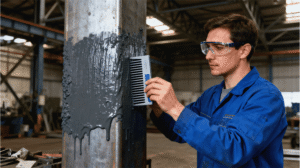
- Required inspection records (batch, mixing ratio, pot life, WFT/DFT checks)
Go to Anti-rust primer coatings series >>>
Step 4: Do you need an epoxy intermediate coat?
If the structure is truly outdoors and you want longer durability, adding an epoxy intermediate coat is often the simplest way to increase barrier thickness and reduce permeability.
Use an epoxy intermediate coat when:
- The environment has higher corrosion risk (coastal influence, industrial fallout).
- You want more margin for long service life and fewer maintenance cycles.
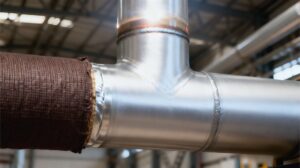
- The steel has edges, welds, and complex geometry where film build is harder.
Step 5: Polyurethane topcoat selection (UV resistance comes first outdoors)
For outdoor steel, the topcoat is what “faces” UV, rain, and temperature cycling. HUILI’s polyurethane anti-corrosion category emphasizes weather resistance and long-term UV performance, which is exactly why polyurethane is commonly used as an outdoor finishing layer.
Selection points to cover in your content (and later in your quote):
- UV resistance / color & gloss retention expectations
- Chemical splash resistance (if relevant)
- Required color range and finish
- Recoat interval compatibility with epoxy layers
HUILI also lists an “Aliphatic Polyurethane High-Performance Topcoat,” which is positioned as a UV-resistant, color-stable topcoat option for long-term outdoor use cases.
Go to polyurethane anti-corrosion coatings >>>
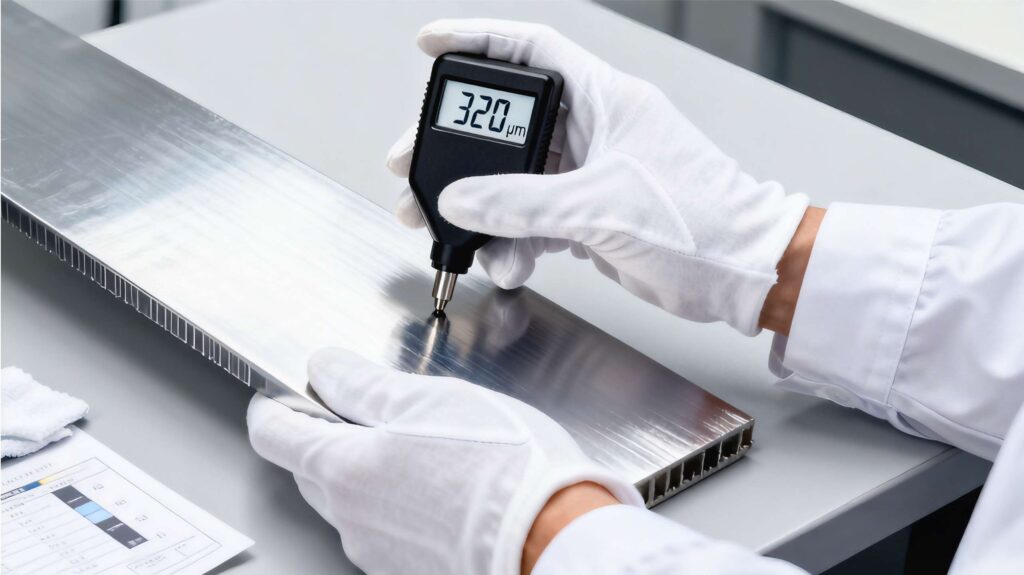
Typical DFT guidance (write it as ranges, then confirm by TDS)
Instead of promising a single number, write thickness as “system targets” and confirm the final spec by product TDS and project standards.
A practical way to present it:
- 2-coat (epoxy primer + PU topcoat): use when exposure is moderate and maintenance is acceptable.
- 3-coat (epoxy primer + epoxy intermediate + PU topcoat): use for higher durability outdoors and more aggressive exposure.
Common failures (and how to prevent them)
Include this section because it ranks well for troubleshooting long-tails and keeps readers on-page.
- Early rusting at edges/welds: often caused by insufficient film build on sharp edges → add stripe coat steps and ensure edge rounding in fabrication specs.
- Peeling/delamination: often linked to poor surface prep or exceeded recoat window → specify surface prep standard and recoat interval clearly.
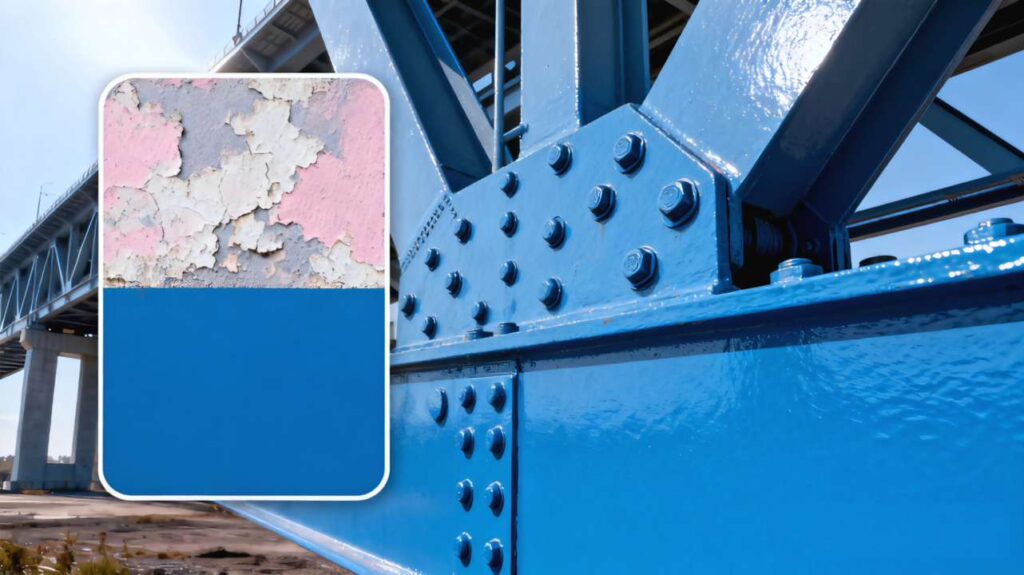
- Chalking/fading: often due to insufficient UV stability of the topcoat → specify UV-resistant polyurethane topcoat for full outdoor exposure.
RFQ checklist (copy-paste to get a fast, accurate quote)
To turn this article into inquiries, add a “give us your project data” section.
Provide:
- Country/region: Middle East / Southeast Asia / Central Asia
- Structure type: pipe rack, platform, building frame, conveyor support, etc.
- Exposure: coastal distance, humidity/condensation frequency, industrial fumes
- Surface prep plan: blasting level, maintenance repaint constraints
- Application method: airless spray / brush-roller, shop or site application
- Target design life / maintenance interval
- Required documents: TDS, SDS, COA, system recommendation
Go to marine & offshore corrosion protection >>>
Go to Steel Structure Coating Industrial Anti-Corrosion Solutions >>>