Steel loses load-bearing capacity quickly at high temperatures, so fireproof coating is a structural safety design element, not decorative paint. The goal is to buy time for evacuation, firefighting, and structural stability by meeting the required fire rating for the specific asset and fire scenario.
Quick Guide
- Confirm the fire scenario first: cellulosic building fire or hydrocarbon oil and gas fire.
- Select the system by exposure and visibility: intumescent for architectural or exposed steel, cementitious for heavy industrial and hidden zones.
- Convert fire rating into thickness using section factor and your approved design method.
- Control substrate prep, primer compatibility, and adhesion—most failures start at the interface.
- Build a QC plan around thickness ranges, curing, repairs, and moisture management.
Why steel structures require fire protection
Steel is strong at ambient temperatures, but its strength and stiffness drop sharply as temperature rises. In a fire, that loss of capacity can trigger deflection, buckling, connection failure, and progressive collapse long before the fire is “over.”
Decision rule for engineers: specify fire protection to match the real risk, meaning the expected fire curve, required duration, and exposure conditions, not just a generic “1 hour” line item.
Compare types of fireproof coating systems
A fireproof coating system is usually more than one layer. It can include substrate preparation, anti-corrosion primer, a fireproof layer, reinforcement where required, and a sealing or topcoat depending on environment and durability expectations.
Intumescent fireproof coating
How it works
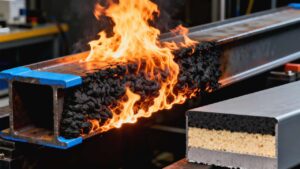
When heated, intumescent coating expands and forms an insulating char layer that slows heat transfer into the steel.
Where it fits best
- Exposed steel where appearance matters
- Indoor steel or sheltered industrial steelwork
- Projects that need thinner builds compared to cementitious solutions
Field risks engineers should plan for
- Sensitivity to substrate prep and primer compatibility
- Moisture sensitivity in humid or coastal environments if the system is not properly sealed
- Damage and repair logistics for exposed structures
Cementitious fireproof coating
How it works
Cementitious systems provide a thick insulating layer that resists heat transfer through mass and low thermal conductivity.
Where it fits best
- Heavy industrial assets, process areas, and utilities
- Hidden steel and non-architectural areas
- Large tonnage steel where cost control matters
Field risks engineers should plan for
- Higher thickness and weight, which affects detailing and scheduling
- Cracking, impact damage, and water absorption risks if sealing and drainage are not addressed
- Strong dependency on curing control and workmanship discipline
Intumescent vs cementitious: decision table
| Selection factor | Intumescent fireproof coating | Cementitious fireproof coating |
|---|---|---|
| Typical steel visibility | Exposed or architectural | Hidden or industrial utility steel |
| Typical build | Thinner, system-controlled | Thicker, heavy build |
| Best for | Warehouses, industrial buildings, indoor process support steel | Petrochemical, power, heavy industry, large tonnage steel |
| Main execution risk | Primer compatibility, sealing, repairs | Cracking, water absorption, damage, curing discipline |
| Best buying approach | Specify full system and approved thickness method | Specify system + reinforcement/sealer rules + repair method |
Cellulosic fire vs hydrocarbon fire protection
This is where many RFQs go wrong. A “fireproof coating” is not universal because different fire curves heat steel at different rates and peak profiles.
- Cellulosic fire is typical for buildings and general construction fire scenarios.
- Hydrocarbon fire is typical for oil and gas, petrochemical, and fuel-related hazards, where heat-up can be more severe and faster.
Decision rule: if the project is in oil and gas, terminals, refineries, or hydrocarbon handling zones, treat hydrocarbon fire protection as a separate engineering requirement, not a checkbox.
Fire rating requirements, 1 hour to 3 hour
Fire ratings usually represent the time the protected steel must maintain performance under the defined fire scenario. The same “2 hour rating” can require very different thickness depending on:
- Steel size and shape
- Section factor
- Orientation and exposure condition
- System type and approved design method
Buyer reminder: do not compare contractor bids only by “hours.” Compare by the declared steel section factors, thickness ranges by member type, and the QC and repair rules.
Fireproof coating thickness calculation
Most thickness design methods use the section factor concept, often expressed as Hp/A, to relate steel geometry to heat-up rate. Higher section factor members tend to heat faster and typically require more protection for the same rating.
What you should specify in the workpack
- The design basis used for thickness selection
- The section factor range by member type, not one thickness for all steel
- Thickness ranges by zone and member category, not a single “average” target
- Repair and touch-up thickness rules at edges, bolts, and connections
If you need a system-oriented reference page for your scope definition, use: Fireproof coating system for steel structures.
Fireproof coating vs anti-corrosion coating, how they work together
Fireproof coating does not replace anti-corrosion protection. In real industrial projects, the system must manage both long-term corrosion control and fire performance.
Key engineering coordination points
- Primer compatibility: the anti-corrosion primer must be approved as compatible with the selected fireproof system.
- Interface quality: most delamination starts at the primer–fireproof layer interface due to contamination, moisture, or poor cure control.
- Sealing strategy: exposed and humid environments usually require a sealing or topcoat approach to reduce water uptake and preserve durability.
- Repair planning: define how damaged areas will be re-primed, re-built, and re-sealed without breaking fire rating continuity.
Fireproof coating for industrial and oil and gas projects
Use scenario-based zoning rather than one system for everything:
- Refineries and petrochemical: prioritize hydrocarbon fire scenarios, mechanical damage resistance, and repair logic.
- Power plants: balance cost, schedule, access, and long-term maintenance, and plan for thermal cycling zones.
- Warehouses and industrial buildings: intumescent systems are common where steel is visible and controlled interior conditions exist.
- Offshore or coastal terminals: moisture and salt exposure increase the need for sealing, interface control, and strict QC.
Region-specific field reality
- Middle East: heat, UV exposure, and dust can impact curing windows, contamination control, and topcoat durability.
- Southeast Asia: high humidity and rain exposure increase water management, sealing, and adhesion risk control.
- Central Asia: temperature swings and seasonal constraints make curing discipline and scheduling critical.
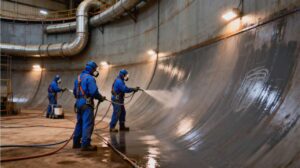
Surface preparation before fireproof coating
Surface preparation is a fireproof coating risk control step, not just an anti-corrosion step.
What to control
- Surface cleanliness and profile appropriate for the primer system
- Primer cure state before fireproof application
- Contamination controls between primer and fireproof layers
- Access and edge detailing so thickness can be achieved at connections and difficult geometry
For a reusable surface preparation reference, link your team here: Surface preparation for industrial coatings.
Common failures in fireproof coating projects
Most failures are preventable if they are designed out early:
- Cracking from wrong thickness build strategy, poor reinforcement control, or curing issues
- Delamination from primer incompatibility, contamination, moisture, or insufficient cure
- Water absorption and durability loss when sealing is missing in exposed environments
- Mechanical damage on industrial sites without a repair plan and routine inspection
- “Looks thick enough” acceptance without measured thickness and documented hold points
Quality and inspection checklist
Use this as your ITP backbone:
- Substrate and primer acceptance: cleanliness, primer type, primer cure confirmation, and interface readiness hold point
- Thickness control: measure DFT and fireproof thickness by member category, record ranges, and verify critical geometry
- Curing control: record ambient conditions, ventilation, and elapsed time before sealing or handover
- Adhesion checks: verify adhesion where the specification requires, especially after delays or exposure
- Repairs: define repair boundaries, surface prep for repairs, and re-application thickness targets
- Documentation: batch traceability, inspection logs, and as-built thickness map for turnover
Cost factors in fireproof coating systems
Cost is usually driven by project execution variables more than material price alone:
- Required fire rating duration and design basis
- Member section factors and total tonnage
- Access method and production rate constraints
- Surface prep and primer compatibility requirements
- Sealing and durability needs for exposed environments
- QC intensity, documentation, and rework risk
Lifecycle reminder: systems that reduce repair frequency can lower total cost even if the upfront price is higher.
How to choose the right fireproof coating system
Use this decision sequence:
Step 1: Define the fire scenario and rating
Confirm cellulosic or hydrocarbon scenario and the required duration by area.
Step 2: Classify exposure and visibility
Determine whether steel is exposed, hidden, indoor, coastal, or high-humidity.
Step 3: Select system family and durability strategy
Choose intumescent or cementitious, then decide if sealing or topcoating is required for long-term performance.
Step 4: Convert to thickness ranges by member category
Use section factor categories so thickness is engineered, not guessed.
Step 5: Lock QC and repair rules before mobilization
If QC and repairs are not defined, the first defects will turn into major schedule delays.
RFQ checklist
To receive an accurate quotation, TDS pack, and system recommendation, include:
- Project location, environment, and asset type
- Fire scenario type and required rating duration by area
- Steel member list, section factors, and zone classification
- Surface preparation standard and primer system used or required
- Exposure condition: indoor, sheltered, outdoor, coastal, high humidity
- Thickness ranges required by member category and acceptance plan
- Sealer or topcoat requirement, if any
- QC documentation needs: hold points, inspection logs, as-built thickness map
- Repair procedure requirements and maintenance expectations
Technical Note / Disclaimer
Fireproof coating system selection, thickness design, and acceptance criteria depend on the fire scenario, steel section factors, exposure environment, and the approved design method. Confirm the final system build-up, thickness ranges, and inspection requirements with the applicable TDS and your project specification before approval.
CTA
If you share your required fire rating, fire scenario, steel member section factors, environment, and primer plan, our technical team will propose a compatible fireproof coating system and provide a documentation pack for review. Contact us here: Project inquiry & technical support.