
Understanding Zinc Coating on Steel
For industrial engineering and large-scale infrastructure, applying a zinc coating on steel is the first line of defense against structural failure. As a manufacturer specializing in heavy-duty industrial systems, Anhui HUILI Coating Technology Co., Ltd. engineers solutions that ensure steel assets endure the harshest environments. Whether for offshore platforms or power plant infrastructure, understanding the fundamental interaction between zinc and steel is critical for selecting the right anti-corrosion system.
How Zinc Protects Steel from Corrosion
The primary mechanism behind zinc-based protection is cathodic protection. When applied to a steel substrate, zinc acts as a sacrificial anode. Because zinc is more electrochemically active than steel, it corrodes in place of the base metal.
In our Zinc-Rich Primers, this principle is utilized to provide active anti-rust capabilities. Even if the coating is scratched or damaged, the surrounding zinc particles will oxidize to protect the exposed steel, preventing the spread of rust underneath the paint film. This dual-action defense—providing both a physical barrier and galvanic protection—is essential for meeting international standards like ISO 12944 for environments with high atmospheric corrosivity (C3 and C4 categories).
Key Characteristics of Zinc Coatings
High-performance zinc coatings are defined by their ability to integrate into complete protective systems. Our formulations are designed to serve as the foundational layer for long-term durability.
Sacrificial Durability: Provides active corrosion resistance that extends the maintenance intervals of steel structures significantly.
System Compatibility: Designed to work seamlessly with intermediate coats and polyurethane topcoats, creating a comprehensive shield against moisture and UV radiation.
Versatile Application: Suitable for diverse sectors, including marine facilities, petrochemical pipelines, and heavy steel construction.
Environmental Compliance: We offer advanced formulations, including water-based and low-VOC options, ensuring projects meet modern environmental regulations without sacrificing performance.
Advantages of Zinc Coated Steel
When we talk about protecting industrial assets, applying a zinc coating on steel is the industry standard for a reason. As a manufacturer handling large-scale global projects, we see firsthand how zinc-rich systems extend the lifespan of infrastructure, from power plants to pipelines.
Long-Term Corrosion Resistance
The primary job of a zinc coating is to act as a sacrificial barrier. The zinc corrodes slowly over time to protect the underlying steel substrate, a process known as cathodic protection. This is essential for meeting international standards like ISO 12944, specifically for environments ranging from medium (C3) to high (C4) atmospheric corrosivity.
For maximum longevity, we rarely rely on a single layer. We typically recommend a multi-coat system where the zinc primer is the foundation, often sealed with a durable topcoat like a polyurethane anti-rust primer to provide additional resistance against chemicals and UV exposure. This layered approach ensures the steel remains rust-free for decades, even in aggressive climates.
Cost-Effectiveness and Efficiency
While the initial application of high-quality zinc coatings might seem like an investment, the lifecycle savings are undeniable. Unprotected steel requires frequent maintenance, repairs, and repainting, which halts operations and drains budgets. By using a robust zinc system, you drastically reduce maintenance intervals.
From a supply chain perspective, efficiency is key for large engineering projects. Our automated production lines, with an annual capacity exceeding 40,000 tons, ensure that we can deliver consistent, high-volume batches to EPC contractors without delays. This stability helps project managers keep their timelines and budgets on track.
Enhanced Durability and Safety
Beyond just preventing rust, zinc coatings contribute to the overall structural integrity and safety of a facility. Corroded steel loses strength, posing significant risks in heavy industrial settings like bridges, storage tanks, and offshore platforms. A properly coated structure maintains its load-bearing capacity and resists mechanical damage during transport and erection.
This durability is non-negotiable in harsh sectors. For instance, in saltwater environments where abrasion and salt spray are constant threats, utilizing a specialized marine anti-corrosion coating for offshore structures over a zinc-rich base provides the necessary toughness to prevent catastrophic failure.
Key Performance Benefits:
Sacrificial Protection: Zinc sacrifices itself to save the steel.
Abrasion Resistance: Harder surface withstands physical wear.
Complete Coverage: Liquid coatings can reach complex corners and crevices that other methods might miss.
Types of Zinc Coating Methods
When protecting industrial assets, choosing the right application method is just as critical as the material itself. While the goal is always the same—creating a barrier against rust—the process varies significantly based on the size of the steel component and the environment it faces. Here is a breakdown of the standard industry methods we encounter and complement with our coating systems.
Hot-Dip Galvanizing
This is the heavy lifter of the industry. In this process, we see steel components submerged entirely into a bath of molten zinc heated to around 840°F (449°C). This creates a metallurgical bond between the zinc and the steel, forming a thick, durable alloy layer.
Best for: Large structural beams, outdoor infrastructure, and utility poles.
Key Benefit: It provides complete coverage, including corners and edges, offering sacrificial protection that lasts for decades in harsh environments.
Electrogalvanizing and Zinc Plating
Unlike the molten bath method, electrogalvanizing uses an electrical current to deposit a thin layer of zinc onto the steel surface. This is often done in a continuous process for sheet metal or batch-processed for smaller parts.
Best for: Automotive body panels, fasteners (nuts and bolts), and smaller hardware.
Key Benefit: It offers a smoother, more uniform finish than hot-dipping, making it ideal for parts that need to be painted later or require tight dimensional tolerances.
Thermal Spraying and Metallizing
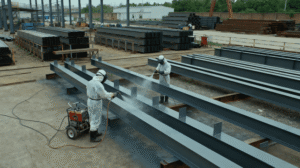
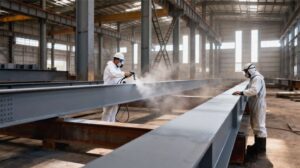
For structures that are simply too massive to fit into a galvanizing tank, thermal spraying is the go-to solution. Here, zinc wire or powder is melted and sprayed onto the steel surface using a specialized gun.
Best for: Bridges, offshore platforms, and large tanks that are already assembled.
Key Benefit: It allows for a thicker coating than galvanizing and can be applied on-site, though it requires a very clean, abrasive-blasted surface to adhere properly.
Zinc-Rich Paints and Mechanical Plating
This is where our expertise at Huili Coating comes into play. Zinc-rich paints (often called “cold galvanizing”) contain a high percentage of zinc dust in the dry film. These coatings provide cathodic protection similar to hot-dip galvanizing but are applied like regular paint using sprayers or brushes. This method is incredibly versatile for both new construction and maintenance.
Best for: Complex steel structures, touch-ups on damaged galvanized steel, and environments requiring ISO 12944 compliance.
Key Benefit: High-performance anti-corrosion without the need for a molten bath.
Mechanical plating, on the other hand, involves tumbling small parts with zinc powder and glass beads to cold-weld the zinc onto the surface. If you are evaluating which method suits your specific environmental conditions, reviewing our guide on how to choose anti-corrosion coating for steel structures can help clarify the best path for your project.
Common Applications of Zinc Coated Steel
Zinc coating on steel is the backbone of modern infrastructure, providing the critical defense needed to keep metal structures standing. As a manufacturer dealing with heavy-duty protection, we see firsthand how these coatings are deployed across diverse sectors to combat corrosion and extend asset lifespans.
Construction and Architectural Components
In the construction industry, durability is everything. We frequently supply zinc-rich solutions for large-scale steel structures where maintenance is difficult or impossible once the building is complete. Zinc coating on steel is the standard for structural beams, roofing sheets, and reinforcement bars (rebar).
Structural Steel: Used in bridges, stadiums, and high-rises to prevent structural integrity loss.
Exterior Cladding: Protects facades from weathering while offering a sleek aesthetic.
Infrastructure: Essential for guardrails, lighting poles, and fencing that face constant outdoor exposure.
Automotive and Manufacturing Parts
Manufacturers rely on zinc protection to ensure their products survive the supply chain and end-use environments. While we focus on heavy industrial applications, the principle remains the same for automotive and equipment manufacturing. Zinc coatings act as a sacrificial layer, protecting the underlying steel from road salts, moisture, and chemical exposure.
Vehicle Bodies: Galvanized steel panels prevent rust on car doors and hoods.
Heavy Machinery: Protects chassis and undercarriages of agricultural and construction equipment.
Fasteners: Bolts, nuts, and screws are almost always zinc-plated to prevent seizing and corrosion.
Industrial and Marine Environments
This is the most demanding sector we serve, often requiring compliance with strict standards like ISO 12944. In marine and heavy industrial settings, the combination of saltwater, humidity, and chemicals can destroy unprotected steel in months. We engineer our systems to withstand these harsh conditions, particularly for offshore platforms and chemical plants.
For critical infrastructure like oil and gas facilities, utilizing specialized storage tank and pipeline coating systems is mandatory. These high-performance zinc coatings provide the necessary barrier against severe atmospheric corrosion (C4 and C5 environments), ensuring that pipelines and storage vessels remain leak-free and operational for decades.
Factors Affecting Zinc Coating Performance
Atmospheric and Environmental Conditions
The lifespan of zinc coating on steel isn’t a fixed number; it is dictated by the environment where the structure stands. We see a massive difference in performance based on local climate data. In clean, dry, rural settings, a standard coating might last for decades without maintenance. However, industrial and coastal areas present aggressive challenges.
Key environmental stressors include:
Humidity: High moisture levels keep the zinc active, consuming it faster.
Salinity: Coastal regions with airborne chlorides (salt spray) accelerate corrosion rates significantly.
Pollutants: Industrial zones with high sulfur dioxide levels can degrade coatings rapidly.
We formulate our systems to align with ISO 12944 standards, ensuring our coatings provide reliable protection even in C3 (medium) to C4 (high) corrosivity categories.
Exposure to Soil and Liquids
When steel is buried or submerged, the rules change completely. Soil resistivity, moisture content, and pH levels become the primary factors driving corrosion. Highly acidic soils or those with high clay content can eat through zinc protection much faster than open air. Similarly, constant immersion in water—especially saltwater or wastewater—demands more than just a basic zinc layer.
For these severe environments, we often recommend a multi-layer system. While zinc provides the sacrificial base, adding a heavy-duty barrier like vinyl ester glass flake mastic creates an impermeable shield against aggressive chemicals and liquids, extending the service life of the substrate significantly.
Zinc Coating Thickness Standards
There is a direct relationship between protection and application: generally, the thicker the zinc, the longer the service life. However, precision is key. You cannot simply apply an excessive amount without risking adhesion issues or cracking. Adhering to strict specifications is crucial for structural integrity.
We follow rigorous manufacturing and application protocols to ensure the Dry Film Thickness (DFT) meets the specific requirements of the project. Whether you are dealing with hot-dip galvanizing or applying a high-performance zinc-rich primer for steel structures, getting the thickness right ensures the cathodic protection remains active for the intended lifespan of the infrastructure. We always advise checking the specific DFT requirements for your target environment before application begins.
Comparing Zinc Coated Metals
Choosing the right material for your project usually comes down to balancing budget, environmental exposure, and longevity. While zinc coating on steel is a powerhouse solution, it helps to see how it stacks up against other common metal options.
Galvanized Steel vs. Stainless Steel
The main difference here is composition versus coating. Stainless steel is an alloy containing chromium, meaning the corrosion resistance is built into the metal itself. It is incredibly durable but comes with a significantly higher price tag.
Galvanized steel, on the other hand, is carbon steel covered in a protective zinc layer. It relies on that outer skin for protection. For many large-scale industrial projects where stainless is too expensive, using carbon steel with a high-performance inorganic zinc silicate primer is the standard approach. This mimics the protection of galvanizing but offers more flexibility for application on massive structures like bridges or tanks.
Stainless Steel: Integral protection, self-repairing, very expensive.
Galvanized Steel: Surface protection, sacrificial, cost-effective.
Galvanized vs. Galvannealed Steel
These two look different and behave differently during fabrication. Standard galvanized steel has that familiar shiny, spangled appearance. It is pure zinc on the surface.
Galvannealed steel takes the process a step further. After the zinc coating is applied, the steel is heated (annealed) to induce diffusion between the steel and the zinc. This creates a zinc-iron alloy coating. The result is a matte, dull gray finish that is not as hard as pure zinc but provides a fantastic surface for painting. If your project involves welding or immediate painting without extensive prep, galvannealed is often the superior choice.
Zinc-Coated vs. Aluminum Alternatives
Aluminum is naturally lightweight and forms a passive oxide layer that resists corrosion, making it great for specific atmospheric conditions. However, it lacks the “self-healing” property of zinc.
Zinc coating on steel provides galvanic protection. If the coating is scratched or cut, the zinc sacrifices itself to protect the exposed steel underneath. Aluminum cannot do this; once the barrier is breached, rust can form. For heavy-duty environments, we often recommend zinc-based solutions as the foundation of complete anti-corrosion coating systems, ensuring that structural integrity is maintained even if the surface suffers minor mechanical damage.
FAQ
What is zinc coating on steel?
Zinc coating on steel is a protective zinc layer applied to steel to provide barrier protection and sacrificial corrosion resistance.
How does zinc protect steel from corrosion?
Zinc is more electrochemically active than steel, so it corrodes first and helps protect exposed steel through galvanic or sacrificial action.
What is the difference between hot-dip galvanizing and zinc-rich paint?
Hot-dip galvanizing forms a bonded zinc layer by dipping steel in molten zinc, while zinc-rich paint delivers similar anti-corrosion logic through an applied coating system and is often used for complex structures, touch-up work, or maintenance applications.
Is zinc coating enough by itself for industrial steel?
In many industrial projects, zinc is used as the foundation of a multi-layer system and is often followed by epoxy build coats and weather-resistant topcoats, because ISO 12944 system selection is based on full protective paint systems rather than one layer alone.
Where is zinc coated steel commonly used?
Common applications include bridges, offshore structures, infrastructure steel, industrial facilities, and other steel assets that need long-term corrosion protection.
What surface preparation is important for zinc-rich coatings?
High-performance zinc-rich systems depend heavily on proper surface preparation, and Sa 2.5 is a widely used blast-cleaning reference for demanding steel coating work.
When should buyers request TDS and a system recommendation?
Buyers should request TDS and system advice when the project has mixed exposure conditions, maintenance repaint requirements, or specific durability targets that affect primer, build coat, and topcoat selection.


 Chinese