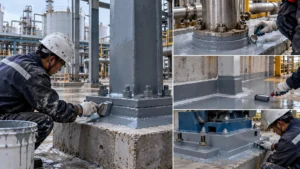
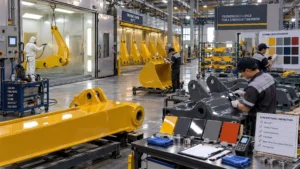
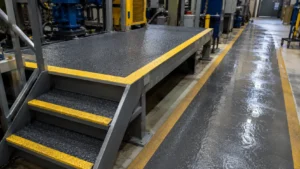
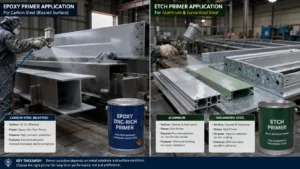
Um revestimento de alta performance não é definido por um único nome de produto. Ele é definido pela capacidade do sistema de revestimento de atender a uma condição de serviço severa específica, como corrosão, exposição química, abrasão, calor, intempéries com UV ou imersão. Em projetos industriais, o alto desempenho deve ser apoiado pelo design do sistema de revestimento, preparação da superfície, espessura de filme seco, aderência, dados da Ficha Técnica (TDS) e o ambiente real de serviço.
Para contratantes de EPC, gerentes de suprimentos, engenheiros de corrosão, equipes de manutenção e compradores industriais, a questão mais importante não é “Qual revestimento é o mais forte?” A melhor pergunta é:
Que desempenho este projeto precisa, e qual sistema de revestimento é projetado para esse serviço?
Este guia explica como comparar revestimentos de alta performance para aplicações industriais, como avaliar revestimentos de alta performance para aço e quais dados do projeto devem ser preparados antes de solicitar uma recomendação técnica ou RFQ.
O que significa Revestimento de Alta Performance em Projetos Industriais
Um revestimento de alta performance é um sistema de revestimento selecionado para uma condição de serviço severa ou claramente definida. Pode precisar resistir à corrosão, químicos, calor, exposição à UV, abrasão, imersão, impacto ou uma combinação de vários riscos.
Revestimentos de alta performance são comumente usados para:
- estruturas de aço em ambientes severos de corrosão;
- equipamentos de processamento químico;
- tanques de armazenamento e oleodutos;
- estruturas de saneamento;
- componentes marinhos e offshore;
- tubulações quentes e equipamentos de alta temperatura;
- maquinaria industrial exposta à abrasão;
- equipamento externo que requer resistência a UV e intempéries.
Uma coating de alto desempenho geralmente não é uma única camada. Pode incluir primer, camada intermediária, camada superior, camada de vedação, camada listrada ou camada barreira especializada, dependendo do projeto.
Para projetos industriais severos ou especiais, sistemas de revestimento industrial especializado deve ser revisado de acordo com o ambiente de serviço real.
Revestimento de Alto Desempenho vs Revestimento Industrial Generalista
Um revestimento industrial geral pode proporcionar aparência, durabilidade moderada e proteção atmosférica normal. Um revestimento de alto desempenho deve atender a critérios de desempenho mais exigentes sob condições de serviço mais severas.
A diferença pode envolver:
- maior resistência à corrosão;
- melhor resistência química;
- maior tolerância ao calor;
- requisitos de adesão mais fortes;
- maior DFT total;
- preparação de superfície mais rígida;
- intervalo de manutenção mais longo;
- inspeção mais detalhada;
- dados de teste específicos ou aprovação de projeto.
Por exemplo, um acabamento geral de equipamento pode ser adequado para maquinário interno, enquanto uma área de planta química severa pode exigir epoxy, escória de vidro, epoxy fenólico, epoxy sem solvente ou outro sistema de membrana de revestimento especializado.
Por que Alto Desempenho Não É Uma Única Categoria de Produto
Alto desempenho não é uma única categoria de produto porque diferentes riscos industriais exigem diferentes tecnologias de revestimento. Epóxi, poliuretano, epoxy fenólico, escória de vidro, primer rico em zinco, revestimento resistente ao calor e revestimento marinho podem ser opções de alto desempenho no ambiente certo.
No entanto, nenhum deles é automaticamente a melhor escolha para cada projeto.
Um revestimento não deve ser escolhido apenas porque é:
- mais espesso;
- mais caro;
- à base de epoxy;
- rotulado como pesadas;
- anunciado como alto desempenho;
- testado para horas de névoa salina elevada.
A seleção correta depende da condição de serviço, substrato, sistema de revestimento, DFT, preparação de superfície, tipo de exposição e metas de manutenção.
Correspondência do Requisito de Desempenho com a Tecnologia de Revestimento
A seleção de revestimento de alto desempenho deve começar com o requisito de desempenho. Um revestimento projetado para resistência aos UV pode não resistir à imersão química. Um revestimento adequado para respingos químicos pode não tolerar alta temperatura. Um revestimento apropriado para estruturas de aço pode não ser adequado para revestimento de tanques.
| Requisito de Desempenho | Direção típica de Revestimento | Aplicações Industriais Comuns | Verificação de Especificação-chave |
|---|---|---|---|
| Resistência severa à corrosão | Zinc-rich primer + epoxy + PU or epoxy system | Steel structures, marine, offshore | Corrosion category, DFT, surface preparation |
| Resistência química | Epoxy, phenolic epoxy, glass flake or specialty lining | Chemical tanks, process equipment | Tipo de químico, concentração, temperatura |
| Resistência à abrasão | High-build epoxy, glass flake or specialty coating | Machinery, platforms, slurry areas | Wear type, impact, traffic, cleaning |
| Resistência ao calor | Revestimento resistente ao calor de silicone ou modificado | Hot pipes, exhausts, power plants | Continuous and peak temperature |
| UV / weathering resistance | Polyurethane or weather-resistant topcoat | Outdoor steel, equipment, machinery | Gloss/color retention, chalking risk |
| Resistência à imersão | Solvent-free epoxy, phenolic epoxy or lining system | Tanks, wastewater, pipelines | Liquid type, immersion time, holiday testing |
This table is a selection framework, not a universal product list. The same industrial asset may require more than one performance function. For example, an outdoor chemical tank may need corrosion resistance, chemical resistance, UV resistance and inspection for film continuity.
Key Performance Criteria Buyers Should Check
Buyers should check the performance criteria that match the service environment. A high-performance coating system should be evaluated through corrosion exposure, chemical exposure, abrasion, heat, UV, immersion, DFT, adhesion and maintenance target.
Corrosion Resistance
Corrosion resistance is one of the most common reasons for selecting high-performance coating for steel. Steel structures, platforms, pipelines, tanks exteriors and marine components may need corrosion protection beyond general-duty coatings.
Corrosion-related checks include:
- categoria de corrosão;
- exposição interna ou externa;
- ambiente costeiro ou marinho;
- poluição industrial;
- umidade;
- exposição a spray salino;
- tipo de primer;
- total DFT;
- surface preparation grade;
- expected maintenance interval.
ISO 12944-5 provides guidance for selecting protective coating systems in different environments and durability expectations, but final system choice should still be project-specific.
For steel corrosion protection, sistemas de revestimento anticorrosivo epóxi may be used as barrier layers, primers or intermediate coats depending on the specification.
Resistência Química
Chemical resistance should be evaluated by chemical type, concentration, temperature, exposure time and whether the service is splash, spill, vapor, condensation or immersion. A coating that resists occasional splash may not be suitable for continuous immersion.
Chemical exposure may include:
- acids;
- alkalis;
- solvents;
- fuels;
- wastewater;
- produtos químicos de limpeza;
- process liquids;
- mixed chemical environments.
Phenolic epoxy, glass flake, solvent-free epoxy and other specialty systems may be considered depending on chemical conditions. The exact recommendation should be based on chemical resistance data and project service information.
Abrasion and Impact Resistance
Abrasion and impact resistance matter in machinery areas, platforms, mining equipment, slurry zones, walkways, loading areas and equipment handling zones. A coating can have strong corrosion resistance but still fail if traffic or mechanical wear removes the film.
Abrasion-related checks include:
- foot traffic;
- forklift traffic;
- particle impact;
- slurry movement;
- cleaning abrasion;
- steel wheel or pallet contact;
- local repair strategy.
A high-build epoxy or specialty abrasion-resistant coating may be needed where wear is a major failure mode.
Heat Resistance
Heat resistance is required for hot pipes, exhaust components, stacks, power plant equipment, boilers, furnaces and process equipment exposed to elevated temperature. The coating must be selected by continuous temperature, peak temperature and temperature cycling.
Important questions include:
- What is the normal operating temperature?
- What is the peak temperature?
- Is the surface insulated?
- Is the service indoor or outdoor?
- Will the coating face condensation during shutdown?
- Is corrosion under insulation a concern?
- Is color retention important at high temperature?
For hot service, high temperature and special industrial coatings may be reviewed according to operating temperature and project condition.
UV and Weathering Resistance
UV and weathering resistance are important for outdoor steel, equipment, machinery, tanks exteriors and structures exposed to sunlight. Epoxy coatings can provide strong barrier protection, but they may chalk under long-term UV exposure. A polyurethane topcoat is often used when color and gloss retention matter.
UV and weathering checks include:
- outdoor exposure;
- sunlight intensity;
- requisito de retenção de cor;
- gloss retention requirement;
- chalking tolerance;
- intervalo de manutenção;
- compatibilidade da demão de acabamento.
For outdoor equipment and steel structures, polyurethane weather-resistant topcoat systems may be used over epoxy primers or intermediate layers where appropriate.
Immersion and Lining Performance
Immersion service is more demanding than atmospheric exposure or chemical splash. Tank interiors, wastewater structures, pipelines and process vessels may need lining systems with strict film continuity, cure and inspection requirements.
Immersion-related checks include:
- stored liquid;
- temperatura;
- pH;
- solvent or fuel exposure;
- duração da imersão;
- cleaning cycle;
- teste de holidays;
- return-to-service time;
- repair method.
For immersion or storage service, sistemas de revestimento para tanques de armazenamento e dutos should be reviewed with the actual liquid, temperature and inspection requirements.
High Performance Coating for Steel: What Changes?
High performance coating for steel requires more than choosing a strong product. The real performance depends on steel preparation, primer selection, intermediate layer, topcoat, DFT, curing, inspection and the actual corrosion environment.
Steel Structures in Severe Corrosion Environments
High performance coatings for steel are often used in C4, C5, marine, offshore, chemical plant, power plant and industrial infrastructure environments. These projects require coating systems that resist moisture, salts, pollutants and long-term outdoor exposure.
A steel structure coating system may include:
- sharpening blasting;
- zinc-rich primer or epoxy primer;
- camada intermediária de epóxi;
- topcoat de poliuretano;
- stripe coating on edges and welds;
- DFT inspection;
- adhesion or repair checks where required.
For marine and salt exposure, sistemas de revestimento marinhos may be reviewed where seawater, salt spray or offshore conditions are involved.
Why DFT and Surface Preparation Decide Real Performance
DFT and surface preparation often decide whether a high-performance coating system actually performs in service. Even a high-quality coating can fail early if the steel is contaminated, the profile is wrong, the DFT is too low, or the film is under-cured.
Verificações importantes incluem:
- cleanliness;
- perfil de superfície;
- sais solúveis;
- remoção de poeira;
- revestimento em faixas;
- wet film thickness;
- espessura de filme seco;
- tempo de cura;
- recoat interval.
ASTM D7091 covers nondestructive measurement of DFT for nonmagnetic coatings on ferrous metals and nonmagnetic, nonconductive coatings on non-ferrous metals. Many industrial specifications set minimum and maximum DFT for each layer.
When Zinc-Rich, Epoxy, PU or Specialty Systems Are Used
Different coating technologies serve different steel protection roles. Zinc-rich primers may be used for cathodic protection on prepared carbon steel. Epoxy coatings provide barrier protection and chemical resistance. Polyurethane topcoats improve UV, color and gloss retention. Specialty systems may be needed for heat, chemicals, immersion or severe abrasion.
A high-performance steel system may use:
- zinc-rich primer for prepared steel;
- epoxy primer for adhesion and barrier protection;
- high-build epoxy intermediate coat;
- polyurethane topcoat for outdoor weathering;
- glass flake coating for chemical or abrasion resistance;
- heat-resistant coating for hot equipment.
The system should be selected by environment, not by product name alone.
Check TDS and Test Data Before Specification
TDS and test data should be reviewed before specifying a high-performance coating. However, test results should be interpreted according to service conditions. Laboratory tests support selection, but they do not replace project data.
DFT and Coating System Thickness
DFT controls barrier performance, film continuity, durability and coating cost. Too little DFT may reduce protection, while excessive DFT can create curing, cracking, solvent retention or overcoating problems depending on the product.
Buyers should check:
- DFT per coat;
- total system DFT;
- minimum and maximum DFT;
- wet film thickness target;
- número de demãos;
- edge and weld stripe coat requirement;
- repair DFT requirements.
DFT should be connected to the full system design, not treated as an isolated number.
Adhesion and Surface Preparation
Adhesion depends on surface preparation, primer compatibility, curing, cleanliness and recoat condition. A high-performance coating system must bond to the substrate and between layers.
Adhesion checks may include:
- pull-off adhesion;
- cross-cut or field adhesion check where specified;
- compatibilidade com revestimento antigo;
- primer-to-topcoat compatibility;
- surface profile verification;
- contamination control.
ASTM D4541 covers pull-off strength testing of coatings using portable adhesion testers and is commonly referenced where adhesion testing is required.
Chemical, Salt Spray and Heat Data
Chemical resistance, salt spray and heat data can support coating selection, but they must be matched to the real exposure. A salt spray result alone does not prove performance in every marine or industrial environment. Chemical immersion data does not automatically apply to chemical vapor or mixed chemical splash.
ASTM B117 covers the salt spray/fog test environment and apparatus conditions. It can be useful for comparative testing, but coating selection should still consider corrosion category, substrate, surface preparation, DFT and service environment.
When reviewing test data, ask:
- Which chemical was tested?
- At what concentration?
- At what temperature?
- Was the exposure immersion, splash or vapor?
- What DFT was tested?
- Was the coating fully cured?
- What substrate preparation was used?
Service Life and Maintenance Interval
High-performance coating does not mean maintenance-free. It means the coating system is designed to meet a target service life or maintenance interval under defined conditions.
Buyers should define:
- expected service life;
- inspection interval;
- maintenance window;
- repair method;
- downtime limitation;
- acceptable appearance change;
- failure consequence.
A coating system that is easy to inspect and repair may be more practical than a system that looks strong on paper but is difficult to maintain in the field.
Avoid Common Mistakes When Choosing High-Performance Coatings
High-performance coating selection can fail when buyers focus on product names instead of service data. A coating should be selected by exposure, substrate, required performance, inspection method and maintenance target.
Choosing Only by Resin Type
Choosing only by resin type is risky because “epoxy,” “polyurethane,” or “silicone” describes chemistry, not complete project suitability. Different products within the same chemistry can perform very differently.
Por exemplo:
- epoxy may be used for primer, intermediate coat or tank lining;
- polyurethane may be used for UV-resistant topcoat;
- silicone-modified coating may be used for heat resistance;
- glass flake coating may be used for chemical and barrier protection.
The resin type is only the starting point.
Treating Salt Spray Hours as the Only Proof
Salt spray hours should not be treated as the only proof of coating performance. Salt spray testing can support comparison, but real industrial exposure may include UV, wet-dry cycling, chemicals, abrasion, temperature changes and mechanical damage.
A coating with impressive salt spray data may still be unsuitable if:
- the surface preparation is wrong;
- DFT is too low;
- the environment includes chemicals;
- UV exposure is severe;
- the coating is used in immersion without approval;
- the substrate is not compatible.
Salt spray data should support, not replace, coating system review.
Ignoring Splash vs Immersion
Chemical splash and immersion are different service conditions. A coating may resist occasional splash but fail under continuous immersion. Immersion requires stricter film continuity, cure, inspection and often holiday testing.
Before specifying chemical-resistant coating, confirm:
- impacto ou imersão;
- exposure time;
- liquid temperature;
- chemical concentration;
- cleaning cycle;
- return-to-service requirement.
This distinction is especially important for tanks, containment areas, wastewater structures and process equipment.
Using Outdoor Finish Where Chemical Resistance Is Required
Outdoor finish coatings may provide good UV and weathering resistance, but they may not resist strong chemicals. A polyurethane topcoat can be excellent for appearance and weathering, but severe chemical exposure may require epoxy, phenolic epoxy, glass flake or another specialty system.
The coating system should match the dominant risk:
- UV and weathering;
- corrosion;
- ataque químico;
- heat;
- immersion;
- abrasion.
When multiple risks are present, the full system must be designed around the most severe service condition.
Asking Only for Price Without Service Data
A price-only RFQ is not enough for high-performance coating. Without service data, the supplier cannot confirm the correct coating type, DFT, surface preparation, cure time, inspection method or maintenance expectation.
A better RFQ should describe the environment and performance target. This allows the manufacturer to recommend a suitable coating system rather than simply quote a product name.
Prepare RFQ Data for a High-Performance Coating Project
A high-performance coating RFQ should include the asset type, substrate, service environment, chemical exposure, temperature, immersion condition, UV exposure, abrasion risk, DFT requirement, surface preparation and inspection standard.
Service Environment Data the Manufacturer Needs
The manufacturer needs detailed service data to match the coating to the project.
Useful service information includes:
- tipo de ativo;
- steel, concrete, tank, pipeline or equipment substrate;
- exposição interna ou externa;
- categoria de corrosão se conhecida;
- coastal, marine or industrial atmosphere;
- tipo químico;
- chemical concentration;
- temperatura;
- splash or immersion exposure;
- exposição à UV;
- abrasion or impact;
- produtos químicos de limpeza;
- expected service life;
- intervalo de manutenção.
This information helps separate general industrial coating needs from severe service coating system needs.
Project and Application Data
Application data is equally important because high-performance coating depends on correct installation. A strong system can fail if the surface preparation or application conditions are poor.
Fornecer:
- método de preparação da superfície;
- DFT requerido;
- número de demãos;
- método de aplicação;
- shop or field application;
- temperature and humidity;
- recoat schedule;
- janela de inatividade;
- inspection requirement;
- photos, drawings or specifications;
- repair or new-build scope.
If the asset is already coated, include old coating condition and failure photos.
When HUILI May Recommend Another Coating System
HUILI may recommend another coating system when the requested product does not match the service condition. Depending on exposure, the recommendation may involve epoxy, polyurethane, glass flake, phenolic epoxy, solvent-free epoxy, heat-resistant coating, marine coating or another specialty system.
Possible recommendations include:
- epoxy anti-corrosion coating for barrier protection;
- PU topcoat for outdoor UV and color retention;
- phenolic epoxy for selected chemical service;
- glass flake coating for severe chemical or barrier needs;
- heat-resistant coating for hot equipment;
- marine coating for salt and seawater exposure;
- tank lining for immersion service.
The correct recommendation starts with the service environment, not the product name.
FAQ
What is a high-performance coating?
A high-performance coating is a coating system selected for a defined severe service condition such as corrosion, chemicals, heat, UV exposure, abrasion or immersion. It should be supported by suitable TDS data, surface preparation, DFT, adhesion and project-specific performance requirements.
How is high-performance coating different from general industrial coating?
General industrial coating may provide appearance and moderate protection. High-performance coating is selected for harsher service conditions and usually requires stricter system design, surface preparation, DFT control, test data review and inspection.
What high-performance coating is suitable for steel?
High performance coating for steel depends on corrosion environment, surface preparation, exposure, DFT and service target. Options may include zinc-rich primer systems, epoxy systems, epoxy plus polyurethane systems, marine coatings or specialty coatings for chemical, heat or immersion service.
Is epoxy always considered a high-performance coating?
No. Epoxy can be part of a high-performance coating system, but not every epoxy product is suitable for every severe service condition. Epoxy may be used for primer, barrier protection, chemical resistance or lining, but final selection depends on service environment and system design.
What data should I provide for a high-performance coating quotation?
You should provide asset type, substrate, corrosion environment, chemical exposure, temperature, immersion or splash condition, UV exposure, abrasion risk, expected service life, surface preparation, DFT requirement, application method, inspection standard, drawings and photos.
Request a High-Performance Coating Recommendation
High-performance coating should be selected according to service environment, performance criteria, substrate, DFT, surface preparation, inspection requirement and maintenance target. HUILI can review your project and recommend whether epoxy, polyurethane, glass flake, phenolic epoxy, heat-resistant, marine or specialty coating systems are suitable.
Para uma recomendação mais precisa, envie:
- tipo de ativo;
- substrate: steel, concrete, tank, pipeline or equipment;
- categoria de corrosão se conhecida;
- chemical exposure and concentration;
- temperatura;
- splash or immersion condition;
- UV or outdoor exposure;
- abrasion or impact risk;
- expected service life;
- intervalo de manutenção;
- método de preparação da superfície;
- exigência de DFT;
- método de aplicação;
- inspection standard;
- drawings, photos or project specification.
Envie seus dados através da high-performance coating project inquiry page so the technical team can support coating system selection, TDS review, performance comparison and RFQ preparation.