O revestimento antiderrapante industrial é usado para reduzir o risco de queda em pisos, plataformas, degraus, rampas, placas de aço, passarelas e áreas de manutenção expostas à água, óleo, poeira, químicos ou tráfego intenso. Para compradores industriais, a decisão-chave não é simplesmente “tornar o piso mais áspero”, mas como combinar o sistema de revestimento, a textura do agregado, o substrato, o tráfego, a limpeza […]
Este guia é escrito para gerentes de facilities, contratantes EPC, gerentes de segurança, equipes de manutenção, aplicadores de revestimento e compradores que precisam de uma maneira prática de especificar revestimento antiderrapante industrial para oficinas, áreas de tratamento de águas residuais, zonas de carregamento, plataformas de aço e superfícies de trabalho úmidas ou oleosas.
Para que o Revestimento Antiderrapante Industrial Foi Projetado
O revestimento antiderrapante industrial é projetado para criar uma superfície de caminhada ou de trabalho texturizada, durável, que reduz o risco de escorregamento em áreas industriais úmidas, oleosas, empoeiradas ou de alto tráfego. Geralmente combina um ligante de revestimento com agregados ou textura de superfície para aumentar a aderência sob condições de serviço específicas.
No uso industrial, o desempenho antiderrapante depende de mais do que a rugosidade do revestimento. A superfície final também deve resistir ao desgaste, a químicos de limpeza, à contaminação por óleo, à corrosão sob o revestimento e a danos mecânicos por tráfego de pés ou veículos.
Sistemas antiderrapantes industriais podem ser usados em:
- pisos de concreto;
- plataformas de aço;
- pavimentos de aço;
- passagens elevadas;
- rampa;
- docas de carregamento;
- áreas de acesso a máquinas;
- passarelas de águas residuais;
- rotas de manutenção externa;
- áreas de produção úmidas.
Para projetos de funções especializadas mais amplas, sistemas de revestimento industrial especializado podem ser revisados quando a exigência anti-derrapante é combinada com resistência química, resistência à abrasão ou funções de segurança especiais.
Termos de Revestimento Antiderrapante, Antiderrapante e Não Deslizante
revestimento antiderrapante, antiaderente e não deslizante são frequentemente usados para descrever a mesma necessidade do projeto: uma superfície texturizada que melhora a tração ao caminhar ou trabalhar. Em especificações, o termo exato é menos importante do que o substrato requerido, exposição, textura, carga de tráfego e método de teste.
Saudação comum inclui:
- revestimento industrial antiderrapante;
- revestimento industrial antiaderente;
- revestimentos industriais não deslizantes;
- revestimento antiderrapante para chapa de aço;
- revestimento antiaderente para aço;
- revestimento de segurança texturizado;
- revestimento de passagem de segurança.
Para SEO e aquisição, esses termos podem aparecer de forma diferente. Para engenharia, devem ser tratados como uma única questão de projeto:
Qual textura de superfície e qual sistema de revestimento são necessários para esta área industrial?
Por que mais áspero nem sempre é mais seguro
Um revestimento mais áspero nem sempre é mais seguro, porque textura excessiva pode aprisionar óleo, sujeira, químicos e resíduos de processo, tornando a superfície mais difícil de limpar. Se o agregado for muito grosseiro para o tráfego e o método de limpeza, o revestimento pode tornar-se desconfortável, de difícil lavagem ou mais suscetível a danos em pontos elevados.
O objetivo é textura equilibrada:
- relevante atrito resistente para condições molhadas ou oleosas;
- relevante durabilidade para desgaste de tráfego;
- relevante capacidade de limpeza para o local;
- relevante adesão do revestimento para prender o agregado;
- relevante proteção contra corrosão onde o aço está envolvido.
Uma superfície não escorregadia que não pode ser limpa adequadamente pode tornar-se escorregadia novamente após acúmulo de óleo, algas, poeira ou resíduos químicos.
Onde é necessária a Revestimento Antiderrapante Industrial
O revestimento antiderrapante industrial é necessário onde trabalhadores caminham, sobem, operam equipamentos ou mantêm ativos em superfícies expostas à água, óleo, poeira, químicos ou desgaste mecânico. Os requisitos da OSHA para superfícies de caminhada e trabalho enfatizam que os pisos de sala de trabalho devem ser mantidos limpos e, quando viável, secos, mas muitos ambientes industriais não conseguem permanecer secos durante a operação normal. Nesses casos, o design da superfície torna-se parte da estratégia de segurança.
Pisos Molhados e Áreas de Lavagem
Pisos molhados e áreas de lavagem precisam de revestimento antiderrapante porque filme de água, detergente, algas ou líquido de processo podem reduzir a tração rapidamente. Isso é comum em plantas de águas residuais, áreas de torres de resfriamento, zonas de lavagem, pisos de produção e salas de utilidades.
Requisitos típicos incluem:
- ligante de revestimento resistente à água;
- textura média para tração ao caminhar;
- perfil de superfície lavável;
- resistência a detergentes ou químicos de limpeza;
- boa aderência ao concreto ou aço;
- acabamento de borda próximo a drenos e juntas.
Para estruturas industriais úmidas, revestimentos para áreas de água residual e industriais úmidas podem ser relevantes quando o desempenho antiderrapante precisa ser combinado com exposição à umidade ou resistência a água residual.
Áreas de Maquinaria Oleosa e Zonas de Manutenção
Áreas de maquinaria oleosa precisam de revestimento antiderrapante porque óleo hidráulico, lubrificante, refrigerante e resíduos de manutenção podem criar um filme deslizante persistente. Um revestimento liso pode parecer limpo, mas tornar-se-á inseguro quando o óleo estiver presente.
Áreas comuns incluem:
- zonas de equipamentos hidráulicos;
- salas de bombas;
- salas de compressores;
- plataformas de serviço de máquinas;
- passarelas de manutenção;
- rotas de inspeção de equipamentos.
Nestas áreas, o sistema de revestimento deve ser compatível com a exposição a óleo e os métodos de limpeza. Uma superfície texturizada pode melhorar a tração, mas também precisa de um plano de limpeza para que o óleo não permaneça preso entre os picos de agregado.
Plataformas, Escadas e Passarelas de Aço
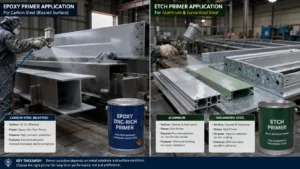
Plataformas de aço, escadas e passarelas precisam de revestimento antiderrapante quando chuva, poeira, óleo, condensação ou chapa de aço gasta criam risco de queda. Superfícies de aço também precisam de proteção contra corrosão, portanto a camada antiderrapante normalmente deve fazer parte de um sistema de primer e camada superior, em vez de ser uma camada de textura aplicada diretamente sobre metal não preparado.
Áreas industriais de aço podem incluir:
- degraus de escada;
- plataformas de acesso com corrimão;
- passarelas de apoio a estruturas de tubulação;
- docas de carregamento;
- ponte de manutenção;
- superfícies de placa xadrez;
- zones de reparo de treliça de aço.
Para plataformas de aço que também precisam de proteção contra corrosão, o revestimento antiderrapante deve estar alinhado com o sistema de revestimento da estrutura de aço em vez de ser tratado como um acabamento de piso independente.
Docas de carregamento e pisos industriais de alto tráfego
Docas de carregamento e pisos industriais de alto tráfego precisam de antiderrapante mais forte e maior resistência ao desgaste porque empilhadeiras, paletes, carrinhos e rodas de aço podem aplainar a textura da superfície. O risco não é apenas escorregamento; é a perda de textura ao longo do tempo.
Áreas de alto tráfego precisam de:
- agregado mais resistente;
- melhor fixação da camada superior;
- ligante resistente à abrasão;
- projeto de revestimento reparável;
- marcas de segurança claras;
- cronograma de inspeção de manutenção.
Se o desgaste do tráfego polir o agregado ou remover a camada texturizada, a superfície pode tornar-se lisa novamente, mesmo que o revestimento ainda esteja ligado.
Escolha o Sistema de Revestimento Certo e a Textura do Agregado
O sistema de revestimento antiderrapante adequado é escolhido pelo substrato, exposição a líquidos, carga de tráfego, exigência de textura e método de limpeza. O ligante prende o agregado, enquanto o agregado cria o perfil de tração; ambos devem atender às condições de serviço.
Sistemas de Revestimento Antiderrapante à base de Epóxi
Sistemas antiderrapantes à base de epóxi são comumente usados em concreto preparado ou aço onde adesão forte, filme de alta construção e broadcast de agregado são necessários. Eles podem ser adequados para pisos internos, áreas de maquinário, passarelas e zonas de manutenção.
Um sistema antiderrapante de epóxi pode incluir:
- primers para adesão ao substrato;
- base epóxi de alto prédio;
- agregado de broadcast;
- cobertura de trava ou camada superior;
- marcação de linha opcional ou cor de segurança.
Sistemas epóxi podem oferecer boa adesão e resistência ao desgaste, mas a exposição UV externa pode causar desbaste (chalk) a menos que protegido por uma camada superior adequada.
Revestimento de poliuretano antideslizante para UV e intempéries
Revestimento de poliuretano antiderrapante é útil quando o projeto precisa de textura além de melhor resistência aos UV, retenção de cor ou desempenho em intempéries. Uma camada superior de poliuretano pode ser usada para travar o agregado e proteger o acabamento em áreas externas selecionadas ou semi-exteriores.
Um revestimento poliuretano antiderrapante pode ser considerado para:
- platôs exteriores;
- passarelas externas;
- rotas de acesso ao equipamento;
- marcadores de cor de segurança;
- zonas de respingos químicos moderados;
- áreas que exigem melhor brilho ou retenção de cor.
Para projetos em que a química de PU faz parte do sistema selecionado, sistemas de revestimento anticorrosivo de poliuretano pode apoiar a seleção da camada superior. a textura antiderrapante ainda precisa ser especificada separadamente.
Tipo de agregado e tamanho de partícula
O tipo de agregado e o tamanho de partícula controlam a textura, durabilidade, facilidade de limpeza e conforto de uma superfície industrial antiderrapante. Agregado fino é mais fácil de limpar, mas pode oferecer menos tração em áreas oleosas ou molhadas. Agregado graúdo melhora a aderência, mas pode ser mais difícil de limpar e mais exposto ao desgaste pelo tráfego.
Opções comuns de agregado incluem:
- areia de sílica;
- óxido de alumínio;
- agregado não metálico;
- quartzo graduado;
- partículas de desgaste de especialidade.
O agregado deve ser selecionado de acordo com:
- tráfego de pedestres ou tráfego de veículos;
- condições úmidas, oleosas ou secas;
- método de limpeza;
- exposição química;
- textura necessária;
- uso interno ou externo;
- ciclo de manutenção esperado.
Para muitos projetos, uma textura média é mais prática do que uma superfície extremamente grossa, pois equilibra a tração com a limpeza.
Combinar Revestimento Antiderrapante com a Área, o Líquido e o Risco de Tráfego
O revestimento antiderrapante industrial deve ser alinhado à área e à exposição, porque pisos úmidos, zonas de maquinaria oleosas, docas de carga e plataformas de aço não falham da mesma forma. Uma boa tabela de seleção ajuda a evitar especificar a mesma textura em todos os lugares.
| Área industrial | Risco principal de derrapagem | Direção do Revestimento / Textura | Principal Preocupação de Manutenção |
|---|---|---|---|
| Piso úmido / área de lavagem | Filme de água, algas, detergente | Sistema epóxi de textura média ou PU | Limpeza sem polir a superfície |
| Zona de máquina oleosa | Filme de óleo e vazamentos hidráulicos | Aresta grossa com ligante compatível | Remoção de óleo e retenção de agregado |
| Plataforma de aço / degrau de escada | Chuva, poeira, placa de aço desgastada | Revestimento antiderrapante para aço com sistema de primer | Corrosão sob o revestimento e desgaste das bordas |
| Doca de carregamento | Operador de empilhadeira e abrasão de palete | Sistema de agregado de alto desgaste | Desgaste de tráfego e danos por impacto |
| Piso de processamento químico | SALPICAR de produtos químicos e caminhar molhado | Revestimento texturizado resistente a químicos | Compatibilidade com químicos e limpadores |
| Caminho externo | Chuva, UV, ciclos de temperatura | Acabamento superior estável a UV sobre camada texturizada | Intemperismo e retenção de textura |
Caso o projeto exija resistência de escorregamento mensurável, métodos de teste podem ser adicionados à especificação. ASTM E303 cobre a medição de propriedades de atrito de superfície usando o Testador de Pêndulo Britânico, mas os critérios de aceitação devem ser definidos pelo padrão do projeto, exigência do proprietário ou regulamentação local de segurança.
Evite falhas comuns de revestimento antirrisco industrial
Revestimentos industriais antirrisco falham quando a textura, agregado, ligante, preparação da superfície ou manutenção não correspondem às condições do local. O revestimento pode permanecer visível, mas perder a resistência ao deslizamento se o agregado se desprender, desgastar-se de forma lisa ou ficar preenchido com óleo e sujeira.
Perda de agregado e má fixação da camada superior
A perda de agregado ocorre quando as partículas texturizadas não estão corretamente embutidas ou travadas no sistema de revestimento. Se o agregado ficar muito alto acima do ligante ou se a camada de trava for muito fina, o tráfego pode deslocar as partículas.
Causas comuns incluem:
- espessura insuficiente da camada base;
- tempo de espalhamento incorreto;
- incompatível agregado;
- cobertura de camada de acabimento inferior;
- tráfego intenso antes da cura completa;
- preparação de superfície abaixo do sistema ruim.
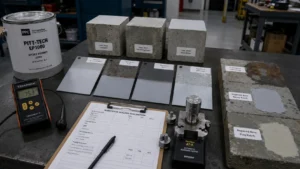
A retenção de agregado deve ser verificada durante mock-up ou aplicação inicial, especialmente para cais de carregamento e plataformas de aço.
Pontos suaves causados pelo desgaste do tráfego
Pontas suaves formam-se quando o tráfego de pedestres, movimentação de empilhadeira, arrasto de paletes ou equipamentos de limpeza desgastam a superfície texturizada. Essas áreas costumam aparecer ao longo de caminhos de caminhada, pontos de curva, beiradas de degraus e áreas de carregamento.
Para reduzir esse risco, a especificação deve considerar:
- agregado mais duro;
- cobertura de trava mais espessa;
- sistema de textura reparável;
- intervalos de inspeção definidos;
- padrão de tráfego;
- acesso à manutenção.
Um revestimento antiderrapante deve ser tratado como uma superfície de segurança passível de manutenção, não como uma textura permanente de um único momento.
Má adesão em chapa de aço ou revestimento antigo do piso
A má adesão pode fazer com que o revestimento antiderrapante se descole da chapa de aço, concreto ou de um revestimento antigo do piso. A textura não resolve problemas de adesão; pode até aumentar o esforço sobre o revestimento se a liga for fraca.
Antes da aplicação, verifique:
- preparação da superfície de aço;
- solidez do revestimento antigo;
- contaminação por óleo e gordura;
- contaminação por sal solúvel;
- condição de umidade no concreto;
- poeira após a moagem ou jateamento;
- compatibilidade do primer.
Quando pisos antigos são reparados, o empreiteiro deve testar se o revestimento existente pode suportar uma camada texturizada adicional.
Textura muito áspera para limpeza
Textura que é muito áspera pode prender óleos, lodo, pós ou resíduo químico. Este é um problema sério em áreas industriais de água residuais, químicas, de maquinaria e adjacentes à indústria de alimentos, onde a limpeza faz parte da estratégia de segurança.
Antes de escolher uma textura áspera, confirme:
- frequência de limpeza;
- produtos químicos de limpeza;
- método de lavagem com pressão;
- drenagem;
- tipo de resíduos;
- requisitos de higiene ou contaminação;
- se carrinhos ou empilhadeiras passarão sobre a superfície.
Uma superfície com excelente aderência no primeiro dia pode tornar-se insegura se não puder ser limpa adequadamente.
Especificar Revestimentos Antiderrapantes para Placa de Aço e Plataforma Corretamente
Revestimento antiderrapante para placa de aço deve ser especificado como um sistema combinado de adesão, proteção contra corrosão e textura. Plataformas de aço e degraus costumam estar expostos tanto ao risco de corrosão quanto ao desgaste mecânico, portanto a textura sozinha não basta.
Revestimento Antiderrapante para Placa de Aço
O revestimento antiderrapante para placa de aço normalmente deve incluir preparação da superfície, primer compatível, camada de revestimento texturizado e camada de aumento de aderência ou camada de selagem. A placa de aço pode estar lisa, oleosa, enferrujada, galvanizada ou previamente revestida, e cada condição altera a rota de aplicação.
Verificações importantes incluem:
- aço nu ou aço galvanizado;
- placa lisa ou placa xadrez;
- condição de revestimento existente;
- nível de corrosão;
- requisito de perfil;
- tipo de primer;
- textura agregada;
- risco de desgaste na borda;
- exposição à chuva, óleo ou produtos químicos.
Revestimento antiderrapante para aço não deve ser aplicado sobre ferrugem solta, óleo ou revestimento antigo mal aderido.
Marca de borda, degraus e rotas de acesso
A marcação de borda e o design de cores de segurança devem ser incluídos quando o revestimento antiderrapante for utilizado em degraus, plataformas e rotas de acesso. Bordas amarelas, linhas de passagem e zonas de perigo ajudam os trabalhadores a identificar mudanças de elevação e caminhos seguros.
Áreas comuns incluem:
- batente de degrau;
- bordas de plataformas;
- rotas de acesso;
- limites da zona de carregamento;
- rotas de manutenção de máquinas;
- passarelas de emergência.
O sistema de marcação também deve resistir ao tráfego e à limpeza. Uma cor vibrante que se desgaste rapidamente pode não sustentar a segurança a longo prazo.
Proteção contra corrosão mais resistência ao deslizamento
Projetos de plataformas de aço costumam precisar de proteção contra corrosão mais resistência ao deslizamento. O primer e a camada base protegem o aço, enquanto o agregado e a camada superior criam a textura de caminhada.
Um sistema prático pode incluir:
- jateamento abrasivo ou preparação mecânica;
- primer anticorrosivo;
- camada texturizada de epoxy ou PU;
- dispersão de agregado;
- trava da camada superior;
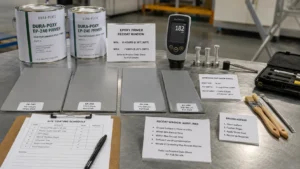
- inspeção de DFT e textura;
- plano de reparo para áreas gastas.
Se o projeto for ao ar livre ou próximo a exposições químicas, o sistema completo deve ser verificado, não apenas o acabamento antiderrapante.
Preparar dados de RFQ para um projeto de revestimento antiderrapante industrial
Um RFQ de revestimento antiderrapante industrial deve incluir a área de trabalho, substrato, exposição a líquidos, tipo de tráfego, método de limpeza, textura requerida e janela de indisponibilidade. Sem esses dados, um fornecedor pode orçar um revestimento, mas não pode recomendar com confiabilidade a textura e o sistema corretos.
Dados do projeto de que o fabricante precisa
O fabricante precisa de informações práticas do local para selecionar o aglutinante, o agregado, a textura e o método de aplicação.
Dados úteis de RFQ incluem:
- piso, plataforma, escada, rampa ou passarela;
- substrato: concreto, placa de aço, aço galvanizado ou revestimento existente;
- local interno ou externo;
- exposição a água, óleo, poeira ou produtos químicos;
- trânsito de pedestres, carrinhos ou tráfego de empilhadeira;
- método de limpeza;
- limpadores químicos ou detergentes;
- cor obrigatória ou marca de segurança;
- reparo ou nova construção;
- área de revestimento;
- janela de inatividade;
- exposição à corrosão;
- fotos, desenhos ou layout do site.
Para rotas de acesso ao equipamento e plataformas de maquinaria, sistemas de revestimento de maquinaria e equipamentos também pode ser relevante quando a área antiderrapante se conecta a estruturas de equipamentos revestidos.
Quando HUILI Pode Recomendar Outro Sistema
A HUILI pode recomendar outro sistema de revestimento quando a área tem alta exposição química, desgaste intenso de empilhadeira, corrosão externa severa, umidade ativa do concreto, imersão ou condições de serviço quente. Nesses casos, a solução correta pode exigir revestimento resistente a químicos, epóxi de alto peso/Build, topcoat de PU ou outro sistema especializado em vez de um acabamento antiderrapante simples.
Recomendações alternativas podem incluir:
- sistema antiderrapante de epóxi de alto peso/Build;
- topcoat de PU sobre base texturizada;
- revestimento texturizado resistente a químicos;
- primer de estrutura de aço mais acabamento antiderrapante;
- sistema de revestimento para áreas úmidas;
- procedimento de reparo e retratação para pisos antigos.
A recomendação mais segura depende das condições do local, não apenas do nome do produto.
FAQ
Qual é o melhor revestimento industrial antiderrapante para pisos molhados?
O melhor revestimento industrial antiderrapante para pisos molhados costuma ser um sistema de epóxi ou poliuretano texturizado, compatível com a exposição à água, método de limpeza, nível de tráfego e condição do substrato. Textura de agregado médio é frequentemente prática, pois melhora a tração, mantendo-se mais fácil de limpar do que superfícies muito ásperas.
O revestimento antiderrapante pode ser aplicado em placa de aço?
Sim, revestimento antiderrapante pode ser aplicado em placa de aço se o aço estiver adequadamente limpo, perfilado, primado e compatível com o sistema de coating. Para plataformas de aço externas ou degraus, o sistema deve fornecer proteção contra corrosão e textura antiderrapante.
Qual agregado é utilizado em revestimento antiderrapante industrial?
O revestimento antiderrapante industrial pode usar areia de sílica, óxido de alumínio, quartzo graduado ou outro agregado não metálico, dependendo do tráfego, exposição química, método de limpeza e textura requerida. O óxido de alumínio é frequentemente escolhido quando é necessária maior resistência ao desgaste.
O revestimento antiderrapante de poliuretano é adequado para uso externo?
O revestimento antiderrapante de poliuretano pode ser adequado para uso externo quando o sistema é projetado para exposição a UV, intempéries, movimento de substrato, DFT e retenção de agregado. Para condições severas C4/C5, costeiras ou exposição química, o primer e o revestimento intermediário também devem ser revistos.
Por que os revestimentos industriais antiaderentes perdem textura com o tempo?
Os revestimentos antiaderentes industriais perdem textura quando desgaste de tráfego, movimento de empilhadeira, atrito durante limpeza, falha de fixação do agregado, ataque químico ou cobertura insuficiente de topcoat remove ou suaviza a superfície texturizada. Áreas de alto desgaste devem ser inspecionadas e reparadas antes que a superfície se torne escorregadia.
Solicitar uma Recomendação de Revestimento Antiderrapante Industrial
O revestimento antiderrapante industrial deve ser escolhido pelo área de trabalho, substrato, exposição a líquidos, carga de tráfego, método de limpeza, textura exigida e plano de manutenção. A HUILI pode revisar se o seu projeto precisa de textura à base de epóxi, revestimento antiderrapante de poliuretano, proteção de plataformas de aço ou outro sistema especial.
Para uma recomendação mais precisa, envie:
- detalhes de piso, plataforma, escada, rampa ou passarela;
- tipo de substrato;
- exposição interna ou externa;
- condições úmidas, oleosas, empoeiradas ou químicas;
- tráfego de pedestres, tráfego de empilhadeira ou movimentação de paletes;
- método de limpeza e produtos de limpeza;
- nível de textura desejado;
- requisito de cor ou marcação de segurança;
- exposição à corrosão se houver aço envolvido;
- escopo de reparo ou nova construção;
- janela de inatividade;
- desenhos, fotos ou tamanho da área.
Envie seus dados através da projeto de revestimento industrial antiderrapante página para que a equipe técnica possa apoiar a seleção do sistema, planejamento de textura, revisão de TDS e preparação de RFQ.