
C3 is a medium corrosivity category under ISO 12944, typically associated with urban and industrial atmospheres with moderate pollution and coastal areas with low salinity, so it is common for many general industrial steel structures rather than only severe marine assets.
This article focuses only on C3 decision-making and specification, not the full C1-CX overview, because buyers usually need to know whether a real project is truly C3 and what the coating specification should include.
- Define whether the project is genuinely C3 before writing the paint specification.
- Describe the environment, durability target, and substrate condition in the RFQ.
- Specify a full coating system, not just “c3 paint.”
- Check surface condition carefully for both new steel and maintenance repaint work.
- Ask for TDS and a system recommendation when exposure is close to the C3/C4 boundary.
What does ISO 12944 C3 mean?
ISO 12944 C3 means medium atmospheric corrosivity for steel structures.
In practical terms, C3 commonly covers urban and industrial atmospheres with moderate sulphur dioxide pollution and coastal areas with low salinity.
This matters because C3 is not a severe marine category, but it is also not a low-risk “paint anything” environment.
For steel structure projects, C3 usually requires a defined protective system linked to environment and durability, not just a generic anti-rust primer.
Typical C3 environments for steel structures
Typical C3 projects include outdoor steel in normal urban or light industrial atmospheres where corrosion stress is real but not yet at the higher level normally associated with C4.
Common examples include warehouses, workshops, light industrial frames, utility structures, and general plant steel located away from severe marine attack.
C3 can also apply to some indoor industrial areas where humidity or occasional condensation exists, but the exposure is still below the stronger stress conditions usually seen in C4 interiors such as chemical plants or swimming-pool-type environments.
That is why C3 is often the right category for many day-to-day industrial steel assets, but not automatically for every outdoor steel structure.
When a project is truly C3 and not C2 or C4
The most useful C3 decision is a boundary judgment, not a full corrosion-class lecture. A project is more likely to be truly C3 when the atmosphere is urban or light industrial, the salt influence is low, and humidity or contamination is present but not consistently aggressive.
A common mistake is treating all outdoor steel as C3 by default.
If the project is very low risk, it may not need C3-level thinking, but if industrial humidity, pollutants, or coastal influence are stronger than expected, the project may need to be upgraded toward C4.
For buyers in the Middle East, Southeast Asia, and Central Asia, this boundary issue is especially important because heat, humidity cycles, dust retention, plant emissions, and coastal salt can shift a project out of a “normal outdoor” assumption faster than the specification suggests.
What a practical C3 coating system usually includes
ISO 12944-5 describes common protective paint systems for steel structures and gives guidance for selecting systems by environment, surface preparation, and expected durability ISO 12944-5.
That means a practical C3 specification should describe a system build, not just a product name.
Primer role
The primer provides initial adhesion to the steel and the first level of corrosion control.
Depending on durability target and substrate condition, the primer may be followed by additional build coats rather than left to do all the work alone.
Intermediate or build coat role
An intermediate coat is often added when the project needs higher durability, more barrier build, or stronger overall film robustness.
This is especially useful when the structure is outdoors, has a longer maintenance cycle, or will face repeated humidity exposure.
Topcoat role
A topcoat is typically used where outdoor weathering, colour retention, and appearance matter. ISO 12944-5 guidance is commonly used to match topcoat choice to environmental exposure and durability needs.
For broader system logic, see our steel structure coating system guide.
The key decision rule is simple: do not write “anti-rust paint” as if C3 were a single-product decision. A useful C3 paint specification should define the full system build, expected durability, and where appearance retention matters.
Surface preparation for C3 coating projects
C3 is lower than C4 or C5, but surface preparation still has a direct effect on service life.
New steel and maintenance repaint work should not be treated the same, because contamination, old coating condition, and adhesion risk change the preparation strategy.
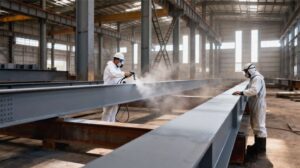
For new steel, buyers should confirm cleanliness, mill scale removal method, surface condition, and whether blast cleaning is required by the selected system.
For maintenance repaint, the condition of the old coating, edge corrosion, underfilm rust, and repair area preparation become just as important as the new topcoat choice.
Where higher-performance preparation is required, ISO 8501-1 and related project specifications are commonly used as references for blast-cleaning grades, and Sa 2½ is a widely recognized reference point for very thorough blast cleaning in more demanding systems ISO 8501-1 PDF.
If your team needs a practical preparation reference, review our surface preparation guide for industrial coatings.
C3 paint specification checklist
This is the commercial core of the page, because a clear specification produces better quotations and fewer technical revisions. ISO 12944 system selection is tied to both corrosivity category and durability, so “C3” alone is not enough information for procurement.
Include these points in a practical C3 paint specification:
- Environment description, including urban, light industrial, or low-salinity coastal exposure.
- Durability target, because coating selection depends on both category and expected service interval.
- Substrate condition, including new steel or maintenance repaint status.
- Surface preparation level and who is responsible for it.
- Number of coats and target total DFT range.
- Whether outdoor UV resistance, colour retention, or appearance retention matters.
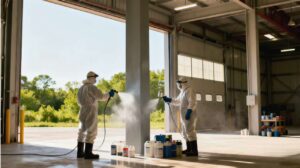
A strong RFQ should also mention whether the steel is shop-coated, field-coated, or partially repaired on site, because that changes application control and documentation needs.
Common mistakes when specifying C3 coatings
The first mistake is writing every normal industrial environment as C3 without checking whether the project is actually lower risk or already drifting toward C4.
The second mistake is writing only “c3 paint” without stating durability target, full system build, and substrate condition.
Another frequent problem is ignoring old coating condition in maintenance repaint projects. A decent topcoat will not solve adhesion failure, hidden corrosion, or weak surface preparation.
A further mistake is assuming that because C3 is not a severe marine category, a very basic paint can be used without real specification discipline.
Quality and inspection checklist
Before approval or release, check:
- Surface cleanliness and contamination level.
- Condition of old coating if it is maintenance repaint work.
- Target DFT range across flats, edges, welds, and repair areas.
- Recoat interval range between coats according to the selected system documents.
- Visible defects such as missed areas, poor touch-up, or weak edge coverage.
FAQ
What does ISO 12944 C3 mean?
ISO 12944 C3 means medium atmospheric corrosivity for steel structures.
It is commonly associated with urban and industrial atmospheres with moderate pollution and coastal areas with low salinity.
What is a typical C3 environment?
Typical C3 environments include outdoor steel in urban or light industrial settings and some indoor industrial areas with humidity or occasional condensation, provided the exposure is not severe enough to move into C4.
Is C3 suitable for outdoor steel structures?
Yes, many outdoor steel structures are genuinely C3, especially in urban and light industrial atmospheres with moderate corrosion stress.
But not every outdoor steel structure is automatically C3, because low-risk rural exposure may be lower and stronger industrial or coastal stress may require C4 thinking.
What should a C3 paint specification include?
A useful C3 paint specification should include the environment description, durability target, substrate condition, surface preparation level, number of coats, total DFT range, and any UV or appearance-retention requirement.
When should a project be upgraded from C3 to C4?
A project should be reviewed toward C4 when industrial humidity, pollutants, condensation, or coastal salt influence are stronger than normal C3 conditions.
This boundary check matters most when the environment looks ordinary on paper but behaves more aggressively in service.
Technical Note
Final coating selection depends on environment classification, durability target, steel condition, surface preparation quality, application control, and full system build. Confirm the selected system against the latest TDS, relevant standards, and approved project specification before purchase or application.
CTA
Send your project environment, durability target, and steel condition to get a suitable C3 coating system recommendation and TDS package from contact our technical team.

 Chinese