
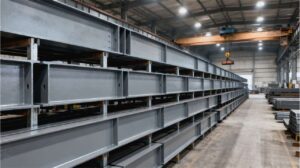
Steel structures are widely used in oil and gas, infrastructure, marine engineering, power, and general industrial plants. When exposed to moisture, oxygen, salts, or aggressive chemicals, steel can corrode quickly and create structural risk, safety issues, and rising maintenance cost.
That is why anti corrosion coating for steel is not just a paint choice but a system decision. In practice, buyers need to understand coating type, material, surface preparation, and service environment before they can ask for the right TDS or RFQ.
- Match the coating type to the environment, not just the asset name.
- Specify a full coating system instead of a single “anti-rust paint.”
- Check surface preparation before comparing product prices.
- Use DFT and maintenance planning as part of system selection.
- Send exposure details and substrate condition with the RFQ.
What is anti corrosion coating for steel?
Anti corrosion coating for steel refers to protective coatings designed to reduce rust and corrosion by separating the steel surface from environmental exposure. In industrial use, these coatings usually protect steel through barrier protection, cathodic protection, chemical resistance, or a combination of all three.
In real projects, steel corrosion coating is usually applied as a multi-layer system rather than a single coat. ISO 12944-5 is one of the main standards used to describe protective paint systems for steel structures, which is why system build matters more than product name alone ISO 12944-5.
How anti corrosion coatings protect steel
Barrier protection
Barrier coatings form a dense film that slows the entry of water, oxygen, and salts. Epoxy coatings are widely used for this role because they combine strong adhesion with good corrosion and chemical resistance.
Cathodic protection
Zinc-rich coatings protect steel differently. The zinc acts sacrificially, corroding before the steel and helping protect damaged or exposed areas around small defects.
Chemical resistance
Some environments need more than moisture protection. In chemical plants, tank farms, and process areas, higher chemical resistance is often provided by materials such as novolac epoxy, which are selected for more aggressive service.
Major types of anti corrosion coatings for steel
The right protective coating for steel depends on exposure, durability target, and maintenance plan. Buyers should compare the whole system, not just the topcoat or primer.
| Coating type | Main strengths | Typical use | Buyer note |
|---|---|---|---|
| Epoxy coatings | Strong adhesion, barrier protection, chemical resistance | Steel structures, tanks, industrial equipment | Often used as primer or intermediate coat |
| Zinc-rich coatings | Sacrificial protection, strong corrosion resistance | Bridges, offshore steel, heavy structural steel | Works best with proper surface prep and full system design |
| Polyurethane coatings | UV resistance, weather durability, color retention | Outdoor steel structures, buildings, exposed plant steel | Common as topcoat rather than heavy-build barrier layer |
| Bituminous coatings | Water resistance, buried-service protection | Pipelines, buried steel, below-grade structures | Good fit where sunlight resistance is less important |
| Fluorocarbon coatings | Long-term weathering and appearance durability | Premium infrastructure, coastal architecture, exposed steel | Usually selected when retention of finish matters |
Epoxy coatings
Epoxy is one of the most widely used corrosion resistant coatings for steel because it bonds well to prepared steel and provides strong barrier performance. It is commonly used in plant steel, storage tanks, equipment supports, and fabricated structures.
Zinc-rich coatings
Zinc-rich systems are often chosen where long-term corrosion control is critical. They are especially common on bridges, offshore structures, and major steel frames because they add sacrificial protection to the system.
Polyurethane coatings
Polyurethane coatings are valued for UV stability and weather durability. They are frequently used as finish coats on outdoor structures where gloss, color retention, and appearance matter.
Bituminous coatings
Bituminous coatings are practical for buried or water-exposed service where simple moisture protection is needed. They are common in pipeline and underground protection work.
Fluorocarbon coatings
Fluorocarbon systems are used when the project needs long-term weathering performance and a premium finish. They are often seen in high-end infrastructure or exposed coastal steelwork.
Typical anti corrosion coating systems for steel
A practical anti corrosion coating for steel is usually written as a system, not a single material. ISO 12944-5 is used widely in industry to guide protective paint system selection for steel structures by environment and durability ISO 12944-5.
Example system 1
- Zinc-rich primer
- Epoxy intermediate coat
- Polyurethane topcoat
This is a common system for structural steel that needs corrosion resistance, build thickness, and outdoor weather durability.
Example system 2
- Epoxy primer
- Glass flake epoxy
- Polyurethane topcoat
This system is often used when stronger barrier build and tougher service resistance are needed, especially in wet or industrial environments.
What buyers should specify
A useful specification should define:
- Number of coats
- Target DFT range
- Surface preparation level
- Whether UV resistance is needed
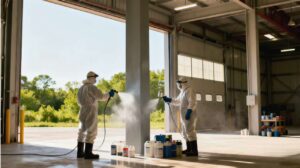
- Whether the work is shop-applied, field-applied, or maintenance repaint
For broader system logic, see our steel structure coating system guide.
Industrial applications of anti corrosion coatings
Different industries use different coating materials because the corrosion drivers are not the same.
Steel structures in industrial plants
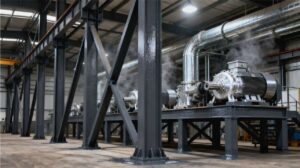
Power plants, process units, factories, and utility steel often face humidity, industrial fallout, and intermittent chemical exposure. These projects usually need balanced systems with good adhesion, barrier protection, and maintainability.
Bridges and infrastructure
Bridges and infrastructure steel often face atmospheric corrosion, wet-dry cycling, and in some regions salt exposure. Zinc-rich plus epoxy and weather-resistant topcoat systems are common for long-life performance.
Marine and offshore structures
Marine and offshore steel faces seawater, salt-laden air, and constant humidity. These environments usually require heavier-duty systems and tighter inspection control.
Storage tanks and pipelines
Tanks and pipelines may face fuels, water, chemicals, buried service, or splash exposure. That is why corrosion coating for steel in these assets is usually selected by service condition rather than by asset category alone.
Key factors when selecting anti corrosion coatings for steel
Selection should start with exposure, not brand preference. Buyers in the Middle East, Southeast Asia, and Central Asia should check heat, UV, humidity, salinity, condensation, industrial contamination, and maintenance access before asking for a recommendation.
Environmental conditions
Match the system to marine, industrial, chemical, buried, or general atmospheric exposure. A coating that performs well on indoor plant steel may not be the right answer for coastal structures or chemical service.
Surface preparation
Surface preparation is one of the biggest performance factors in any steel corrosion coating system. ISO 8501-1 is a common reference for blast-cleaned steel surfaces, and Sa 2½ is widely used as a reference level for thorough preparation in higher-performance coating work ISO 8501-1 PDF.
Coating thickness
Typical total DFT for industrial anti-corrosion systems often falls in the 200–500 µm range, depending on system build, exposure severity, and durability target. Higher thickness alone is not a cure for weak design or poor preparation.
Maintenance requirements
Service life planning should be part of the first specification, not an afterthought. Many industrial systems are designed around maintenance expectations in the 10–25 year range, depending on environment and inspection discipline.
If you need preparation guidance before writing the spec, review our surface preparation guide for industrial coatings.
Common problems in steel corrosion coating systems
Most failures do not start with “bad paint.” They usually start with specification gaps, surface issues, or application errors.
Common failure causes
- Poor surface preparation
- Insufficient coating thickness
- Incompatible coating materials
- Improper curing conditions
- Missed edges, welds, and repair spots
- Overcoating outside the recommended window
What buyers often forget
Many RFQs describe the asset but not the real exposure. Missing details such as coastal storage, maintenance repaint over old coating, intermittent chemical splash, or on-site touch-up conditions can lead to the wrong system recommendation.
Maintenance and inspection of steel coatings
Inspection protects the value of the coating system. Without inspection, even a well-specified coating can fail early.
Inspection methods
- Visual inspection for rusting, cracking, blistering, pinholes, and damage
- DFT measurement across flats, edges, and repairs
- Adhesion testing where required
- Repair planning for spot repair or partial recoating
Repair strategy
Minor damage is often managed by spot repair if the surrounding coating is still sound. Wider breakdown usually requires broader recoating after proper surface preparation and compatibility review.
RFQ checklist
Include these points when requesting anti corrosion coating for steel:
- Asset type and service environment
- Indoor, outdoor, coastal, marine, industrial, or chemical exposure
- New steel or maintenance repaint
- Required number of coats and target DFT range
- Surface preparation standard and responsibility
- Need for UV resistance or appearance retention
- Expected maintenance cycle
- Whether you need TDS, method statement, or system recommendation
A better RFQ usually gets a better quotation. It also reduces back-and-forth on coating type, film build, and application method.
FAQ
What is the best anti corrosion coating for steel?
There is no single best coating for every project. The right choice depends on environment, substrate condition, durability target, and whether the asset needs barrier protection, sacrificial protection, chemical resistance, or all three.
How long do steel anti corrosion coatings last?
Service life varies by system design, surface preparation, environment, and maintenance plan. In many industrial specifications, buyers plan systems around broad maintenance ranges such as 10–25 years rather than expecting one fixed lifespan.
What coating prevents rust on steel?
Several coatings help prevent rust on steel, including epoxy, zinc-rich, polyurethane-based systems, bituminous coatings, and chemical-resistant epoxies. The correct answer depends on whether the steel is exposed to atmosphere, UV, water, chemicals, or buried service.
Are epoxy coatings good for steel corrosion protection?
Yes. Epoxy coatings are widely used because they offer strong adhesion, barrier protection, and good chemical resistance, especially in multi-coat industrial systems.
What thickness is required for anti corrosion coatings on steel?
It depends on the coating system and service environment. Many practical industrial systems fall within a total DFT range of about 200–500 µm, but the correct value should come from the approved system specification.
What industries use corrosion resistant coatings for steel?
Common sectors include oil and gas, industrial manufacturing, infrastructure, power, marine, offshore, storage tanks, and pipelines. Any steel asset exposed to corrosion risk can require a defined protective system.
Technical Note
Final system selection depends on service environment, substrate condition, surface preparation quality, coating compatibility, application control, and inspection scope. Always confirm the selected product and system against the latest TDS, relevant standards, and approved project specification before purchase or application.
CTA
Send your service environment, steel condition, and target durability to contact our technical team for a suitable anti corrosion coating for steel recommendation and TDS package.

 Chinese