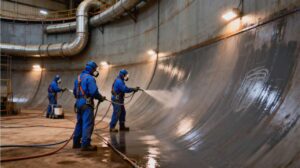
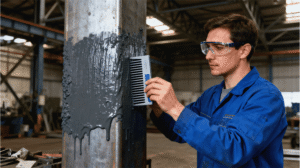
A steel structure coating system only performs as designed when surface preparation, application conditions, and inspection records are strictly controlled. For industrial anti-corrosion projects, a clear inspection checklist shortens supplier evaluation, reduces rework risk, and ensures long-term protection. HUILI provides not just coatings, but the technical guidance needed to apply them correctly.
1) Pre-job checklist (Align before you blast)
Before any blasting or painting starts, alignment between owner, contractor, and coating supplier is critical to avoid disputes later.
-
Scope Check: Confirm if the project is new fabrication (easier control) or maintenance repaint (needs compatibility checks).
-
Exposure Confirmation: Is the site indoor, coastal (salt risk), or chemical (industrial fumes)? This defines the system’s “pass/fail” criteria.
-
Documents: Ensure you have the latest TDS (Technical Data Sheet), SDS (Safety Data Sheet), and application guide on site.
-
Inspection Plan: Agree on who measures, what tools (DFT gauge type), and frequency of checks (e.g., SSPC-PA2).
2) Surface preparation inspection (The #1 failure point)
Most early coating failures, such as peeling or underfilm corrosion, trace back to poor surface preparation. You cannot inspect quality “into” the job; the surface must be right before the gun trigger is pulled.
What to inspect
-
Cleanliness: Check for oil/grease (black light or water break test), dust (tape test), and visible rust.
-
Surface Profile: For new steel, verify the anchor profile (e.g., 50-75 microns) matches the primer’s requirement.
-
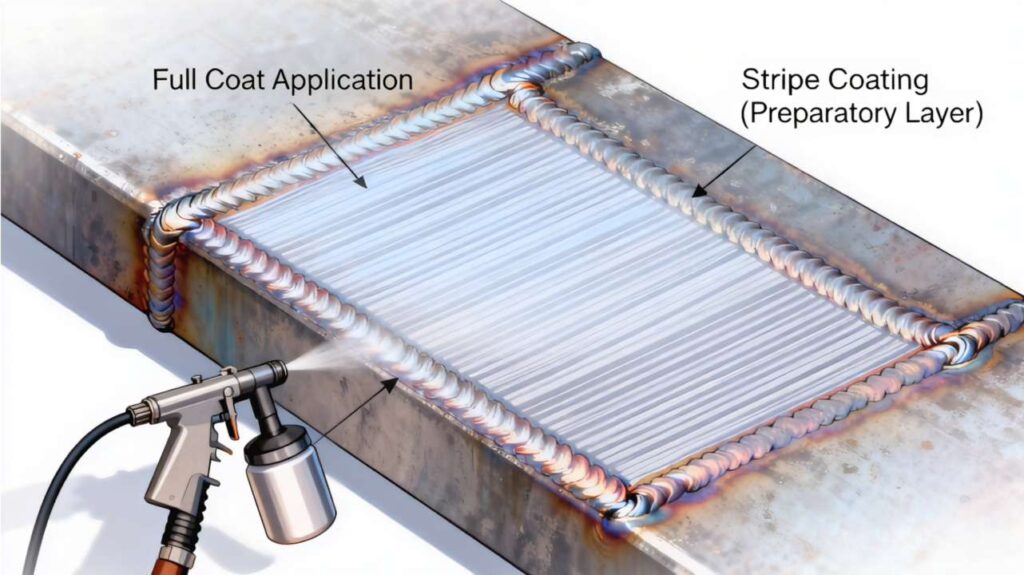
Sharp Edges: ensure edges are rounded (radius > 2mm) or stripe-coated, as coatings pull away from sharp corners.
3) Environmental conditions (Don’t paint in the rain)
Even the correct paint fails if applied when the steel is wet or too cold.
Record these at every shift:
-
Ambient temperature
-
Relative humidity (usually < 85%)
-
Substrate temperature (must be at least 3°C above dew point to prevent condensation)
If conditions change sharply (e.g., morning dew or midday heat), stop work and re-check.
4) Mixing and induction (2K coatings control)
For two-component (2K) epoxy or polyurethane systems, defects often come from mixing errors.
Inspection actions:
-
Ratio: Confirm Part A and Part B are mixed in the exact ratio (by volume or weight as per TDS).
-
Induction Time: Some epoxies need 15-30 mins “induction” after mixing before spraying.
-
Pot Life: Discard mixed paint once the pot life is exceeded; do not add thinner to extend it.
5) Application checks: WFT & DFT control
Thickness control is central to corrosion protection. Too thin = early rust; too thick = cracking or solvent entrapment.
During application (WFT)
-
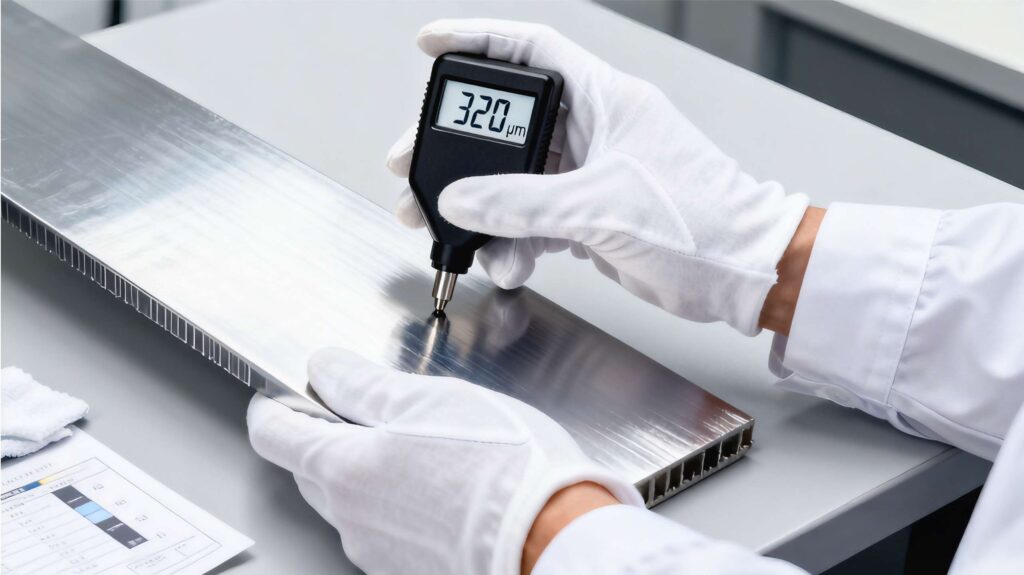
Use a Wet Film Thickness (WFT) gauge immediately after spraying. This allows the painter to adjust technique instantly.
After curing (DFT)
-
Measure Dry Film Thickness (DFT) after curing.
-
Take multiple readings: The “80-20 rule” (e.g., SSPC-PA2) often applies—no reading below 80% of specified DFT.
-
Pay special attention to bolts, welds, and complex geometries where coverage is often thin.
6) Recoat interval control (Avoid peeling)
Many delamination cases happen when the next coat is applied:
-
Too early: Solvent entrapment causing blistering.
-
Too late: The surface becomes too hard/slick for the next coat to stick (especially epoxies).
Checklist:
-
Record “Time of Application” for Coat 1.
-
Calculate “Ready to Recoat” time based on current temperature (colder = longer wait).
-
If the maximum window is exceeded, abrade/roughen the surface before applying the next coat.
Go to Polyurethane Anti-Corrosion Coatings
7) Common defects and quick diagnosis
Use this to identify issues early during site walkthroughs.
-
Peeling: Poor surface prep (oil/dust) or exceeded recoat window.
-
Blistering: Solvents trapped (recoated too soon) or salts left on the surface (osmosis).
-
Pinholes: Air trapped in the coating, often due to spraying too fast or surface porosity.
-
Chalking: Using an epoxy topcoat outdoors (not UV stable); switch to Polyurethane.
8) Touch-up & maintenance repaint guide
Small damage can become rapid corrosion if not repaired correctly.
Procedure:
-
Clean: Remove loose rust/paint to St 2/3 (power tool).
-
Feather: Sand the edges of the surrounding good paint.
-
Patch Prime: Apply surface-tolerant epoxy primer to bare steel.
-
Finish: Apply topcoat to match the system.
9) RFQ Checklist (Get the right system)
If you are requesting a coating supply for a project, provide these details to get an accurate technical proposal:
-
Project Location: Middle East / Southeast Asia / Central Asia (defines climate).
-
Structure Type: Pipe rack, tank, walkway, etc.
-
Condition: New steel or maintenance repaint?
-
Surface Prep: Blasting (Sa 2.5) or Power Tool (St 3)?
-
Required Docs: TDS, SDS, COA, Inspection Plan?
Contact Us
We would love to speak with you.
Feel free to reach out using the below details.