Galvanized coating protects steel through a zinc layer, but it is not the only zinc-based protection route for industrial steel projects. Depending on fabrication method, steel size, exposure environment, repair access, color requirement, and maintenance target, buyers may need hot-dip galvanizing, zinc-rich primer, or a duplex coating system.
For EPC contractors, steel fabricators, infrastructure buyers, maintenance engineers, procurement managers, and coating distributors, the key decision is not simply “do we need zinc?” The better question is: which zinc protection route fits this steel asset and service environment?
This guide explains the difference between galvanized coating, zinc-rich coating, and duplex coating systems. It also covers galvanised steel coating, white rust, passivation, surface preparation, and RFQ data needed before selecting a system.
Galvanized Coating Protects Steel with Zinc — But It Is Not the Only Zinc Option
Galvanized coating usually refers to a zinc layer applied to steel, commonly through hot-dip galvanizing. The zinc layer protects steel by acting as a sacrificial layer, meaning zinc corrodes preferentially and helps protect the steel underneath.
This is different from ordinary barrier coating. A normal coating blocks water, oxygen, and corrosive ions from reaching the steel. Zinc protection adds a sacrificial mechanism. That is why galvanized coating, zinc-rich primer, and duplex coating systems need to be compared as different protection routes, not just different product names.
What Galvanized Coating Means in Industrial Steel Projects
In industrial steel projects, galvanized coating often means hot-dip galvanizing on fabricated steel items such as frames, platforms, brackets, bolts, guards, small steel parts, fencing, and infrastructure components. The steel is coated with zinc before installation, and the zinc layer provides corrosion protection.
Galvanized coating can be useful when steel parts are suitable for the galvanizing process, when the size and geometry fit the process limits, and when the project wants long-term zinc protection without relying only on a liquid coating system.
However, hot-dip galvanizing is not always practical for every steel asset. Large steel structures, already-installed steel, welded assemblies, repair areas, or site-applied systems may require zinc-rich primer or another coating route instead.
Why Zinc Protection Is Different from Ordinary Coating
Zinc protection is different from ordinary coating because zinc can provide sacrificial protection to steel. When the zinc layer or zinc-rich primer is damaged, nearby zinc may still help protect exposed steel to some degree, depending on the system and damage condition.
This does not mean zinc systems are maintenance-free. Zinc layers can be consumed over time, damaged during fabrication, affected by chemical exposure, or covered with white rust. Zinc-rich primer also depends on proper steel surface preparation and compatible topcoats.
Choose Between Hot-Dip Galvanizing, Zinc-Rich Primer and Duplex Coating System
The best steel protection route depends on part size, fabrication stage, exposure, repair needs, coating appearance, and maintenance target. A galvanized coating, a zinc-rich primer, and a duplex coating system are not interchangeable in every project.
| Protection Route | How It Protects Steel | Best Fit | Main Limitation | Buyer Check |
|---|---|---|---|---|
| Hot-dip galvanized coating | Steel is coated with a zinc layer through galvanizing | Fabricated parts, outdoor steel items, bolts, frames | Size limits, heat distortion, repair needs | Part size, standard, zinc layer thickness |
| Zinc-rich primer | Zinc pigment in coating provides sacrificial protection | Large steel structures, site-applied systems, repair areas | Needs prepared steel and correct overcoat | Zinc content, surface preparation, DFT |
| Duplex coating system | Coating is applied over galvanized steel for extended durability | Coastal, industrial, color/UV, long-service steel | Adhesion risk on zinc surface | White rust, passivation, surface preparation |
| Epoxy + PU without zinc | Barrier and weathering protection | Lower to moderate corrosion or equipment systems | No zinc sacrificial base | Environment, design life, maintenance |
| Repair zinc coating | Local zinc-rich repair or compatible repair coating | Damaged galvanized areas, welds, cut edges | Repair quality depends on preparation | Damage size, cleanliness, repair method |
This table should be used as a decision map. The correct choice depends on whether the steel can be galvanized before installation, whether site repair is required, and whether the project needs extra color, UV, or chemical resistance.
For steel structures where a full coating system is needed, buyers can review steel structure coating systems before deciding whether galvanizing, zinc-rich primer, or a duplex system is more practical.
Galvanised Steel Coating: When Additional Coating Is Needed
Galvanised steel coating may be needed when galvanized steel requires extra weathering resistance, color control, chemical resistance, or longer durability in industrial or coastal environments. Galvanizing alone may be enough in some environments, but it may not meet every project requirement.
This section directly covers the merged keyword galvanised steel coating, including British spelling and the practical question of coating over already-galvanized steel.
When Galvanizing Alone May Be Enough
Galvanizing alone may be enough when the steel is used in a moderate environment, the zinc layer thickness is suitable, color is not important, and the project does not require special chemical, abrasion, or UV finish performance.
Examples may include some outdoor brackets, frames, small steel parts, utility steel, or infrastructure components where the primary goal is zinc corrosion protection and appearance is not a major requirement.
Even then, buyers should confirm zinc thickness, expected exposure, maintenance access, and whether cut edges or welded areas need repair.
When Duplex Coating Adds Value
A duplex coating system adds a coating layer over galvanized steel. This can improve durability, weathering, color control, UV resistance, chemical splash resistance, or appearance.
Duplex systems are often considered for:
- coastal steel;
- industrial atmospheres;
- projects requiring specific color;
- visible galvanized steel structures;
- long-maintenance-cycle assets;
- galvanized steel exposed to chemical splash or frequent cleaning;
- projects where the zinc layer needs extra barrier protection.
In a duplex system, the galvanized coating provides zinc protection, while the coating system adds barrier and weathering performance. The benefit depends on correct surface preparation and coating adhesion to the zinc surface.
When Galvanized Steel Should Not Be Coated Without Testing
Galvanized steel should not be coated without testing when the zinc surface is new, passivated, contaminated, too smooth, or covered with white rust. These conditions can reduce coating adhesion and cause peeling.
A coating that works well on carbon steel may fail on galvanized steel if the zinc surface is not prepared correctly. Before applying epoxy primer or polyurethane topcoat over galvanized steel, the surface condition must be reviewed.
Surface Preparation Controls Adhesion on Galvanized Steel
Coating galvanized steel often fails when the zinc surface is passivated, contaminated, too smooth, or covered with white rust. Surface preparation is the main difference between coating carbon steel and coating galvanized steel.
New Galvanizing and Passivation
New galvanized steel may have surface treatments or passivation layers that reduce coating adhesion. The surface can also be very smooth, giving the coating less mechanical key.
Before coating new galvanized steel, buyers should ask whether the surface requires weathering, cleaning, abrasion, sweep blasting, or another approved preparation method. The answer depends on the coating system and project specification.
White Rust and Zinc Salts
White rust is a common issue on galvanized surfaces. It appears when zinc reacts with moisture and forms white corrosion products. Coating over white rust can cause adhesion failure because the coating bonds to unstable zinc salts instead of a sound zinc surface.
White rust should be removed before coating. The surface should be clean, dry, and prepared according to the coating system requirements.
Sweep Blasting or Mechanical Abrasion
Sweep blasting or mechanical abrasion may be used to create a suitable profile on galvanized steel. The goal is to improve coating adhesion without removing too much zinc or damaging the galvanized layer.
The preparation method must be controlled. Aggressive blasting can damage the zinc layer, while insufficient preparation can leave the surface too smooth for proper bonding.
Adhesion Testing Before Full Application
Adhesion testing is recommended when coating galvanized steel, especially for new galvanizing, old galvanized surfaces, passivated zinc, white rust history, or coastal exposure. A small test area can reveal adhesion problems before the whole project is coated.
If the test fails, changing the topcoat alone will not solve the root problem. The surface preparation, primer selection, or coating system must be reviewed.
Use Epoxy Primer and Polyurethane Topcoat Carefully in Duplex Systems
A duplex coating system usually requires a compatible primer or epoxy layer over galvanized steel and a suitable topcoat for weathering, color, chemical exposure, or UV resistance. The system must be approved for zinc surfaces.
Epoxy Primer Over Galvanized Steel
Epoxy primer over galvanized steel can work when the surface is clean, properly prepared, and the primer is compatible with zinc. However, not every epoxy primer designed for carbon steel is suitable for galvanized steel.
The primer must bond to the zinc layer, tolerate the surface condition, and support the next coating layer. Buyers should confirm DFT, recoat interval, surface preparation, and topcoat compatibility in the TDS.
For primer product routing, the anti-rust and primer coating series can help buyers review available primer directions before requesting a galvanized steel system recommendation.
Polyurethane Topcoat for UV and Color Retention
Polyurethane topcoat may be used over a compatible primer or intermediate layer when galvanized steel needs UV resistance, color retention, gloss retention, and weathering performance. This is common in visible steel structures, equipment, infrastructure, and coastal steel.
The topcoat should not be applied directly over unprepared galvanized steel unless the system is specifically approved. The success of the topcoat depends on the primer and surface preparation below it.
Why Ordinary Systems May Fail on Zinc Surface
Ordinary steel coating systems may fail on galvanized steel because zinc surfaces have different adhesion behavior from carbon steel. Smooth zinc, passivation, white rust, oil, salts, or weak preparation can cause peeling.
If a project uses a duplex system, the coating supplier should review galvanized surface condition and surface preparation before recommending epoxy primer or polyurethane topcoat. The zinc-rich primer vs epoxy primer comparison can also help buyers understand how zinc-based primers differ from ordinary epoxy systems.
Repairing Damaged Galvanized Coating
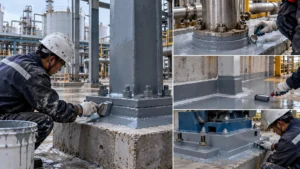
Damaged galvanized coating may need repair when cut edges, welded areas, drilled holes, handling damage, or site modifications expose bare steel. These local defects can become corrosion starting points if not repaired correctly.
Repair methods may include zinc-rich repair coatings, compatible repair primers, or project-approved coating systems. The best repair depends on damage size, surface condition, exposure environment, and whether the repaired area must match the original zinc layer or final coating appearance.
Cut Edges and Welded Areas
Cut edges and welded areas often have reduced zinc protection. Welding can burn away zinc near the weld, and cutting can expose bare steel. These areas should be cleaned and repaired before service.
The repair coating must be compatible with the surrounding galvanized surface and the final topcoat if a duplex system is used.
Field Damage During Transport and Installation
Galvanized steel can be scratched or damaged during transport, erection, bolting, or handling. Minor damage may still need repair in aggressive environments such as coastal or industrial sites.
Buyers should define repair requirements in the coating or galvanizing specification. Leaving repair decisions to the field can create inconsistent protection.
Common Galvanized Coating Selection Mistakes
Most galvanized coating mistakes come from confusing galvanizing with zinc-rich primer, coating new galvanized steel without preparation, or selecting a duplex system without checking adhesion.
Assuming Galvanized Steel Cannot Corrode
Galvanized steel can corrode when the zinc layer is consumed, damaged, contaminated, chemically attacked, or exposed to severe conditions. Cut edges, welds, scratches, and trapped moisture can also create corrosion risks.
Galvanizing improves corrosion resistance, but it does not remove the need for design, inspection, and repair planning.
Using Zinc-Rich Primer Where Hot-Dip Galvanizing Was Required
Zinc-rich primer and hot-dip galvanizing are different systems. Zinc-rich primer is applied as a coating and depends on surface preparation, zinc content, DFT, and overcoating. Hot-dip galvanizing creates a metallurgically bonded zinc layer through a galvanizing process.
A zinc-rich primer should not be used as a direct substitute for hot-dip galvanizing when the project specification requires galvanizing unless approved by the project owner or engineer.
Coating Over White Rust or Passivation
Coating over white rust, passivation, or contamination can cause adhesion failure. The coating may peel because it never bonded properly to the zinc surface.
Surface cleaning and preparation should be completed before primer application. If the galvanized surface condition is uncertain, adhesion testing is recommended.
Comparing Only Initial Price
Comparing only initial price can mislead buyers. Hot-dip galvanizing, zinc-rich primer, and duplex coating systems have different fabrication requirements, application costs, maintenance cycles, repair methods, and service lives.
A better comparison should include steel size, fabrication stage, zinc layer condition, coating system, DFT, maintenance interval, repair access, and lifecycle cost.
Prepare RFQ Data for Galvanized Coating or Zinc-Rich System Review
A useful RFQ should include steel asset type, galvanizing status, zinc layer condition, exposure environment, coating function, surface preparation method, and repair requirement. Without this information, suppliers can only give a generic answer.
Before requesting TDS, SDS, or price, prepare:
- Steel asset type: structure, frame, platform, bracket, pipe support, equipment, guardrail, or fabricated part
- New steel, already galvanized steel, or damaged galvanized steel
- Hot-dip galvanizing standard or zinc layer thickness if known
- Surface condition: new galvanizing, weathered zinc, white rust, passivation, oil, salts, or contamination
- Indoor, outdoor, coastal, industrial, chemical, or marine atmosphere exposure
- Color, UV, chemical, or appearance requirement
- Whether a duplex coating system is required
- Surface preparation method, such as cleaning, sweep blasting, abrasion, or repair preparation
- Damaged or repaired area size
- Target DFT and total coating system DFT
- Planned topcoat: epoxy, polyurethane, acrylic, or other system
- Required documents: TDS, SDS, COA, system proposal, or inspection guidance
- Project country, delivery schedule, and coating quantity
For duplex systems that need barrier and weathering performance, buyers may also review the epoxy anti-corrosion coating series and polyurethane anti-corrosion coating series before confirming the final coating route.
FAQ About Galvanized Coating
What is galvanized coating?
Galvanized coating is a zinc coating on steel, commonly produced by hot-dip galvanizing. The zinc layer protects the steel by acting as a sacrificial layer and slowing corrosion of the underlying steel.
Is galvanized coating the same as zinc-rich coating?
Galvanized coating is not the same as zinc-rich coating. Galvanized coating usually refers to a zinc layer formed through galvanizing, while zinc-rich coating is a coating that contains zinc pigment and is applied like a primer or repair coating.
Can galvanized steel be coated again?
Galvanized steel can be coated again, but the zinc surface must be properly prepared. White rust, passivation, oil, salts, and smooth zinc surfaces can reduce coating adhesion. Surface preparation and adhesion testing are recommended before full application.
What is a duplex coating system?
A duplex coating system is a coating system applied over galvanized steel. It combines zinc protection from the galvanized layer with barrier protection, weathering resistance, color control, or chemical resistance from the coating layers.
Why does coating peel from galvanized steel?
Coating peels from galvanized steel when the surface is too smooth, passivated, contaminated, covered with white rust, or not prepared correctly. Peeling can also happen if the primer is not compatible with zinc or the recoat schedule is wrong.
Should I choose hot-dip galvanizing or zinc-rich primer?
The choice depends on part size, fabrication stage, exposure environment, site application needs, repair access, project specification, and maintenance target. Hot-dip galvanizing is suitable for many fabricated steel parts, while zinc-rich primer may be more practical for large structures, repair areas, or site-applied systems.
Request Galvanized Coating System Review
The safest way to choose between galvanized coating, zinc-rich primer, and duplex coating system is to review steel asset type, zinc surface condition, exposure environment, surface preparation, topcoat plan, and maintenance target together.
For galvanized coating system review, zinc-rich primer comparison, duplex coating system advice, or RFQ support, send your steel asset type, galvanizing status, zinc layer condition, exposure environment, white rust or passivation condition, surface preparation method, DFT target, topcoat plan, and required documents through the galvanized coating system review form. HUILI can help review whether your project should use hot-dip galvanized coating, zinc-rich primer, epoxy primer, polyurethane topcoat, repair coating, or a duplex coating system.