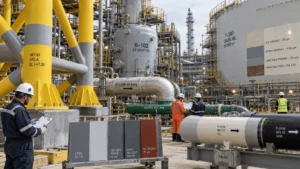
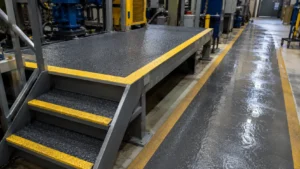
Epoxy primer undercoat should be selected by its coating layer position, surface preparation requirement, DFT target, recoat window, and topcoat compatibility. For EPC contractors, steel fabricators, machinery manufacturers, maintenance teams, procurement managers, and coating distributors, the main question is not only whether the product is “epoxy,” but what role it plays in the full coating system.
In industrial coating systems, an epoxy primer undercoat may act as an adhesion base, corrosion primer, build layer, or compatibility bridge before an epoxy intermediate coat or polyurethane topcoat. This guide explains how to separate primer, undercoat, sealer, intermediate coat, topcoat, and lining functions before requesting TDS or RFQ support.
Start with Layer Position, Not the Product Name
Epoxy primer undercoat should be understood by its position in the coating system: it may act as primer, base coat, sealer, or undercoat depending on substrate, DFT, and the next layer. The same epoxy based primer may be used differently depending on whether it is applied over prepared steel, old coating, porous substrate, or another compatible coating layer.
In industrial projects, “undercoat” is often used as a practical layer term rather than a strict resin category. It usually means the coating layer below the final topcoat, but that layer may still need primer performance, corrosion resistance, surface sealing, or barrier build.
Why “Undercoat” Is a Layer Function
“Undercoat” is a layer function because it describes where the coating sits in the system, not only what chemistry it contains. An epoxy resin primer can be called an undercoat when it is applied before a final topcoat, but it still needs to meet primer or intermediate coat requirements.
For example, on prepared steel, the epoxy layer may need to provide adhesion and corrosion resistance. Under a polyurethane topcoat, it may also need to provide a stable base for intercoat adhesion. On a maintenance surface, a recoatable epoxy primer may need to bond to old coating and support the next coat.
Why Industrial Buyers Should Check the TDS First
Industrial buyers should check the TDS first because the product data sheet defines surface preparation, DFT range, drying time, recoat window, compatible topcoats, application method, and service limitations. The word “undercoat” alone does not tell buyers whether the product can act as primer, sealer, intermediate coat, or final coat.
Before purchase, buyers should confirm whether the product is suitable for carbon steel, galvanized steel, aluminum, old coating, or concrete. They should also confirm whether polyurethane topcoat, epoxy topcoat, or another system layer can be applied over it.
Compare Primer, Undercoat, Intermediate Coat, Sealer, and Topcoat
The fastest way to avoid coating system mistakes is to separate each layer by function, not by similar names. Primer, undercoat, intermediate coat, sealer, topcoat, and lining can overlap in casual language, but they are not interchangeable in industrial coating systems.
| Layer Term | Main Function | Where It Sits in the System | Can Epoxy Primer Undercoat Fit Here? | Main Risk If Misused |
|---|---|---|---|---|
| Primer | Adhesion and corrosion base | First layer on prepared steel | Yes, if TDS allows | Poor adhesion or corrosion if wrong |
| Undercoat | Base or build layer before final coat | Between substrate/primer and topcoat | Sometimes, depending on system | Wrong DFT or incompatible topcoat |
| Intermediate coat | Barrier thickness and system build | Between primer and topcoat | Sometimes, if designed as high-build | Insufficient barrier if too thin |
| Sealer | Porosity control or surface sealing | On porous or prepared surfaces | Only if TDS supports sealer use | Trapped moisture or poor bonding |
| Topcoat | UV, weathering, color, and finish | Final exposed layer | Usually no | Chalking, weak weathering, poor finish |
| Lining | Immersion barrier | Inside tanks or liquid contact areas | No, unless lining-grade product | Softening, blistering, immersion failure |
This table shows why buyers should not select epoxy primer undercoat by name alone. The correct product depends on substrate, exposure, layer sequence, dry film thickness, and the next coating layer.
Use Epoxy Primer Undercoat When the Next Layer Needs a Stable Base
Epoxy primer undercoat is useful when the next layer needs a stable, bonded, corrosion-resistant base before epoxy intermediate coat or polyurethane topcoat. In many industrial systems, this layer helps connect surface preparation, adhesion, and topcoat performance.
Steel Structures and Equipment
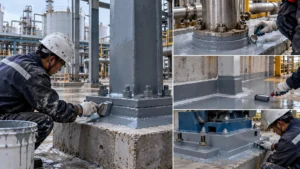
Steel structures and equipment often use metal epoxy primer or epoxy primer for metal as the base layer before intermediate or topcoat application. The undercoat must bond to prepared steel and provide enough corrosion resistance for the service environment.
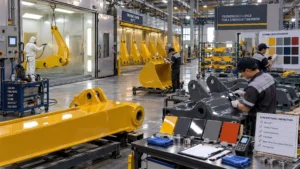
For structural steel, machinery frames, equipment housings, and fabricated steel parts, buyers should confirm surface preparation grade, DFT, drying time, and compatible topcoat. A primer undercoat that works in a workshop may still need additional inspection if the steel is transported, stored, or topcoated later at site.
Outdoor Systems with Polyurethane Topcoat
Outdoor systems often use epoxy primer undercoat below polyurethane topcoat because epoxy provides adhesion and corrosion base, while polyurethane provides UV resistance and weathering performance. This is especially common for steel structures, equipment, and infrastructure exposed to sunlight.
The epoxy primer and polyurethane topcoat system shows why layer roles should be separated. Epoxy undercoat should not be expected to keep long-term gloss and color outdoors, and polyurethane topcoat should not be expected to replace the corrosion primer below.
Maintenance Recoating and Old Coating Compatibility
Maintenance recoating may require a recoatable epoxy primer when the surface includes sound old coating, local repair areas, or mixed substrates. In this case, the undercoat must support adhesion to the existing system and provide a stable base for the next coating layer.
The buyer should confirm whether the old coating is epoxy, polyurethane, alkyd, chlorinated rubber, or another system if known. Adhesion testing, sanding, cleaning, and compatibility review may be needed before applying a new epoxy primer undercoat.
Check Compatibility Before Applying Topcoat Over Epoxy Primer Undercoat
Topcoat compatibility depends on cure, recoat window, surface cleanliness, DFT, and manufacturer-approved system data. Even if two coatings are chemically compatible, poor application timing or contamination can cause peeling, blistering, or weak intercoat adhesion.
Recoat Window and Intercoat Adhesion
Recoat window controls whether the next layer can bond properly to the epoxy primer undercoat. If the topcoat is applied too early, incomplete cure or trapped solvent may cause defects. If it is applied too late, the epoxy surface may need sanding, abrasion, or cleaning before overcoating.
Intercoat adhesion is especially important when steel is primed in a fabrication shop and topcoated later on site. Transport damage, dust, condensation, and exceeded maximum recoat interval can all reduce system performance.
DFT and Surface Profile
DFT and surface profile affect whether the epoxy primer undercoat can cover the prepared steel properly. If the film is too thin, blast profile peaks may remain underprotected. If the film is too thick, curing, solvent release, or recoat problems may occur.
Typical epoxy primer DFT may be around 40–80 μm, while high-build epoxy intermediate layers may be higher depending on the TDS. Buyers should not assume that every epoxy primer can be used as a high-build undercoat.
Surface Cleanliness Before Topcoat
Surface cleanliness before topcoat is critical because dust, oil, soluble salts, moisture, and amine blush can reduce bonding between layers. A clean and cured epoxy primer undercoat gives the next layer a better chance of forming a durable system.
Before applying topcoat, the applicator should check whether the surface is clean, dry, within the recoat window, and free from contamination. If the surface has been exposed for too long, light abrasion or cleaning may be required according to the TDS.
Avoid Misusing Epoxy Primer Undercoat as a Final Coat or Lining
Epoxy primer undercoat should not be used as a final weathering coat or tank lining unless the product is specifically designed for that service. Undercoat language can be misleading when buyers assume that one epoxy layer can replace the full coating system.
Why It Is Usually Not a Final Outdoor Topcoat
Epoxy primer undercoat is usually not a final outdoor topcoat because epoxy can chalk, fade, or lose gloss under UV exposure. It may still protect the steel as a base layer, but outdoor appearance and weathering usually require a compatible polyurethane topcoat.
For exposed steel, the final layer should be selected by UV resistance, gloss retention, color retention, and weathering demand. The polyurethane anti-corrosion coating series can be reviewed when the system needs an outdoor final finish.
Why It Is Not Automatically a Tank Lining
Epoxy primer undercoat is not automatically a tank lining because immersion service requires different performance. Tank linings may need higher DFT, holiday detection, full cure, chemical compatibility, and resistance to stored liquids.
A normal epoxy primer undercoat may soften, blister, or fail in immersion if it is not designed for liquid contact. If the project involves internal tank service, buyers should select a lining-grade system rather than assuming primer undercoat is enough.
Why Color Does Not Define Performance
Color does not define performance because red, grey, white, or black primer colors do not prove corrosion resistance, DFT capacity, or topcoat compatibility. A red oxide epoxy primer, for example, should still be evaluated by resin system, pigment type, surface preparation, DFT, and compatible layers.
Buyers should avoid selecting undercoat only by color or appearance. Product chemistry, TDS data, and system compatibility matter more than shade.
Prepare RFQ Data for Epoxy Primer Undercoat Selection
A useful RFQ for epoxy primer undercoat should include substrate, surface preparation, system layers, topcoat plan, DFT target, recoat schedule, and exposure environment. Without these details, suppliers can only recommend a generic epoxy based primer.
Before requesting TDS or price, prepare:
- Substrate: carbon steel, galvanized steel, aluminum, old coating, or mixed surface
- New build, maintenance, or recoating project
- Surface preparation method and cleanliness level
- Existing coating type and condition, if any
- Proposed layer sequence: primer, undercoat, intermediate, topcoat, or sealer
- Exposure environment: indoor, outdoor, coastal, industrial, chemical splash, or machinery service
- Target DFT for primer/undercoat and total system DFT
- Planned topcoat, such as polyurethane topcoat or epoxy topcoat
- Recoat interval and site schedule
- Application method: spray, brush, roller, shop coating, or field coating
- Color requirement, if any
- Required documents: TDS, SDS, system proposal, or compatibility review
For buyers comparing primer and epoxy system options, the anti-rust and primer coating series and epoxy anti-corrosion coating series can help identify suitable product families before final compatibility review.
FAQ About Epoxy Primer Undercoat
Is epoxy primer undercoat the same as epoxy primer?
Epoxy primer undercoat may be the same product as epoxy primer when it is used as the base layer before another coat. However, whether it can function as undercoat, primer, sealer, or intermediate coat depends on the TDS, substrate, DFT, and coating system design.
Can epoxy primer undercoat be used as a final coat?
Epoxy primer undercoat is usually not recommended as the final outdoor coat because epoxy can chalk and lose gloss under UV exposure. For outdoor steel or equipment, a compatible polyurethane topcoat is usually used above epoxy primer or epoxy intermediate coat.
Can polyurethane topcoat be applied over epoxy primer undercoat?
Polyurethane topcoat can often be applied over epoxy primer undercoat when the epoxy is properly cured, clean, within the recoat window, and approved by the manufacturer’s TDS. If the recoat window is exceeded or the surface is contaminated, sanding or cleaning may be needed.
Is epoxy primer undercoat the same as sealer?
Epoxy primer undercoat is not always the same as sealer. A sealer controls porosity or stabilizes a prepared surface, while an undercoat may provide adhesion, corrosion base, or build before topcoat. Epoxy primer as sealer should only be used when the TDS supports that function.
What DFT is typical for epoxy primer undercoat?
Typical DFT depends on product type and system role. A standard epoxy primer undercoat may be around 40–80 μm, while a high-build epoxy intermediate or undercoat may be higher. Final DFT should always follow the product TDS and project specification.
What should I send before asking for undercoat recommendation?
Before asking for an epoxy primer undercoat recommendation, send the substrate, surface preparation method, coating layer sequence, topcoat plan, DFT target, exposure environment, recoat schedule, and any existing coating information. These details help the supplier review compatibility and system performance.
Request Epoxy Primer Undercoat Compatibility Support
The safest way to select epoxy primer undercoat is to review the substrate, layer sequence, DFT, recoat window, topcoat compatibility, and exposure environment together. The right undercoat should support adhesion, corrosion protection, system build, and the next coating layer without being misused as a final coat or immersion lining.
For epoxy primer undercoat TDS, compatibility review, RFQ, or primer–intermediate–topcoat system support, send your substrate, surface preparation method, layer sequence, topcoat plan, target DFT, exposure environment, recoat schedule, and application method through the epoxy primer undercoat compatibility support form. HUILI can help review whether your project needs an epoxy based primer, recoatable epoxy primer, epoxy intermediate coat, or a complete coating system.