Epoxy vs Etch Primer: Which Primer Fits Each Industrial Metal Substrate?
Epoxy vs etch primer selection should be based on the metal substrate, available surface preparation, corrosion exposure, required film build, and compatibility with the complete coating system. Etch primer is generally used as a thin adhesion-promoting pretreatment on suitable bare metals, while epoxy primer normally provides a more substantial protective and bonding layer.
For EPC contractors, fabrication shops, corrosion engineers, QA/QC teams, and industrial buyers, the practical question is not simply which primer is “stronger.” Carbon steel, aluminum, galvanized steel, and stainless steel have different surface conditions, so the correct primer route may change from one substrate to another.
This guide compares epoxy primer with etch and self-etching primer for industrial applications, explains when direct-to-metal epoxy can simplify a system, and shows why epoxy primer over etch primer should only be used when the exact products are approved as compatible.
Epoxy vs Etch Primer: The Practical Difference
Etch primer is mainly a thin surface-treatment and adhesion-promoting layer, while epoxy primer is generally used as a protective primer with stronger barrier properties and greater system-building capability. The two products can serve different functions and should not be treated as interchangeable names for the same primer technology.
A typical industrial etch primer may use phosphoric-acid chemistry to interact with a prepared metal surface and improve adhesion of later coatings. For example, International Interprime 539 is described as a single-component modified polyvinyl butyral phosphoric-acid etch primer.
Epoxy primers, by contrast, are normally selected for functions such as:
- corrosion protection;
- adhesion to properly prepared substrates;
- barrier protection;
- compatibility with epoxy intermediate coats;
- support for polyurethane or other compatible topcoats;
- higher protective film build than a thin pretreatment layer.
The correct choice still depends on the individual product. Some industrial epoxy primers are approved for direct application to non-ferrous or zinc-coated substrates, while other products require different preparation or pretreatment.
Thin-Film Surface Treatment vs Protective Primer Layer
Etch primer usually serves as a thin pretreatment layer that promotes adhesion on a suitable bare metal surface, while epoxy primer usually functions as a protective primer within a multi-coat corrosion-control system. This difference matters because a pretreatment layer should not automatically be expected to provide the same barrier protection as a full epoxy primer coat.
The practical design questions are:
- Does the metal need corrosion protection or mainly adhesion promotion?
- Can the surface be abrasive blasted or mechanically roughened?
- Is the primer exposed before topcoating?
- What intermediate coat or topcoat follows?
- Is the system intended for C3, C4, C5, marine, chemical, or indoor exposure?
- Does the product TDS approve the substrate and coating sequence?
A primer should be selected by system role, not by name alone.
Why Primer Chemistry Alone Does Not Decide Compatibility
Primer chemistry alone does not decide compatibility because surface condition, substrate preparation, film thickness, curing, and approved overcoating sequence all affect performance. Two products described as “epoxy primer” can have very different substrate recommendations, and the same is true for etch primers.
For example, an industrial epoxy primer may be approved for direct application to aluminum or galvanized steel, while another epoxy primer may require abrasive preparation or a tie coat. A self-etching primer may work as a thin pretreatment layer in one approved system but may not be compatible beneath another epoxy coating.
This is why the TDS and coating system recommendation are more important than general rules such as:
- aluminum always requires etch primer;
- galvanized steel always requires acid pretreatment;
- epoxy can always be applied over self-etching primer;
- etch primer is always better for adhesion.
Those statements are too broad for industrial specification work.
Choose Primer by Metal Substrate
Primer should be chosen by substrate because carbon steel, aluminum, galvanized steel, and stainless steel present different corrosion mechanisms and adhesion challenges. The available surface preparation method is often as important as the primer chemistry.
Carbon Steel — Epoxy Primer Is Usually the Main Industrial Route
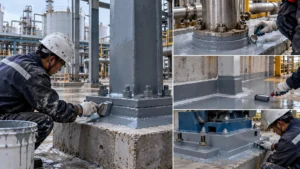
Epoxy primer is commonly selected for carbon steel when the project requires corrosion protection, barrier performance, and compatibility with a complete industrial coating system. Carbon steel can normally be abrasive blasted to create both cleanliness and surface profile, which suits many epoxy primer systems.
Typical carbon steel preparation may involve:
- removal of oil and grease;
- abrasive blasting;
- control of soluble salts;
- dust removal;
- defined surface profile;
- prompt primer application before flash rusting.
For severe atmospheric exposure, another primer route such as zinc-rich epoxy may be considered. That is a different comparison because zinc-rich primer provides cathodic protection, while a non-zinc epoxy primer mainly relies on barrier protection and corrosion-inhibitive pigmentation.
For that decision, the separate zinc-rich primer vs epoxy primer guide should be used rather than mixing the two questions.
Aluminum — Etch Primer or Compatible Epoxy Primer?
Aluminum can use an approved etch-primer route or a compatible epoxy primer route depending on alloy, oxide condition, contamination, preparation method, and product approval. It is incorrect to assume that every aluminum surface must receive etch primer before epoxy.
The aluminum surface normally requires careful control of:
- oil and grease;
- oxide condition;
- surface contamination;
- abrasion or sweep blasting where specified;
- dust removal;
- time between preparation and priming.
The search term epoxy primer for aluminum often assumes epoxy cannot bond directly to aluminum. In reality, product-specific industrial epoxy primers exist for direct application to properly prepared aluminum.
For example, Sherwin-Williams Macropoxy 2706 EG lists direct application to hot-dip galvanized steel, stainless steel, and aluminum.
The correct engineering question is therefore:
Is this specific epoxy primer approved for this aluminum substrate and preparation method?
Not:
Is epoxy primer universally suitable or unsuitable for aluminum?
Galvanized Steel — Surface Condition Comes Before Primer Choice
Galvanized steel primer selection should begin with the zinc surface condition because new galvanized steel, weathered zinc, and white-rusted galvanized steel require different preparation decisions. Applying primer over unstable zinc corrosion products can cause adhesion failure regardless of whether the product is epoxy or etch primer.
Check whether the galvanized surface is:
- newly galvanized;
- aged and weathered;
- contaminated by oil or passivation residues;
- covered with white rust;
- mechanically damaged;
- already coated;
- suitable for sweep blasting;
- approved for chemical pretreatment.
Possible coating routes include:
- approved pretreatment followed by compatible coating;
- sweep blasting followed by compatible epoxy primer;
- direct application of a product specifically approved for galvanized steel;
- tie-coat or special primer routes in selected systems.
The primer decision should not be separated from the preparation method.
Stainless Steel — Adhesion Strategy Matters More Than Corrosion Protection Alone
Stainless steel primer selection is usually driven by adhesion and service requirements rather than the same corrosion logic used for carbon steel. A smooth passive stainless surface can be difficult for coatings to bond to unless it is properly cleaned and roughened.
The project should check:
- stainless steel grade;
- chloride or chemical exposure;
- surface contamination;
- fabrication residues;
- weld areas;
- mechanical abrasion or sweep blasting requirements;
- compatibility of primer and next coat.
In some projects, stainless steel is coated for:
- color coding;
- chemical resistance;
- cleanability;
- abrasion resistance;
- CUI protection;
- marine or chloride exposure.
The coating system should be selected for the actual service condition. Primer selection is only one part of the system.
Compare Epoxy and Etch Primer by Substrate
Epoxy and etch primer should be compared by substrate, preparation method, and system function rather than by a universal winner. The table below gives a practical industrial selection framework.
| Metal Substrate | Etch Primer Role | Epoxy Primer Role | Main Selection Check |
|---|---|---|---|
| Carbon steel | Limited or system-specific use | Common protective primer route | Blast cleaning, exposure, corrosion category |
| Aluminum | Adhesion-promoting option in approved systems | Compatible epoxy products may be used directly | Alloy, oxide condition, preparation, TDS |
| Galvanized steel | Pretreatment option for selected systems | Compatible epoxy may follow proper preparation or be directly approved | New or weathered zinc, white rust, sweep blasting |
| Stainless steel | Special adhesion pretreatment in selected systems | Compatible epoxy route may be used | Surface roughness, contamination, service condition |
| Mixed-metal fabrication | Product- and interface-specific | Often requires compatibility review | Galvanic interfaces and substrate-specific preparation |
The table is a starting point, not a substitute for the coating specification. A primer approved for one metal substrate should not automatically be extended to another substrate without checking the TDS.
Check Surface Preparation Before Selecting Primer
Surface preparation should be confirmed before primer selection because even the correct primer can fail on a contaminated, smooth, oxidized, or poorly prepared substrate. In many industrial projects, the preparation route determines which primer choices are practical.
For a broader standards-based explanation of cleanliness and preparation methods, the surface preparation for industrial coatings guide covers the subject in more detail.
Abrasive Blasting for Carbon Steel
Abrasive blasting is commonly used for carbon steel because it removes rust, mill scale, and old coating while creating a surface profile for primer adhesion. The required cleanliness and profile depend on the coating system and project specification.
Before epoxy primer application, check:
- blast cleanliness;
- surface profile;
- dust;
- soluble salts;
- flash rust risk;
- steel temperature;
- dew point margin.
A high-performance epoxy system applied over poorly blasted steel can fail earlier than a simpler system applied over correctly prepared steel.
Sweep Blasting and Cleaning for Galvanized Surfaces
Sweep blasting can prepare galvanized steel for coating when the procedure is controlled to roughen the zinc surface without unnecessarily damaging the galvanized layer. Aggressive blasting may remove too much zinc, while insufficient preparation may leave a smooth or contaminated surface.
The contractor should control:
- abrasive type;
- blast pressure;
- angle;
- distance;
- surface roughness;
- white rust removal;
- dust and zinc corrosion products.
Chemical pretreatment may also be used in selected approved systems. The final route should match the primer TDS.
Abrasion and Contamination Control on Aluminum and Stainless Steel
Aluminum and stainless steel require careful cleaning and surface roughening because smooth surfaces and contamination can reduce primer adhesion. Preparation methods may include mechanical abrasion or controlled blasting depending on the product system.
Particular attention should be given to:
- oil;
- polishing compounds;
- fabrication residues;
- salts;
- oxide condition;
- embedded carbon steel contamination;
- dust after abrasion.
For stainless steel, contamination with carbon steel particles can create additional corrosion problems. Tools and abrasives should be suitable for the substrate and project procedure.
Can Epoxy Primer Be Applied Over Etch Primer?
Epoxy primer can only be applied over etch primer when the specific products are approved as a compatible system and the etch primer film, cure condition, DFT, and recoat interval meet the TDS requirements. “Primer over primer” is not automatically safer.
This question appears in several search forms:
- epoxy primer over etch primer;
- epoxy over etch primer;
- can you put epoxy primer over etch primer;
- can you use epoxy primer over self etch primer;
- epoxy primer over self etching primer.
The correct answer is product-specific.
Why Primer Over Primer Is Not Automatically Safer
Adding epoxy over etch primer is not automatically safer because an unnecessary or incompatible layer can become the weakest point in the coating system. Possible problems include intercoat adhesion failure, solvent attack, excessive pretreatment film build, or application outside the recoat window.
Before combining products, confirm:
- manufacturer approval;
- primer chemistry;
- film thickness;
- curing condition;
- minimum recoat interval;
- maximum recoat interval;
- compatible next coat;
- service exposure.
A thin etch primer should not be applied as though it were a high-build protective coating. Excessive film build can change the intended performance of a pretreatment layer.
When a Direct-to-Metal Epoxy May Simplify the System
A direct-to-metal epoxy may simplify the system when the product is specifically approved for the prepared substrate and service condition. In that case, adding an etch primer may provide no benefit and may introduce an unnecessary compatibility interface.
A DTM epoxy route may be considered when:
- the product TDS approves the substrate;
- the required surface preparation can be achieved;
- corrosion exposure matches the system design;
- the epoxy provides the required adhesion and barrier performance;
- the planned intermediate and topcoat layers are compatible.
This is especially relevant for fabrication shops handling several metal substrates, but each substrate still needs the correct preparation procedure.
Avoid Common Primer Selection Mistakes
Primer selection mistakes usually come from applying general rules to a product-specific coating system. The most common errors are copying automotive self-etching logic into industrial work, combining unapproved primer layers, ignoring zinc corrosion products, and choosing by product name instead of service condition.
Using Automotive Self-Etch Logic in Industrial Projects
Automotive self-etching primer logic should not be transferred directly to industrial steel structures, tanks, machinery, or chemical plants because the expected film build, service life, corrosion environment, and coating system are different.
Industrial projects may require:
- multi-coat corrosion systems;
- defined DFT;
- C3–C5 exposure design;
- chemical splash resistance;
- outdoor UV durability;
- project inspection;
- long maintenance intervals.
An automotive repair method may be appropriate for its intended application but still be unsuitable for heavy-duty industrial service.
Applying Epoxy Over an Unapproved Etch Primer
Epoxy should not be applied over an unapproved etch primer because compatibility cannot be assumed from generic product names. An etch primer may be sensitive to the solvent package, film thickness, or curing behavior of the next coating.
The safe approach is to verify:
- same-manufacturer approved system or documented compatibility;
- recoat window;
- DFT;
- surface condition;
- service environment.
If approval cannot be confirmed, the safer route may be to use one compatible primer system rather than stacking unrelated products.
Ignoring White Rust or Surface Contamination
White rust and contamination on galvanized steel must be removed or controlled before coating because primer cannot create reliable adhesion over unstable zinc corrosion products. The same principle applies to oil, dust, polishing compounds, and salts on aluminum or stainless steel.
Primer is not a substitute for preparation.
Common warning signs include:
- powdery white corrosion products;
- oil films;
- passivation residues;
- handling contamination;
- visible condensation marks;
- fabrication dust.
The surface should be evaluated before the primer is ordered, not after adhesion problems appear.
Choosing Primer by Product Name Instead of Service Condition
Primer should be selected by service condition because two projects using the same metal may need different systems. Aluminum equipment in a clean indoor workshop and aluminum exposed to chloride spray do not have the same coating requirements.
The decision should consider:
- substrate;
- exposure;
- preparation;
- required durability;
- chemical splash;
- UV exposure;
- maintenance interval;
- available application method;
- complete coating sequence.
This is also why the question “etch primer or epoxy primer?” does not have one universal answer.
Prepare RFQ Data for Metal Primer Selection
Primer RFQs should include the substrate, surface condition, available preparation method, exposure environment, and planned coating system. Without these details, the manufacturer can quote a primer but cannot reliably confirm the correct route.
Substrate Information the Manufacturer Needs
The manufacturer needs the exact substrate rather than the general term “metal.”
Useful information includes:
- carbon steel grade or general structural steel;
- aluminum alloy if known;
- hot-dip galvanized steel;
- electro-galvanized steel where relevant;
- stainless steel grade;
- mixed-metal fabrication;
- new or weathered substrate;
- existing coating condition.
Photos are useful for galvanized and weathered metal because surface condition can change the recommended preparation.
Surface Preparation and Service Data
Surface preparation and service data determine whether etch primer, epoxy primer, DTM epoxy, zinc-rich primer, or another route is appropriate.
Send:
- abrasive blasting availability;
- sweep blasting capability;
- mechanical abrasion method;
- chemical pretreatment if specified;
- indoor or outdoor exposure;
- coastal or marine environment;
- industrial pollution;
- chemical splash;
- operating temperature;
- primer DFT requirement;
- intermediate coat;
- topcoat;
- durability target.
The manufacturer should review these factors as a complete system rather than selecting primer separately.
When HUILI May Recommend Another Primer Route
Another primer route may be recommended when neither standard etch primer nor conventional epoxy primer fits the project condition. Depending on the substrate and service, HUILI may review:
- direct-to-metal epoxy primer;
- zinc-rich primer for prepared carbon steel;
- epoxy zinc phosphate primer;
- compatible tie coat;
- substrate-specific pretreatment;
- complete epoxy intermediate plus PU topcoat system.
For project-specific review, anti-corrosion primer systems should be selected together with the final exposure and coating sequence.
FAQ
Which is better for industrial metal, epoxy primer or etch primer?
Neither primer is universally better; epoxy primer is generally selected for protective barrier performance, while etch primer is mainly used as a thin adhesion-promoting pretreatment in approved systems. The correct choice depends on substrate, preparation method, corrosion exposure, DFT, and the complete coating sequence.
Should aluminum use etch primer or epoxy primer?
Aluminum can use etch primer or a compatible epoxy primer depending on alloy, oxide condition, surface preparation, and product approval. Some industrial epoxy primers are specifically approved for direct application to prepared aluminum, so etch primer is not universally required.
Can epoxy primer be applied directly to galvanized steel?
Yes, some epoxy primers are specifically approved for properly prepared galvanized steel, but surface condition must be checked first. New zinc, weathered galvanized steel, and white-rusted surfaces may require different cleaning, sweep blasting, pretreatment, or primer routes.
Can you put epoxy primer over etch primer?
Epoxy primer can be applied over etch primer only when the specific products are approved as a compatible system. Check film thickness, cure condition, minimum and maximum recoat intervals, and the TDS before combining the two primer layers.
Is self-etching primer the same as epoxy primer?
No, self-etching primer and epoxy primer normally serve different roles. Self-etching primer is generally a thin adhesion-promoting pretreatment for suitable bare metals, while epoxy primer usually provides a thicker protective and bonding layer within an industrial coating system.
Request a Metal Substrate Primer Recommendation
Epoxy vs etch primer selection should begin with the metal substrate and surface preparation method, not with a generic preference for one primer chemistry. HUILI can review whether your project needs etch pretreatment, compatible epoxy primer, DTM epoxy, zinc-rich primer, or another primer route.
For a more accurate recommendation, send:
- metal substrate type;
- carbon steel, aluminum, galvanized steel, or stainless steel details;
- new or weathered surface condition;
- available surface preparation method;
- indoor or outdoor exposure;
- coastal, marine, or industrial environment;
- chemical splash conditions;
- required primer and total system DFT;
- planned intermediate coat and topcoat;
- durability requirement;
- drawings, photos, or project specification.
Send your project details through the metal substrate primer selection inquiry page so the technical team can support primer selection, coating system review, TDS matching, and RFQ preparation.