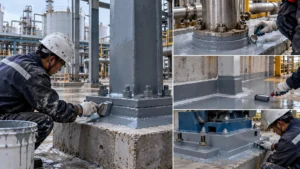
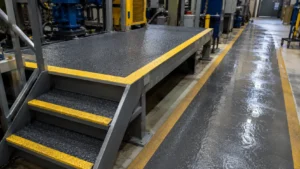
Coating inspection is one of those activities that gets treated as a formality until something goes wrong — and then everyone wonders why there wasn’t a more rigorous inspection process. The reality is that a well-structured inspection regime is not bureaucracy: it’s the mechanism that ensures the contractor applied what was specified, at the right thickness, on the right surface preparation.
This guide covers the key inspection hold points for a structural steel anti-corrosion coating project, what to check at each stage, and what to document. It’s structured for someone who needs to set up or carry out an inspection programme — whether you’re the coating inspector, the project engineer, or the client representative.
The Hold Point Concept
A hold point is a point in the coating process where work must stop until an inspection is completed and signed off. No hold point means no quality control. If the specification doesn’t define hold points, the contractor applies what they think is appropriate and you verify it at the end — by which point most problems are already buried under subsequent coats.
The standard hold points for a structural steel coating project are:
- H1 Surface preparation — before any coating is applied
- H2 After primer coat — before intermediate coat is applied
- H3 After each intermediate coat — before next coat or topcoat
- H4 After topcoat — final inspection including DFT, visual, and any specified testing
On smaller projects, H2 and H3 are sometimes combined into a single mid-coat inspection. On critical projects (offshore structures, process plant), additional hold points — including pre-blast inspection and coating material verification — are added. The minimum non-negotiable hold points are H1 and H4.
1: Surface Preparation Inspection
This is the most important inspection in the entire process. If the surface preparation is wrong, the coating will fail — regardless of product quality or application care. Never allow coating to proceed without H1 sign-off.
The surface preparation guide for industrial coatings (ISO 8501 / SSPC) covers cleanliness grades and preparation methods in full detail.
What to Check
- Cleanliness standard: visual assessment against ISO 8501-1 photographic comparators. For zinc-rich primers and high-build epoxy systems, the specified standard is a minimum Sa 2½ (near-white blast). Sa 2 is not acceptable. Document the achieved standard with a written reference to the comparator photograph.
- Surface profile: measure with Testex Press-O-Film replica tape (ISO 8503-5) or a profilometer. Record Rz in µm. Typical specification: Rz 40–70 µm for standard epoxy systems; Rz 60–100 µm for glass flake systems. If the profile is outside specification, additional blasting is required.
- Chloride contamination: Bresle patch test per ISO 8502-9. For C4 and C5 environments, the acceptance criterion is typically ≤ 20 mg/m². For CX or immersion service, ≤ 10 mg/m². Test multiple locations — at least one per 50 m² of surface, and always test near drainage points and low areas where contamination accumulates.
- Substrate temperature: measure with a calibrated surface thermometer. The substrate must be ≥ 3°C above the dew point. Use a hygrometer to determine dew point. Record ambient temperature, relative humidity, dew point, and substrate temperature.
- Application window: coating must be applied within the specified window after blasting — typically 4 hours, or before visible oxidation. In humid coastal environments, this window may be shorter. If flash rust (light reddening) is visible, the surface must be re-blasted.
2: Primer Coat Inspection
What to Check
- DFT (dry film thickness): per SSPC-PA 2 or ISO 19840. Minimum 5 spot measurements per 10 m², each spot being the average of 3 individual gauge readings. Calibrate the magnetic induction gauge on bare steel immediately before measurement. Record all readings. No spot reading below 80% of specified minimum DFT.
- Visual inspection: look for sags, runs, dry spray (rough granular texture), pinholes, bare areas, and insufficient stripe coat coverage on edges and welds. Stripe coat is particularly important to verify — it’s often skipped or underapplied.
- Pot life compliance: confirm from application records that the primer was mixed in the correct ratio and applied within the stated pot life. This is a process verification, not a measurement — it requires record-keeping from the applicator.
- Intercoat condition: before applying the next coat, verify the primer surface is clean, dry, and within the maximum overcoat window stated in the manufacturer’s TDS. If the maximum overcoat interval has been exceeded, the surface requires light abrasion.
3: Intermediate Coat(s) Inspection
The same checks as H2 apply, with specific attention to:
- Cumulative DFT: measure total DFT after each coat and calculate the individual coat contribution. If cumulative DFT is significantly higher than expected at the intermediate stage, the topcoat can be applied at reduced DFT to stay within the total system specification — but record this explicitly.
- Glass flake systems — DFT ceiling: for glass flake epoxy intermediate coats, exceeding the specified maximum DFT per coat causes mud-cracking on thermal cycling. Maximum DFT compliance is as important as minimum. Check wet film thickness with a comb gauge during application as well as DFT after curing.
- Inter-coat adhesion assessment: if the intermediate coat surface has been contaminated (rain, dust, oil from adjacent operations), it must be cleaned before topcoat. Contaminated intercoat surfaces are a leading cause of delamination in multi-coat systems.
4: Final (Topcoat) Inspection
The final inspection is the documented record that the complete coating system was applied to specification. It should be comprehensive enough to be a standalone quality record.
| Check | Method | Acceptance Criterion | Document As |
|---|---|---|---|
| Total system DFT | Magnetic gauge, SSPC-PA 2 / ISO 19840 | All spot readings ≥ specified minimum; no single reading < 80% of minimum | Reading log with gauge serial number and calibration date |
| Visual inspection | Full surface walkover | No runs, sags, dry spray, holidays, bare areas, or colour inconsistency | Written statement with photographic record of any areas requiring remediation |
| Holiday detection (if specified) | NACE SP0188 Method A (low voltage, <500 µm DFT) or Method B (high voltage, ≥500 µm) | Zero holidays on final test after all repairs completed | Holiday test report: voltage used, areas tested, alarms found, repairs made, re-test results |
| Pull-off adhesion (if specified) | ISO 4624 portable pull-off tester | Minimum 5 MPa at primer-to-steel interface; per specification | Test location, dolly size, force, failure mode (cohesive/adhesive) |
| Colour / gloss (if specified) | Visual comparison to approved sample or spectrophotometer | Within tolerance per specification | Reference sample number or instrument reading |
For projects where the coating is applied in a fabrication shop (primer + intermediate) and the topcoat is applied on site after erection, a separate H4 inspection is required at each stage — not just a single final inspection at the end.
Documentation: What to Record and Keep
A coating inspection without documentation is not an inspection — it’s a walkover. The inspection record is the evidence that the work was done correctly, and should be retained for the life of the structure. Minimum records for a complete coating project:
- Material certificates: product name, batch number, and manufacture date for all coating materials used
- Surface preparation records: cleanliness standard achieved, profile measurement, chloride test results (location, date, result), ambient conditions at time of preparation
- Application records: date, temperature and humidity at time of application, product batch numbers, mixing ratios, pot life compliance (applicator sign-off)
- DFT records: all individual spot readings per coat, gauge serial number, calibration records
- Holiday test records (if conducted): test method, voltage, coverage area, alarm count, repair locations, re-test results
- Adhesion test records (if conducted): test locations, results, failure modes
- Inspector sign-off: name, qualification (if required by specification), date of each hold point sign-off
For a reference on how these inspection stages map to a complete project checklist format, the steel structure coating inspection checklist (surface prep, DFT, recoat interval & touch-up) provides a field-ready version covering each hold point.
Frequently Asked Questions
Who should carry out coating inspection?
It depends on the project criticality. For simple commercial building projects, the site engineer or project manager can carry out basic inspection — checking cleanliness visually, measuring DFT, and reviewing application records. For critical infrastructure, offshore, or process plant projects, a qualified coating inspector (NACE CIP / AMPP, SSPC PCI, or equivalent) should be specified. The inspection qualification matters because the inspector needs to interpret DFT readings correctly, calibrate equipment, and recognise coating defects — these are skills that develop with training and experience, not just from reading a checklist.
What happens if DFT readings fail on a final inspection?
Areas below minimum DFT require remediation — additional coating applied to the low-DFT areas and re-inspection. The remediation approach depends on how far below minimum the readings are and whether the maximum overcoat interval for the system has been exceeded. If it has, the surface must be lightly abraded before additional coating. Areas significantly below minimum DFT — say, less than 50% of specified — may indicate a systematic application problem that requires investigation before remediation, not just a spot top-up. Document all remediation work and re-inspection results as part of the project record.
Is holiday testing always required for structural steel coatings?
No — holiday testing is standard for tank linings, immersion service coatings, and pipeline coatings, but is not routinely required for atmospheric service structural steel coatings. It may be specified as an additional quality check on critical structures or where the project specification calls for it. If in doubt, include it — the cost is modest and it provides assurance that the coating film is continuous, which is particularly important in C5 and CX environments where any film discontinuity creates a rapid corrosion initiation point.
How many DFT readings are required per coat, and what constitutes a failing result?
Per SSPC-PA 2 and ISO 19840: minimum 5 spot measurements per 10 m², with each spot being the average of 3 individual gauge readings. A failing result is any spot reading below 80% of the specified minimum DFT. A single low reading doesn’t automatically require remediation — the full SSPC-PA 2 procedure includes a defined process for handling low spots, including additional measurement in the surrounding area. Document all readings; do not selectively record only passing values.
What is the maximum overcoat interval, and why does it matter?
The maximum overcoat interval is the longest time that can elapse between coats without requiring surface preparation before the next coat is applied. Exceeding it risks inter-coat adhesion failure — the coating surface may have carbonated, become contaminated, or changed surface energy in ways that prevent proper bonding of the next coat. Maximum overcoat intervals are stated in the manufacturer’s TDS and vary significantly by product and temperature. For shop-applied intermediate coats where the topcoat is applied weeks or months later on site, the maximum overcoat interval is one of the most commonly missed specification requirements — check it and document the actual elapsed time in the inspection record.
Technical Support and Documentation from Huili Coating
Huili Coating provides project-specific application procedures that include defined inspection hold points, acceptance criteria, and documentation requirements — aligned with SSPC-PA 2, ISO 19840, and NACE SP0188 as applicable.
To receive system-specific inspection documentation, TDS packages, or technical support for your coating project, send your project details via the Huili Coating project inquiry form:
- Project environment and ISO 12944 corrosivity category
- Coating system being applied (or system under consideration)
- Asset type and application stage (shop fabrication, site erection, maintenance recoat)
- Specific inspection requirements: hold points, third-party inspection, documentation format
- Any project specification or client QC requirements
The technical team will provide product TDS, application procedures with defined hold points, and inspection record templates tailored to the system and project scope.