Of all the corrosion zones on an offshore structure, the splash zone is the most aggressive and the most difficult to protect. Permanently submerged steel can be protected with cathodic protection. Atmospheric steel above the waterline can be protected with standard marine coating systems. But the splash zone — the band of steel that is alternately wet and dry as waves wash over it — sits outside the reach of cathodic protection and experiences corrosion rates that can be 10 times higher than in the fully submerged zone.
Specifying the correct coating system for the offshore splash zone is a critical decision. An inadequate system means premature failure, costly intervention in a marine environment, and potential structural integrity risk. This guide covers the corrosion mechanism, the coating systems used, ISO 12944 CX requirements, and how to specify correctly.
Why the Splash Zone Is the Hardest Zone to Protect
Corrosion rate in the marine environment varies significantly by zone. From bottom to top of an offshore structure:
| Zone | Corrosion Environment | Primary Protection | Typical Corrosion Rate |
| Soil / mud zone | Anaerobic — low oxygen | Cathodic protection + coating | Low — 0.02–0.05 mm/yr |
| Submerged zone | Full seawater immersion | Cathodic protection + coating | Low to medium — 0.05–0.1 mm/yr |
| Splash zone | Alternating wet/dry; aerated; wave action | Coating only — CP ineffective | High — 0.1–0.3+ mm/yr |
| Tidal zone | Periodic seawater exposure | Coating + partial CP | Medium — 0.05–0.15 mm/yr |
| Atmospheric zone | Salt-laden air; UV; temperature cycling | Coating (CX system) | Low to medium — 0.03–0.1 mm/yr |
The splash zone is uniquely challenging because: (1) cathodic protection current cannot reach alternately wet-dry steel effectively; (2) the constant wetting and drying cycle creates osmotic pressure that attacks coating films; (3) wave action and floating debris cause mechanical damage; and (4) the aerated seawater in the splash zone is more corrosive than the oxygen-depleted fully submerged zone.
The consequence: a coating system that performs well in the atmospheric or submerged zones will often fail rapidly in the splash zone. Splash zone coating specification must be based on splash zone performance data — not atmospheric or immersion test data alone.
ISO 12944 and the CX Corrosivity Category
ISO 12944 defines the corrosivity category CX (extreme) as covering offshore environments — both the atmospheric zone and immersion zones of offshore structures. The splash zone is the most severe sub-category within CX.
For CX atmospheric service, ISO 12944-5 defines high-durability (H, >15 years) coating systems based on zinc-rich primer + glass flake epoxy intermediate + polyurethane topcoat, at total DFT of 400–500 µm. However, for the splash zone specifically, ISO 12944 and industry practice both recognise that a different approach is needed — higher DFT, higher-build systems, and in many cases, no topcoat (a thick glass flake epoxy monolithic system rather than a primer/intermediate/topcoat stack).
For CX corrosion protection systems and the difference between C5-M and CX, see our detailed guide on C5-M and CX marine corrosion protection under ISO 12944. If you are also deciding between C5-M and CX for a coastal or marine project, the C5-M vs CX comparison guide provides a practical decision framework.
Coating Systems for the Offshore Splash Zone
System 1: High-Build Glass Flake Epoxy (Solvent-Free)
The industry standard for offshore splash zone protection. Solvent-free, 100% solids glass flake epoxy applied at 600–1,500 µm DFT provides the required immersion resistance, mechanical durability, and osmotic blistering resistance that the splash zone demands.
- Typical DFT: 600–1,500 µm in 2–4 coats
- Application: high-pressure airless spray (minimum 250 bar); specialist tip sizing for glass flake suspension
- Standards: NORSOK M-501 System 7B (splash zone); ISO 12944-5 CX Im2
- Key properties: tortuous diffusion path from glass flakes dramatically reduces osmotic blistering; solvent-free formulation eliminates solvent-entrapment blistering risk
- Surface preparation: Sa 2½ minimum (SSPC-SP 10); surface profile Rz 60–100 µm; chloride ≤ 10 mg/m² for splash zone service
- Temperature resistance: up to 80°C — adequate for splash zone service; for higher temperature service, novolac variants available
System 2: Epoxy Mastic + Glass Flake Topcoat
A two-coat system using a high-build epoxy mastic primer (200–300 µm) beneath a glass flake epoxy topcoat (300–500 µm). Provides similar performance to the monolithic glass flake system with improved substrate tolerance — epoxy mastic systems are less sensitive to surface preparation variations than 100% solids systems, making them useful for field repair and maintenance applications.
- Total DFT: 500–800 µm
- Best for: maintenance recoating over existing systems; new construction where application conditions are variable
System 3: Thermal Spray Aluminium (TSA)
Thermal spray aluminium (TSA) is an arc or flame spray process that deposits a metallic aluminium coating directly onto the blast-cleaned steel substrate at 150–300 µm thickness. TSA provides galvanic protection (aluminium sacrificially corrodes to protect the steel), is inert to seawater, and has no organic binder to fail by osmotic blistering.
- Thickness: 150–300 µm aluminium deposit + sealer coat
- Service life: 25+ years in splash zone service — the longest service life of any coating-based splash zone protection
- Limitation: high capital cost; requires specialist spray equipment and trained applicators; best suited to shop application on new construction
- Standards: ISO 2063, AWS C2.23 / ANSI/AWS C2.23M
💡 TSA is widely specified for North Sea and deepwater offshore structures where inspection and recoating access is extremely expensive. Huili Coating does not manufacture TSA — our splash zone systems are glass flake epoxy based. For TSA requirements, we can refer you to specialist applicators.
System 4: Petrolatum Tape and Wax Systems
For remedial or emergency protection of corroded splash zone steel, petrolatum-based tape and wax systems provide a quick-applied barrier that conforms to irregular surfaces without surface preparation to blast standard. Not suitable for new construction or long-term primary protection, but a practical option for short-term preservation pending planned maintenance.
NORSOK M-501: The Offshore Industry Reference
For offshore oil and gas projects, NORSOK M-501 (Surface Preparation and Protective Coating) is the most widely referenced coating specification standard. It defines specific coating systems for each offshore zone:
- System 1: atmospheric zone — zinc-rich primer + epoxy intermediate + polyurethane topcoat
- System 7A: submerged zone — glass flake epoxy (400–600 µm)
- System 7B: splash zone — glass flake epoxy (600–1,500 µm)
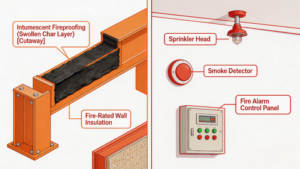
- System 2B: fire-resistant coating for topsides structural steel — intumescent + compatible anti-corrosion system
Products used on NORSOK projects must be qualified to NORSOK M-501 requirements, which include: ISO 9227 salt spray (4,200 hours for CX systems), cathodic disbondment (ISO 15711), and adhesion after immersion. NORSOK qualification is product-specific and system-specific — a product qualified as part of one system is not automatically qualified as part of a different system.
For a comprehensive overview of offshore coating system design across all zones, see the marine anti-corrosion coating offshore system selection and design guide.
Surface Preparation for Splash Zone Coating
Splash zone applications have more stringent surface preparation requirements than atmospheric zone applications, because any contamination beneath the coating will be subjected to the osmotic pressure of seawater cycling.
- Blast cleanliness: ISO 8501-1 Sa 2½ minimum; Sa 3 (white metal) specified on some projects for splash zone service
- Surface profile: Rz 60–100 µm — coarser profile provides better mechanical anchor for high-build glass flake systems
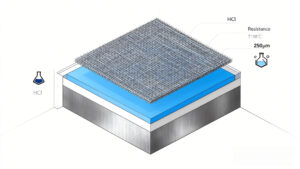
- Chloride: ≤ 10 mg/m² for splash zone (more stringent than the ≤ 20 mg/m² standard for atmospheric service); measure per ISO 8502-9 Bresle patch method
- Application window: apply first coat within 2 hours of blasting in marine environments — flash rusting in coastal humidity can occur rapidly
- Dew point control: substrate must be ≥ 3°C above dew point; in offshore environments, temperature and humidity can change rapidly — monitor continuously during application
💡 For offshore splash zone work, surface contamination is the single most common cause of premature failure. Insist on documented chloride measurements before every coat — not just before the first coat. Rain or sea spray between coats can re-contaminate a blasted or coated surface.
Inspection Requirements
Splash zone coating inspection must be rigorous — access for remediation after installation is expensive and weather-dependent. Key inspection hold points:
- Surface preparation: cleanliness (visual, ISO 8501-1); profile (Testex tape, ISO 8503); chloride (Bresle patch, ISO 8502-9)
- Wet film thickness (WFT) during each coat application — mandatory for high-build systems where DFT control is critical
- Dry film thickness (DFT) after each coat — per SSPC-PA 2; minimum 5 readings per 10 m²; no reading below 80% of specified minimum
- Holiday detection — high-voltage DC spark test (NACE SP0188 Method B) for DFT ≥ 500 µm; voltage set per coating manufacturer’s recommendation
- Final adhesion test — pull-off per ISO 4624; minimum 5 MPa for glass flake epoxy on blast-cleaned steel
Frequently Asked Questions
What is the difference between the splash zone and the tidal zone?
The tidal zone is the area of a structure between the low and high water marks — it is submerged at high tide and exposed at low tide on a predictable cycle. The splash zone extends above the high water mark — it is never fully submerged but is regularly wetted by wave splash, spray, and sea fog. In corrosion engineering, the splash zone typically extends from approximately mean high water level to 5–7 metres above, depending on wave height and sea state. The tidal zone benefits from partial cathodic protection coverage; the splash zone does not.
How often does splash zone coating need to be replaced?
A well-specified and correctly applied high-build glass flake epoxy system should achieve 15–20 years in splash zone service before requiring major maintenance. Thermal spray aluminium (TSA) can achieve 25+ years. In practice, many offshore structures undergo splash zone coating inspection every 5 years during planned maintenance shutdowns, with spot repairs as needed. The inspection interval is typically defined by the asset integrity management plan, which is based on the structure’s criticality, accessibility, and corrosion monitoring data.
Can splash zone coating be applied subsea or in the tidal zone?
Standard epoxy and glass flake epoxy systems require a dry, blast-cleaned substrate and cannot be applied underwater. For emergency or remedial protection of submerged or tidal zone steel, specialist underwater epoxy putties (two-component epoxy systems formulated for underwater curing) or petrolatum tape systems can be applied, but these are not substitutes for a properly applied primary coating system. Planned maintenance work in the tidal zone is typically performed during dry-dock or with temporary cofferdam dewatering.
Offshore Splash Zone Coating Systems from Huili Coating
Huili Coating manufactures high-build glass flake epoxy systems for offshore splash zone protection, qualified to NORSOK M-501 System 7B and ISO 12944 CX requirements.
- Solvent-free glass flake epoxy: 600–1,500 µm DFT range for splash zone service
- Compatible with zinc-rich primer systems for atmospheric zone — full offshore coating system from a single manufacturer
- ISO 9227 salt spray (4,200hr), cathodic disbondment, and adhesion test data available
- Technical documentation in English: TDS, SDS, NORSOK M-501 qualification data, application procedures
- Full marine anti-corrosion coating system for offshore structures overview covering all zones.
- Detailed offshore splash zone coating: glass flake vs standard epoxy comparison for system selection decisions.
Contact our technical team via the project inquiry form with your project zone requirements for a system recommendation.