Protective & marine coatings should be selected by marine exposure zone, not by a generic outdoor steel formula. For port owners, offshore project teams, ship repair buyers, EPC contractors, and distributors in coastal markets, the key decision is whether the coating system can handle salt spray, wet-dry cycling, splash-zone abrasion, UV exposure, and limited maintenance access.
This guide helps buyers compare marine exposure zones, choose the right primer/intermediate/topcoat logic, check surface preparation risks, and prepare better RFQ data before requesting marine coating TDS or system support.
Start with Marine Exposure Zone, Not Generic Steel Protection
Protective & marine coatings should be selected by exposure zone because coastal steel, port facilities, ship areas, and offshore structures face different salt, UV, immersion, and splash-zone risks. A coating system that works on an inland steel frame may not last in a port, ship deck, waterline area, or offshore splash zone.
Marine coating selection must start with the real service condition. Is the steel in coastal atmosphere, port equipment, ship deck traffic, tidal splash, hull waterline, offshore platform exposure, or internal marine tank service? Each zone changes the coating system, DFT target, surface preparation, and inspection requirement.
Why Marine Steel Fails Faster Than Normal Outdoor Steel
Marine steel fails faster than normal outdoor steel because chloride salts, humidity, UV radiation, and wet-dry cycling increase corrosion pressure on coating defects. Salt deposits can remain on the steel surface or coating film, attracting moisture and accelerating underfilm corrosion.
Common field failures include edge rust, blistering, rust creep from welds, coating breakdown in splash zones, and premature chalking where epoxy is left exposed to sunlight. These failures are usually linked to surface salt contamination, insufficient DFT on edges, poor stripe coating, or a system designed for general outdoor exposure rather than marine service.
Why C5-M and CX Conditions Change the Coating System
C5-M and CX conditions change the coating system because marine and offshore exposure requires higher resistance to salt, condensation, UV, and maintenance difficulty. ISO 12944-9:2018 covers performance requirements for protective paint systems for offshore and related structures exposed to marine atmosphere, sea or brackish water, CX offshore conditions, and Im4 immersion category.
For buyers, this means the specification should not simply say “anti-corrosion coating.” It should define the exposure category, surface preparation grade, coating layers, DFT ranges, and inspection method. Offshore and port steel often need zinc-rich epoxy primer, epoxy or glass flake intermediate coat, and polyurethane topcoat rather than a single general-purpose coating.
Map Marine Exposure Zones Before Choosing the System
Marine exposure zones determine whether the coating system needs salt resistance, immersion resistance, abrasion resistance, UV resistance, or splash-zone protection. The table below gives a practical routing map for protective marine coatings.
| Marine Exposure Zone | Main Risk | Recommended System Direction | Key Technical Check | Buyer Data Needed |
|---|---|---|---|---|
| Coastal atmospheric steel | Salt spray, UV, humidity | Zinc-rich epoxy primer + epoxy intermediate coat + polyurethane topcoat | C5-M/CX category, total DFT, topcoat durability | Distance from coast, exposure level, required service life |
| Port structures | Salt deposits, abrasion, impact | Epoxy barrier system + PU topcoat; glass flake in severe areas | Edge protection, surface preparation, maintenance access | Asset type, access condition, traffic/impact level |
| Splash zone | Wet-dry cycling, wave impact, chloride attack | Glass flake epoxy or high-build epoxy system with abrasion-resistant finish | DFT, immersion transition, mechanical damage | Tidal range, splash height, wave/abrasion exposure |
| Ship deck | Abrasion, oil, seawater, foot traffic | Marine deck coating or epoxy system with anti-slip finish | Abrasion resistance, slip resistance, cleaning chemicals | Deck use, traffic level, repair schedule |
| Waterline / hull above water | Wet-dry cycling, UV, seawater | Marine primer + waterline coating or PU finish | Recoat window, wet-dry resistance, film continuity | Hull zone, dock schedule, surface condition |
| Offshore structural steel | CX, salt, UV, limited access | Zinc-rich primer + epoxy/glass flake intermediate + PU/polysiloxane finish | Long durability, inspection access, stripe coating | Offshore zone, design life, maintenance interval |
| Internal marine tanks | Immersion, seawater, fuel, chemicals | Lining-grade epoxy or tank lining system | Medium compatibility, holiday detection, full cure | Stored medium, temperature, cleaning method |
This table is not a fixed specification. It is a marine exposure map that helps buyers decide which coating family should be reviewed first before requesting a product price.
Build the Coating System by Layer Role
A marine coating system should be built by layer role: primer for adhesion and corrosion control, epoxy for barrier protection, and topcoat for UV/weathering resistance. Each layer has a different job, and removing one layer to reduce cost can shorten the maintenance cycle.
Zinc-Rich Epoxy Primer for Steel Protection
Zinc-rich epoxy primer is used on prepared steel when the system needs strong adhesion and sacrificial corrosion protection at the base layer. In C5-M or CX environments, zinc-rich epoxy primer is often specified over abrasive-blasted steel before epoxy intermediate and polyurethane topcoat.
The primer is not a substitute for surface preparation. If mill scale, salts, or poor surface profile remain, zinc-rich primer may not perform as intended. For marine steel, the primer decision should be connected to blast cleanliness, profile depth, DFT, and compatible overcoating.
Epoxy Intermediate or Glass Flake for Barrier Protection
Epoxy intermediate coat is used as a barrier layer that increases film build and reduces water, oxygen, and chloride penetration. In severe marine areas, glass flake epoxy may be used because the flake reinforcement increases the path length for moisture and improves barrier performance.
Glass flake epoxy is especially relevant for splash zones, port steel, tanks, and areas exposed to wet-dry cycling. However, it requires controlled DFT, mixing, application technique, and inspection. Over-application or poor curing can still cause defects such as solvent entrapment or cracking.
Polyurethane Topcoat for UV and Weathering
Polyurethane topcoat is used in marine coating systems to improve UV resistance, color retention, gloss retention, and weathering performance. Epoxy layers are strong for adhesion and barrier protection, but epoxy can chalk under sunlight if left as the final exposed coat.
For coastal steel and port facilities, the typical logic is epoxy for corrosion barrier and polyurethane for exterior durability. This is why buyers should review polyurethane anti-corrosion coating series when the system needs long-term outdoor appearance and UV resistance.
Select Protective & Marine Coatings by Asset Type
Asset type decides whether protective & marine coatings should prioritize atmospheric corrosion resistance, abrasion resistance, immersion protection, or maintenance access. A port railing, ship deck, offshore jacket, and marine equipment frame should not receive the same system by default.
Port Steel Structures and Coastal Facilities
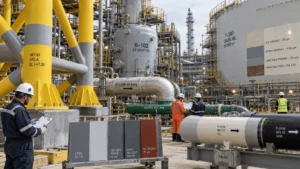
Port steel structures and coastal facilities usually need coatings that resist salt deposits, UV exposure, humidity, impact, and difficult maintenance. Common assets include cranes, handrails, platforms, storage tank exteriors, loading arms, pipe racks, and coastal infrastructure.
For these assets, the coating system often starts with zinc-rich epoxy primer or epoxy primer, followed by epoxy intermediate coat and polyurethane topcoat. Buyers can connect these conditions with broader marine and offshore coating applications when selecting coatings for ports, offshore steel, and coastal facilities.
Ship Hull, Deck, and Waterline Areas
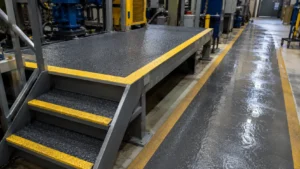
Ship hull, deck, and waterline areas require different coating functions because abrasion, wet-dry cycling, oil contamination, foot traffic, and seawater exposure vary by zone. Deck coatings often need abrasion resistance and anti-slip properties, while waterline areas need wet-dry resistance and film continuity.
This article does not go deep into antifouling coating. For ship repair buyers, the immediate selection question is usually whether the area needs marine primer, epoxy barrier coat, deck coating, waterline coating, or topcoat repair.
Offshore Platforms and Splash-Zone Steel
Offshore platforms and splash-zone steel require stronger barrier protection because these areas face wet-dry cycling, chloride loading, mechanical impact, and limited inspection access. Splash zones are among the most aggressive marine exposure areas because the coating alternates between seawater, air, UV, and abrasion.
For this reason, high-build epoxy, glass flake epoxy, or specialty splash-zone systems may be required instead of a general outdoor coating. If the project involves repeated wave impact or tidal exposure, the RFQ should identify the splash height, tidal range, and maintenance access.
Marine Equipment and Machinery
Marine equipment and machinery need coatings that resist salt spray, oil, abrasion, cleaning chemicals, and mechanical handling. Examples include deck equipment, pumps, valves, winches, frames, housings, and port machinery.
A common approach is epoxy primer or zinc-rich primer for adhesion and corrosion resistance, followed by epoxy intermediate or polyurethane topcoat depending on exposure. For smaller equipment, handling damage and repairability may be as important as the original coating system.
Check Surface Preparation and Salt Contamination Before Coating
Marine coatings fail early when abrasive blasting, surface profile, salt contamination control, or edge preparation is not matched to the marine exposure level. In coastal and offshore projects, surface preparation is often the difference between long-term service and early blistering.
Surface Profile and Blast Cleanliness
Surface profile and blast cleanliness control how well marine coatings bond to steel. Abrasive blasting removes rust, mill scale, and old coating while creating an anchor profile for primer adhesion.
ASTM D4417 covers techniques for measuring the profile of abrasive blast-cleaned surfaces in the field, shop, and laboratory, and it also notes that one method may be appropriate for profile produced by power tools. For marine coating work, surface profile should match the primer TDS and DFT range, not just a visual cleanliness target.
Soluble Salt Contamination
Soluble salt contamination must be controlled before marine coating because chlorides can cause osmotic blistering under the coating film. Washing, testing, and surface cleanliness checks are especially important for steel exposed to seawater, port dust, salt spray, or old marine service.
The failure can appear months after application. The coating may look acceptable after spraying, but trapped salts attract moisture and create pressure below the film. This is one of the most common causes of blistering in coastal and marine maintenance work.
Edges, Welds, and Stripe Coating
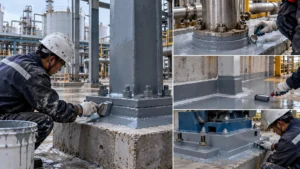
Edges, welds, and corners need stripe coating because spray application often leaves lower DFT on sharp geometry. Marine corrosion frequently starts at welds, bolt holes, flame-cut edges, and damaged areas where film thickness is weak.
For C5-M/CX steel, stripe coating is not just a detail. It is a practical durability measure that helps prevent rust creep from the most vulnerable parts of the steel structure.
Avoid Common Marine Coating Selection Mistakes
Most marine coating selection mistakes come from treating coastal steel like normal outdoor steel or using a decorative topcoat without enough barrier protection. These mistakes can increase maintenance cost because marine assets are expensive to access, scaffold, dock, or shut down.
Using General Outdoor Coating in C5-M/CX Conditions
Using a general outdoor coating in C5-M or CX conditions can lead to early rusting, chalking, blistering, or underfilm corrosion. Normal outdoor systems may not include enough barrier protection, salt resistance, edge protection, or total DFT for marine steel.
For marine projects, the coating system should be selected from exposure category, maintenance interval, and inspection access. A port crane or offshore platform may need a more robust system than inland outdoor steel even when both are exposed to rain and sunlight.
Ignoring Splash-Zone Abrasion and Wet-Dry Cycling
Ignoring splash-zone abrasion and wet-dry cycling can cause premature failure because this zone combines seawater, oxygen, UV, impact, and mechanical wear. A coating that survives atmospheric exposure may not survive repeated wet-dry cycles and wave action.
For splash zones, buyers should consider high-build epoxy, glass flake epoxy, or specialty systems, and should confirm DFT, abrasion resistance, and repair method. This zone should not be treated as a normal atmospheric steel area.
Comparing Only Product Price Instead of System Life
Comparing only product price can be misleading because marine maintenance cost includes access, shutdown, scaffolding, surface preparation, inspection, and recoating frequency. A lower-cost coating can become more expensive if it reduces service life by several years.
Marine coating RFQs should compare system cost, applied DFT, surface preparation, expected maintenance interval, and document support. Price per kg is not enough for coastal, port, or offshore steel.
Prepare RFQ Data for Marine Coating Projects
A useful RFQ for protective & marine coatings should include exposure zone, asset type, surface preparation level, DFT target, maintenance access, and required documents. Without this information, suppliers can only provide a generic marine coating price, not a reliable system proposal.
Prepare these details before requesting a recommendation:
- Asset type: port steel, offshore structure, ship deck, hull area, waterline, marine tank, or equipment
- Exposure zone: coastal atmospheric, splash zone, immersed, deck, internal tank, or offshore steel
- Corrosivity category or owner specification, such as C5-M or CX if defined
- Steel condition: new fabrication, old coating, rusted steel, or maintenance repair
- Surface preparation method: abrasive blasting, power tool cleaning, washing, or localized repair
- Salt contamination limit or testing requirement, if specified
- Target DFT and number of coats
- Preferred coating system: zinc-rich primer, epoxy intermediate, glass flake epoxy, PU topcoat, lining
- Maintenance access: easy access, difficult access, offshore access, dry dock, or shutdown window
- Expected service life or maintenance cycle
- Project country, climate, coastal distance, and humidity condition
- Drawings, photos, coating area, and required documents such as TDS, SDS, and system proposal
For product routing, buyers can review marine coating systems together with the epoxy anti-corrosion coating series before finalizing the complete marine system.
FAQ About Protective & Marine Coatings
What coating system is used for C5-M marine steel?
C5-M marine steel commonly uses zinc-rich epoxy primer, epoxy intermediate or glass flake epoxy barrier coat, and polyurethane topcoat. The final DFT, layer count, and durability target should be confirmed against the project specification and the selected marine coating TDS.
What is the difference between protective coatings and marine coatings?
Marine coatings are protective coatings designed for salt spray, wet-dry cycling, splash-zone exposure, seawater, UV, and marine maintenance conditions. A general protective coating may work in normal outdoor exposure, but marine protective coating systems usually require stronger barrier layers, salt control, and edge protection.
Which coating is used for offshore splash zones?
Offshore splash zones often require glass flake epoxy, high-build epoxy, or specialty splash-zone coating systems because the steel faces wet-dry cycling, chloride attack, impact, and abrasion. The system should be selected by splash height, tidal range, DFT target, and repair access.
Can polyurethane topcoat be used in marine coating systems?
Polyurethane topcoat can be used in marine coating systems as the UV and weathering layer, but it usually needs epoxy primer or epoxy intermediate underneath for corrosion barrier protection. PU topcoat alone should not be treated as the main anti-corrosion layer for C5-M or CX steel.
How should salt contamination be handled before marine coating?
Salt contamination should be removed by proper cleaning and verified where the specification requires salt testing before coating. Chlorides left on steel can cause osmotic blistering under epoxy or marine coating films, especially in humid coastal and offshore environments.
What information is needed for a marine coating RFQ?
A marine coating RFQ should include asset type, exposure zone, C5-M/CX requirement, surface preparation method, target DFT, maintenance access, coating area, drawings, photos, and document needs. This helps the supplier recommend a marine coating system instead of quoting a generic product.
Request Marine Coating System Review
The safest way to select protective & marine coatings is to review the marine exposure zone, steel condition, surface preparation, DFT, and maintenance access together. A coastal warehouse beam, port crane, ship deck, offshore splash-zone member, and internal marine tank may each need a different system.
For C5-M/CX, port, offshore, ship, or coastal steel projects, send your exposure zone, asset type, surface preparation method, DFT target, photos, drawings, maintenance access, and document requirements through the marine coating project inquiry form. HUILI can help review whether the system should use zinc-rich epoxy primer, epoxy intermediate, glass flake epoxy, polyurethane topcoat, or lining-grade coating.