Polyurethane top coat is the final weathering layer in an industrial coating system, used to protect outdoor steel, machinery, equipment, and coastal assets from UV exposure, color fading, gloss loss, and weathering. For EPC contractors, steel fabricators, procurement managers, coating applicators, and distributors, the main decision is not simply “which polyurethane coating to buy,” but whether the topcoat is compatible with the primer, epoxy intermediate coat, exposure environment, DFT target, and recoat window.
This guide explains when polyurethane top coat should be used, why it is often applied over epoxy primer or epoxy intermediate coat, when it should not be used directly on bare steel, and what project data buyers should send before requesting TDS or RFQ support.
Start with the Topcoat Role, Not the Whole Coating System
Polyurethane top coat is the final weathering layer in an industrial coating system, used mainly for UV resistance, weathering resistance, gloss retention, and color stability. It is not designed to replace the primer or epoxy barrier layer in a heavy-duty anti-corrosion system.
In real industrial projects, polyurethane topcoat is often selected after the base protection system has already been defined. The primer supports adhesion and corrosion resistance. The epoxy intermediate coat adds barrier thickness. The polyurethane top coat protects the exposed surface from sunlight, weathering, color loss, and finish degradation.
What Polyurethane Top Coat Does in a System
Polyurethane top coat provides UV resistance, weathering resistance, color retention, gloss retention, and surface durability for the final exposed layer. In outdoor steel structures, machinery, ports, equipment, and infrastructure, this layer helps the coating system maintain appearance and reduce surface chalking.
Aliphatic polyurethane is commonly used for outdoor weathering because it generally provides better color and gloss stability than aromatic polyurethane. Acrylic polyurethane topcoat is also widely used for industrial finish applications where appearance, hardness, and outdoor durability must be balanced.
What Polyurethane Top Coat Does Not Do Alone
Polyurethane top coat does not normally provide the full anti-corrosion protection required for bare steel, C3–C5 steel structures, marine steel, or chemical exposure. It should not be treated as a single-layer corrosion system unless the TDS and service condition clearly allow that use.
A polyurethane topcoat may look durable on the surface, but corrosion protection depends heavily on the layers below it. If the primer is missing, the steel is poorly prepared, or the epoxy barrier layer is insufficient, the topcoat cannot prevent underfilm corrosion by itself.
Use Polyurethane Top Coat When the Final Surface Must Resist Sunlight and Weathering
Polyurethane top coat should be used when the final exposed surface needs UV resistance, color retention, gloss retention, and outdoor durability. It is especially useful where appearance and weathering performance matter as much as corrosion resistance.
Outdoor Steel Structures
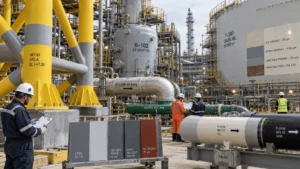
Outdoor steel structures use polyurethane top coat to reduce chalking, color fading, and gloss loss under sunlight and weather. Bridges, pipe racks, platforms, steel buildings, cranes, and exterior structural steel commonly use epoxy primer or zinc-rich primer below polyurethane topcoat.
For outdoor steel structure coating systems, the topcoat should be selected together with corrosivity category, primer type, intermediate coat, total DFT, and expected maintenance cycle. A topcoat alone cannot compensate for poor steel preparation or an under-designed primer system.
Machinery and Equipment Finish
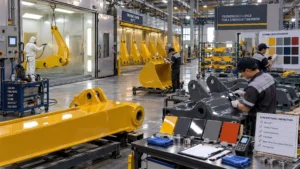
Machinery and equipment use polyurethane top coat when the finish must resist outdoor exposure, handling, cleaning, oil contamination, and transport damage. Equipment frames, housings, pumps, valves, construction machinery, and mining equipment often need both corrosion resistance and good appearance.
In these systems, epoxy primer is often used for adhesion and corrosion resistance, while polyurethane top coat provides the final color and finish durability. Buyers should check hardness development, handling time, color requirement, gloss level, and repair method before mass production.
Coastal and Marine Above-Water Areas
Coastal and marine above-water areas use polyurethane top coat when the final surface must resist salt-laden air, sunlight, humidity, and weathering. In these conditions, the topcoat normally works above zinc-rich epoxy primer and epoxy barrier coats.
For coastal and port applications, polyurethane topcoat is only one part of the system. If the asset is in a splash zone, immersed zone, or offshore CX environment, the system may also need glass flake epoxy, higher DFT, stripe coating, and stricter salt contamination control.
Match Topcoat Requirement to Service Environment
The topcoat requirement depends on whether the asset needs UV resistance, color retention, chemical splash resistance, abrasion resistance, or marine weathering resistance. A polyurethane coating for metal should be selected according to the final exposure surface, not only the product name.
| Service Environment | Main Topcoat Requirement | Suitable PU Topcoat Role | What Still Needs Primer/Epoxy Below | Buyer Check |
|---|---|---|---|---|
| Outdoor C3–C5 steel | UV + weathering resistance | Aliphatic polyurethane topcoat | Anti-corrosion primer + epoxy intermediate coat | Color, gloss, DFT, exposure class |
| Coastal above-water steel | Salt + UV + humidity resistance | PU topcoat over epoxy system | Zinc-rich/epoxy barrier system | Salt exposure, surface prep, maintenance access |
| Machinery/equipment | Appearance + impact + cleanability | Acrylic polyurethane topcoat | Epoxy primer for adhesion and corrosion base | Finish, handling, repair method |
| Chemical splash area | Chemical resistance + cleanability | Chemical-resistant PU topcoat if compatible | Epoxy barrier/intermediate coat | Chemical type, concentration, exposure time |
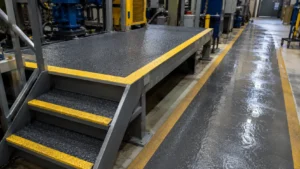
| Marine deck / traffic area | UV + abrasion + slip resistance | PU or polysiloxane topcoat depending on spec | Epoxy/glass flake barrier system | Abrasion, anti-slip, DFT |
| Indoor steel | Finish durability and cleanability | PU only if appearance or cleaning requires it | Primer based on substrate | Cost vs performance need |
This table shows why polyurethane topcoat selection should be driven by final surface requirements. If the exposure is mostly UV and weathering, PU topcoat is valuable. If the exposure is immersion, severe corrosion, or chemical attack, the layers below the topcoat usually decide system durability.
Apply Polyurethane Top Coat Over Epoxy Only After Compatibility Checks
Polyurethane top coat over epoxy can work well when the epoxy layer is fully cured, clean, within the recoat window, and approved by the TDS. This is one of the most common industrial coating system combinations, but it still requires application control.
Why Epoxy Primer + PU Topcoat Is Common
Epoxy primer plus polyurethane topcoat is common because epoxy provides adhesion and corrosion barrier performance, while PU topcoat provides UV and weathering performance. This system logic is widely used for outdoor steel, machinery, port equipment, and industrial infrastructure.
The epoxy primer and polyurethane topcoat system is effective because each layer has a defined role. Epoxy should not be expected to retain gloss and color outdoors like polyurethane, and polyurethane should not be expected to replace the epoxy barrier layer.
Recoat Window and Intercoat Adhesion
Recoat window controls whether polyurethane top coat can bond correctly over epoxy primer or epoxy intermediate coat. If the topcoat is applied too early, incomplete curing or trapped solvent can cause defects; if applied too late, the epoxy surface may need sanding, abrasion, or cleaning before overcoating.
Intercoat adhesion failures often appear as peeling, delamination, or weak bonding between layers. In workshop-to-site projects, dust, rain, condensation, transport damage, or exceeded maximum recoat interval can all create topcoat adhesion problems.
Surface Cleanliness Before Topcoat
Surface cleanliness before topcoat is critical because dust, oil, salt, condensation, and amine blush can reduce adhesion between epoxy and polyurethane layers. Even if both products are compatible, contamination on the epoxy surface can still cause peeling or blistering.
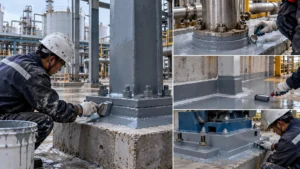
Before applying polyurethane top coat, the applicator should check surface condition, recoat interval, cure state, temperature, humidity, and whether light sanding is required. The final decision should follow the TDS and project coating specification.
Do Not Use Polyurethane Top Coat as the Main Anti-Corrosion Layer
Polyurethane top coat should not be used as the main anti-corrosion layer because it is designed mainly for weathering and finish protection, not deep barrier protection on bare steel. In heavy-duty systems, corrosion protection comes from the prepared substrate, primer, intermediate coat, and total DFT.
Why Bare Steel Needs Primer First
Bare steel needs primer first because primer provides adhesion, wetting, and the first corrosion-resisting layer over the prepared substrate. For C3–C5 steel, primer selection may involve epoxy primer, zinc-rich epoxy primer, or another anti-corrosion primer depending on exposure.
Applying polyurethane topcoat directly to bare steel can create poor long-term corrosion resistance, especially outdoors or in coastal environments. The film may look acceptable at first, but rust can start at scratches, edges, welds, or thin areas.
Why Epoxy Intermediate Still Matters
Epoxy intermediate coat still matters because it adds barrier thickness and reduces water, oxygen, and ion movement toward the steel. High-build epoxy or epoxy intermediate layers often provide 100–200+ μm DFT per coat depending on the TDS and system design.
Without enough epoxy barrier protection, polyurethane topcoat may protect color and gloss but not stop corrosion from developing under the film. For outdoor steel, the best result usually comes from matching primer, epoxy intermediate coat, and PU topcoat as one system.
When PU Alone May Be Acceptable
PU alone may be acceptable only in selected low-risk cases where the substrate is not bare steel, the surface is already protected, and the TDS allows the application. Examples may include maintenance of an existing compatible PU finish, cosmetic repair over sound coating, or indoor finish applications with low corrosion risk.
Even in these cases, the surface must be clean, dry, and properly prepared. For industrial polyurethane coatings, “direct application” should always be verified with product data rather than assumed from product name.
Compare Solvent-Borne, Water-Based, and Aliphatic PU Topcoat Options
Different polyurethane top coat options should be compared by VOC limits, weathering demand, drying condition, application temperature, and required finish quality. The best polyurethane top coat over epoxy is the one that matches the system, exposure, and application condition—not the one with the broadest marketing claim.
Aliphatic Polyurethane for Outdoor Weathering
Aliphatic polyurethane is usually preferred for outdoor weathering because it provides better UV resistance, chalking resistance, gloss retention, and color retention than many aromatic systems. It is widely used as the final coat on steel structures, machinery, marine above-water steel, and infrastructure.
For outdoor steel, buyers should confirm color, gloss level, expected weathering exposure, DFT, and compatible epoxy base coat. The topcoat should be selected as part of a complete coating system rather than an isolated finish.
Water-Based PU Topcoat for Low-VOC Conditions
Polyurethane water based top coat may be considered when VOC limits, indoor application, lower odor, or facility rules are important. However, drying conditions, humidity, temperature, film formation, and corrosion category should be checked carefully.
Water-based PU can be useful in selected industrial environments, but it should not be treated as identical to solvent-borne PU in every service condition. A dedicated water-based PU topcoat article should go deeper into humidity, drying, VOC, and application restrictions.
Acrylic Polyurethane Topcoat for Industrial Finish
Acrylic polyurethane topcoat is commonly used when industrial equipment or steel structures need a hard, durable, weather-resistant finish. It can provide good appearance, outdoor durability, and cleanability when used over compatible primer and intermediate coats.
For machinery and equipment, acrylic polyurethane is often chosen for appearance consistency, color control, and handling resistance. Buyers should check curing time, hardness development, gloss level, and touch-up repair process before production.
Prepare Topcoat Data Before Requesting TDS or RFQ
A useful RFQ for polyurethane top coat should include exposure environment, primer/intermediate system, color and gloss requirement, DFT target, recoat window, and application method. Without this information, a supplier can only recommend a generic polyurethane coating instead of a project-ready system.
Prepare these details before requesting TDS or price:
- Asset type: steel structure, equipment, machinery, coastal asset, marine above-water steel, or infrastructure
- Service environment: outdoor, coastal, marine, chemical splash, indoor, or high-humidity
- Existing primer or epoxy intermediate coat
- Recoat interval and current surface condition
- Target DFT and total system DFT
- Color, gloss, and finish requirement
- UV resistance and weathering requirement
- Chemical splash, abrasion, or cleaning exposure
- Application method: spray, brush, roller, shop coating, or field coating
- Temperature and humidity during application
- Maintenance cycle and expected durability
- Required documents: TDS, SDS, system proposal, COA, or application guidance
For buyers comparing polyurethane anti-corrosion coating series with epoxy base systems, the RFQ should clarify whether the coating is used as a final weathering layer, a finish coat for equipment, or part of an outdoor steel anti-corrosion system.
FAQ About Polyurethane Top Coat
Can polyurethane top coat be applied over epoxy?
Polyurethane top coat can be applied over epoxy when the epoxy is fully cured, clean, within the recoat window, and approved by the TDS. If the epoxy surface is contaminated, over-aged, or affected by amine blush, intercoat adhesion failure or peeling can occur.
Is polyurethane top coat good for outdoor steel?
Polyurethane top coat is good for outdoor steel as the final weathering layer because it improves UV resistance, color retention, gloss retention, and chalking resistance. For C3–C5 steel, it should normally be used over primer and epoxy intermediate layers rather than directly over bare steel.
Can polyurethane top coat be applied directly to bare steel?
Polyurethane top coat is usually not recommended directly on bare steel for industrial anti-corrosion service. Bare steel normally needs surface preparation and primer first, especially where the system must resist moisture, salts, chemical splash, or outdoor weathering.
What is the typical DFT for polyurethane top coat?
Typical polyurethane top coat DFT is often around 40–80 μm per coat, but the final range depends on product type, application method, color, exposure, and project specification. Excessive DFT can cause curing or appearance defects, while low DFT may reduce weathering performance.
What is the difference between epoxy topcoat and polyurethane top coat?
Epoxy topcoat is usually stronger for barrier and chemical resistance, while polyurethane top coat is usually stronger for UV resistance, weathering, gloss retention, and color retention. For outdoor steel, epoxy is often used below and polyurethane is used as the final exposed layer.
Is water-based polyurethane top coat suitable for industrial steel?
Water-based polyurethane top coat can be suitable for selected industrial steel applications where VOC limits, indoor use, or facility rules matter. It still requires checks for humidity, drying temperature, DFT, substrate preparation, and compatibility with the primer or epoxy layer.
Request Polyurethane Topcoat System Support
The safest way to select polyurethane top coat is to review the existing primer/intermediate layer, exposure environment, color and gloss requirement, DFT target, and recoat window together. A topcoat should not be selected only by color or price because UV exposure, weathering, compatibility, and application conditions directly affect performance.
For PU topcoat TDS, RFQ, or epoxy + PU system support, send your asset type, exposure environment, existing coating layer, color/gloss requirement, DFT target, application method, and maintenance cycle through the polyurethane topcoat technical support form. HUILI can help review whether your project needs aliphatic polyurethane, acrylic polyurethane topcoat, water-based PU, or a full primer–epoxy–PU coating system.