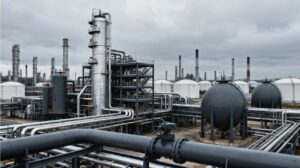
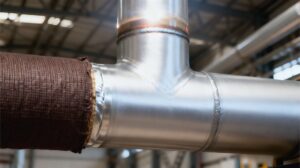
On most structural steel projects, intumescent fireproof paint is not applied directly to bare steel—it is applied as part of a tested coating system that includes an anti-corrosion primer and, in many cases, a protective topcoat. Intumescent systems typically include multiple layers, and performance depends on those layers being compatible and approved together, not mixed ad‑hoc on site.
![Intumescent fireproof coating system over anti-corrosion primer with topcoat]](https://huilicoating.com/wp-content/uploads/2026/01/intumescent-system-primer-topcoat-layers.webp-1024x575.jpg "How to Apply Fireproof Paint over Anti-Corrosion Primer (Compatibility Guide) 1")
1) Why primer compatibility matters (fire performance + adhesion)
Intumescent coatings form an insulating char under fire exposure, but the system can fail if the primer loses adhesion at high heat and the char layer detaches from the steel. Industry guidance emphasizes that the primer must be tested and approved as part of the intumescent system, and primer dry film thickness (DFT) can be a critical factor in maintaining adhesion.
Compatibility is not only about “sticking today.” It’s also about:
The primer staying bonded under fire exposure.
The intumescent layer expanding properly without cracking or flaking.
The topcoat sealing the intumescent layer in humid/outdoor environments.
2) The correct layer order (do not improvise on site)
A typical thin-film intumescent system for steel is one of these:
Two-coat system (interior, low corrosivity)
Primer (anti-corrosion)
Intumescent coating
Three-coat system (higher moisture / weathering / higher corrosivity)
Primer (anti-corrosion)
Intumescent coating
Topcoat / sealer coat (protects the intumescent layer from moisture and early degradation)
In more corrosive environments, guidance from application documents shows that an epoxy primer is often used prior to the intumescent layer and a polyurethane (or similar) topcoat may be used as the final coat.
Go to Fire-Resistant Coating Series>>>
3) Primer selection rules (what engineers should specify)
Your goal is to specify a primer that is:
Anti-corrosive enough for the service environment.
Compatible with the intumescent product (approved system).
Applied at an acceptable DFT and within defined recoat intervals.
Common primer families used under intumescent (general industry practice)
Many intumescent systems allow epoxy or alkyd primers, but some systems caution against certain zinc-rich primers or primer types unless explicitly approved. Always verify approvals and compatibility lists from the intumescent system supplier.
Primer DFT matters
Industry guidance notes that primers are often approved up to a maximum DFT, because excessive primer thickness can increase the risk of adhesion loss under fire exposure. This is why primers are tested and specified within limits as part of the full system approval.
Go to Anti-Rust & Primer Coatings Series>>>
![Sweep blasting primed steel before applying intumescent coating]](https://huilicoating.com/wp-content/uploads/2026/01/sweep-blast-primed-steel-before-intumescent.webp-1024x575.jpg "How to Apply Fireproof Paint over Anti-Corrosion Primer (Compatibility Guide) 2")
4) Surface preparation and primer condition checks (before applying intumescent)
Even if the primer is “correct on paper,” you still need to confirm it is suitable in the field.
For new steel (freshly primed)
Check:
Primer is fully cured “dry to overcoat.”
No contamination (dust, oil/grease, overspray powder).
DFT is within specification tolerance.
Any damaged areas are repaired before the intumescent coat.
For primed steel stored outdoors (common in project delays)
If there is extended time between primer application and intumescent application, application guidance recommends:
Washing off contamination (oils/greases, debris, chalking).
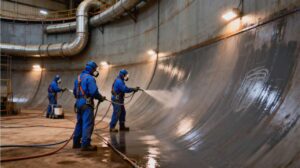
Uniform abrasive sweep blasting of the primer to restore a surface profile for adhesion.
Feathering transition margins and repairing fractured primer back to the original prep standard.
5) Application rules for intumescent coating (thickness + passes)
Intumescent coating performance is thickness-driven, but applying too much in one pass can cause sagging, cracking, or poor curing. Application guides commonly require multi-pass application to reach the required DFT safely, especially for 90/120-minute ratings.
Practical thickness control steps
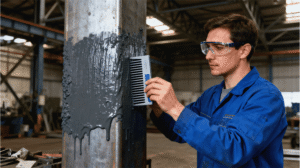
Measure WFT during application to control build.
Measure DFT after curing for acceptance.
Apply additional coats as needed to reach the specified DFT.
6) Topcoat over intumescent: when it’s mandatory
In demanding exposure conditions, the topcoat’s key role is acting as a sealer to protect the intumescent layer from moisture and environmental degradation. Guidance explains that too low a topcoat thickness can reduce sealing protection, while too high a topcoat thickness may impede char formation and shorten fire duration, so the topcoat must also be compatible and specified correctly.
A topcoat is commonly required when:
The steel is exterior or semi-exposed.
Humidity is high (many Southeast Asia locations).
The surface will be washed down, cleaned, or mechanically abused.
There is risk of moisture ingress into the intumescent film.
Go to Polyurethane Anti-Corrosion Coatings>>>
7) Common compatibility failures (and how to avoid them)
Problem 1: Intumescent delaminates from primer
Common drivers:
Primer not approved/compatible.
Primer DFT too high.
Primer contaminated or over-aged before recoating.
Preventive actions:
Use an approved primer list for the chosen intumescent system.
Control primer DFT and recoat window.
Sweep blast/clean aged primer before applying intumescent.
Problem 2: Cracking, mud-cracking, or sagging
Common drivers:
Over-thickness in a single coat.
Poor curing conditions.
Preventive actions:
Apply in multiple passes to reach target DFT.
Follow temperature/humidity limits from the product data.
Problem 3: Exterior intumescent degrades early
Common drivers:
Missing or incompatible topcoat.
Inadequate sealing thickness.
Preventive actions:
Specify a compatible sealer/topcoat for humid/outdoor exposure.
![Wet film thickness measurement for intumescent fireproof coating]](https://huilicoating.com/wp-content/uploads/2026/01/wft-comb-intumescent-thickness-check.webp-1024x575.jpg "How to Apply Fireproof Paint over Anti-Corrosion Primer (Compatibility Guide) 3")
8) RFQ Checklist (to get a correct system approval + quote)
To quote and technically approve “fireproof paint over primer,” provide:
Country/region: Middle East / Southeast Asia / Central Asia.
Steel member schedule (beam/column sizes) and required fire rating (60/90/120 min).
Service exposure: interior dry / semi-exposed / exterior; corrosion category if defined.
Existing or planned primer type + DFT range and when it was applied.
Surface preparation method for primer (blast standard) and any site rework plan.
Whether a topcoat is required (UV/weathering/moisture).
Required standards/certifications (e.g., cellulosic vs hydrocarbon scenarios).
Go to Steel Structure Coating Solutions>>>
Next step: request a compatibility confirmation package
Do not assume compatibility. Request a system confirmation package (recommended primer + intumescent + topcoat, plus DFT limits, recoat windows, and TDS/SDS) for your project environment and fire rating requirement. Industry guidance stresses that all coats in an intumescent system must be compatible and approved together to ensure fire protection performance.
Contact Us
We would love to speak with you.
Feel free to reach out using the below details.