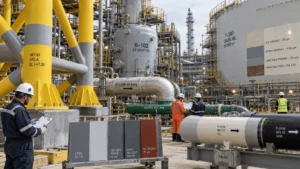
Power generation facilities — coal-fired, gas-fired, combined cycle, or biomass — bring together almost every coating challenge in industrial protection. High-temperature boiler exteriors, flue gas systems carrying SO₂ and moisture, cooling towers with continuous water exposure, large structural steel in outdoor industrial atmospheres, and fireproofing requirements for turbine building steel. Each zone has distinct requirements, and specifying a single coating type across the whole facility is a reliable way to get premature failures somewhere.
This guide works through the main asset categories in a thermal power plant, what drives corrosion in each, and which coating systems are appropriate.
Boiler Exterior and High-Temperature Process Equipment
The exterior of a coal or gas-fired boiler operates at elevated temperatures — the boiler casing surface is typically 150–300°C in operation, with local hot spots near burners that can exceed 400°C. Standard epoxy or polyurethane coatings are completely unsuitable here. This is the domain of silicone and aluminium-silicone systems.
| Surface Temperature | Recommended Coating | Notes |
| Up to 200°C | Modified epoxy or epoxy-silicone hybrid | Better corrosion resistance than pure silicone at this range |
| 200–400°C | Silicone aluminium (standard) | Industry standard; aluminium pigment provides barrier + galvanic effect |
| 400–600°C | High-ratio aluminium-silicone | Higher aluminium loading for elevated temperature stability |
| Above 600°C | Inorganic zinc silicate or ceramic | Organic binders can’t survive; inorganic systems required |
One practical note on silicone systems specifically: they cure on first heat-up, not at ambient temperature. The coating is applied and looks dry within hours, but the actual cross-linking and development of heat resistance happens during the first firing cycle. This means the boiler can be commissioned while the coating is still technically in its ‘uncured’ state — the heat-up procedure needs to follow the manufacturer’s guidelines (gradual ramp, typically 25–50°C per hour to operating temperature) to avoid blistering during the first cure cycle.
For the full temperature band breakdown and system selection logic across silicone, inorganic zinc, and ceramic systems, see the high-temperature coating guide.
Flue Gas Systems — Stacks, Ducts, and Scrubbers
Flue gas systems in coal-fired plants present some of the most aggressive internal corrosion conditions in any industrial facility. The combination of SO₂, SO₃, NOₓ, water vapour, and fly ash creates an environment that attacks both carbon steel and many coating systems rapidly.
The specific risk is dew point corrosion. When flue gas temperature drops below the acid dew point (typically 120–160°C for sulphuric acid mist), acid condenses on the duct wall. This is highly corrosive and attacks both steel and most organic coatings. At the other end of the operating cycle — during startup and shutdown — the system passes through the dew point twice, so the problem is periodic rather than continuous.
Coating selection for flue gas ductwork depends on the operating temperature profile:
- Above 200°C continuous: silicone coating, applied to the exterior; the interior at this temperature doesn’t typically need coating if the steel is adequately thick
- At or near dew point: acid-resistant vinyl ester or glass flake epoxy for the interior; these areas are the highest-risk for acid attack
- After wet scrubbers (FGD systems): the cleaned flue gas is cool and saturated with water, often at acidic pH; glass flake epoxy or vinyl ester lining for the duct interior downstream of the scrubber
Stack interior linings are a specialist application — the combination of acid resistance, high temperature resistance, and thermal cycling resistance narrows the field considerably. Borosilicate glass flake epoxy or potassium silicate systems are used in the most demanding stack applications.
Cooling Towers and Cooling Water Systems
Cooling towers are high-maintenance structures in any power plant. The combination of continuous water exposure, biological growth, and mechanical wear from water distribution creates rapid degradation of unprotected or poorly protected steel.
For steel cooling tower structure and basin:
- Structural steel: C4 to C5 system — zinc-rich primer / high-build epoxy / polyurethane topcoat at 300–400 µm total DFT
- Cold water basin interior (concrete): solvent-free epoxy or glass flake epoxy, 300–500 µm; concrete substrate requires specific preparation and a damp-tolerant primer
- Fill support frames: hot-dip galvanised steel is common; if painting is required, use a zinc-compatible primer system
Cooling water distribution pipework and heat exchanger water boxes — where the coating is in contact with cooling water — should be specified with a solvent-free epoxy system. Where the cooling water has high chloride content (seawater or brackish water once-through systems), glass flake epoxy is preferred.
Structural Steel — Turbine Buildings and Power Plant Structures
The main structural steel of a thermal power plant — turbine halls, boiler houses, administration buildings — is in a C3 to C4 atmospheric environment for most inland locations. Coastal power stations move to C4–C5.
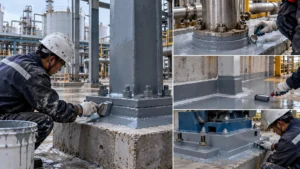
Standard specification: zinc-rich epoxy primer / epoxy intermediate / polyurethane topcoat, at 250–350 µm total DFT for C3/C4, or 320–420 µm for C5.
Where structural steel is in the vicinity of flue gas — near stack bases, around scrubber systems — the atmosphere is more aggressive due to SO₂ and acid mist. These areas warrant a C5 system even if the general plant is C3/C4.
For a full breakdown of C5 system requirements, primer selection, and anti-corrosion coating for steel structures in industrial and coastal environments, including system design by corrosivity category, see the detailed guide.
Corrosion Under Insulation in Power Plant Pipework
Power plants have extensive insulated pipework — steam lines, feedwater lines, condensate lines — operating at temperatures from ambient to 500°C+. CUI (corrosion under insulation) is a significant maintenance issue in operating plants, where moisture ingress through damaged insulation causes rapid localised corrosion beneath the insulation jacketing.
The coating under insulation on hot pipework needs to resist the operating temperature, survive thermal cycling, and maintain adhesion in the presence of moisture that ingresses during plant outages. Standard epoxy coatings cannot do all three. Modified silicone or thermal spray aluminium (TSA) are the preferred systems for CUI protection on hot pipework.
API RP 583 (Corrosion Under Insulation and Fireproofing) is the primary reference for CUI coating selection in power plant applications.
Fireproofing for Turbine Buildings
The structural steel in turbine buildings is typically required to have fire resistance — both for life safety and to protect the significant equipment investment in the turbine hall. The applicable fire scenario depends on the facility: a hydrogen-cooled generator creates a hydrocarbon fire risk requiring UL 1709-rated fireproofing; other areas of the turbine building may be specified to the cellulosic fire curve (BS 476 / EN 13501).
The distinction matters significantly — confirm the applicable fire curve with the project’s fire engineer before specifying. The required fire resistance period (typically 60 or 90 minutes) and the structural steel section factors will determine the intumescent DFT or cementitious thickness required.
💡 For intumescent coating DFT calculation based on section factor and fire resistance period, see how to calculate intumescent coating thickness. For a clear explanation of passive fire protection system types and when each applies, see passive fire protection vs active fire protection.
Questions from Power Plant Projects
Can we apply silicone coating to a boiler that’s already in service?
In-service application on a hot boiler is possible with some silicone products specifically formulated for hot surface application — some can be applied to surfaces up to 200°C. However, this is a specialist application requiring specific equipment, appropriate PPE, and careful attention to solvent flash-off. The more common approach for maintenance recoating is to apply during a planned outage when the surface has cooled below 40°C. Confirm with the manufacturer whether their specific product is rated for hot surface application.
What’s the best coating for a coal-fired boiler flue gas desulphurisation (FGD) system?
FGD systems — wet scrubbers that remove SO₂ from flue gas — contain a corrosive slurry of limestone, gypsum, and acidic process water at temperatures typically 50–80°C. The interior of the absorber tower and associated pipework needs a lining with both acid resistance and resistance to abrasion from the slurry. Glass flake vinyl ester or borosilicate glass flake epoxy are the most commonly specified systems for FGD interiors. Confirm the specific chemistry (pH, chloride content, temperature) of the FGD slurry with the plant process team before finalising the lining specification.
How often do power plant coatings need maintenance?
Significantly less often than most plant maintenance teams expect — provided the initial specification and application are correct. A well-specified C5 system on structural steel, with a proper zinc-rich primer, should reach 15–20 years before major maintenance. High-temperature silicone coatings on boiler casings typically need touching up around penetrations and damaged areas at each major outage (typically every 3–5 years), with full recoating at 10–15 years. Flue gas duct linings depend heavily on the severity of the acid attack and the quality of the original application — inspection at each major outage and spot repair of damaged areas extends service life significantly.
Power Plant Coating Systems from Huili Coating
Huili Coating manufactures high-temperature silicone coatings (200–650°C), anti-corrosion systems for structural steel and cooling towers, acid-resistant glass flake epoxy for flue gas applications, and UL 1709-rated intumescent fireproofing — for thermal power plants, combined cycle plants, and industrial power generation facilities.
- High-temperature silicone aluminium: 200–600°C range
- C5 anti-corrosion systems: zinc-rich primer / glass flake epoxy / PU topcoat
- Glass flake epoxy: cooling water systems, FGD, flue gas ductwork
- UL 1709 intumescent fireproofing: 60, 90, 120-minute ratings
Send your project zone data — boiler surface temperatures, structural steel section factors, flue gas chemistry, fire resistance periods required, and coastal or inland location — via the project inquiry form and our technical team will recommend a zone-specific coating system and provide TDS documentation for your specification review.