Steel structures fail faster when coatings are under-specified, poorly applied, or selected as a single “paint” instead of a coating system. ISO 12944 is widely used because it guides selection of a coating system based on environmental corrosivity and durability (time to first major maintenance), and it also points to design and surface-prep factors that prevent premature failure.
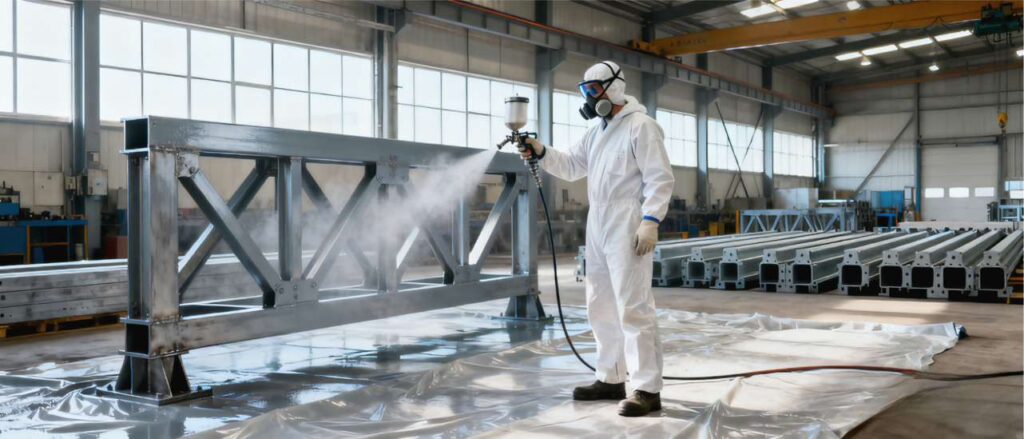
Why Steel Structures Need Professional Coating Systems
Corrosion risk is not cosmetic—it accelerates section loss and increases lifecycle maintenance costs when defects begin at edges, welds, and bolted connections. A professional system approach matters because ISO 12944 treats corrosion protection as a combination of environment severity, durability target, and execution controls such as surface preparation and specification writing.
Key drivers that push projects toward “system” (not single coat)
Corrosive exposure: industrial pollutants, humidity, coastal salt
Service life target: “time to first major maintenance” is a planning variable in ISO 12944 durability thinking
Safety and compliance: steel assets (plants, bridges, offshore) often have strict inspection/maintenance needs
Unique value (what buyers forget): “C3/C4/C5” alone is not a complete spec. To recommend the right system and quote accurately, a manufacturer also needs steel condition (new build vs maintenance), surface prep method, application constraints, and durability target.
Common Steel Structure Applications
Coating requirements vary widely by application, even within the same country.
Industrial buildings (workshops, warehouses, plants)
Bridges and transportation steelwork
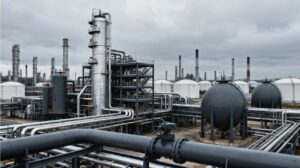
Power plants and energy facilities
Offshore platforms and coastal steel structures (high salt + humidity)
If your scope is mainly structural steel, use our application hub to align coating systems with typical steelwork conditions and deliverables:
Anchor: [Steel Structure Coating Solutions] ->
Recommended Coating Systems for Steel Structures
Most projects use one of two “system families”: anti-corrosion systems (nearly always needed) and fireproof systems (only if required by code/owner spec).
Anti-Corrosion Coating System
A typical anti-corrosion system for steel structures includes:
Primer: adhesion + corrosion inhibition (zinc-rich or epoxy primer, project-dependent)
Intermediate: high-build epoxy to create barrier thickness
Topcoat: weathering/UV resistance and appearance (often polyurethane; project-dependent)
ISO 12944 frames system selection around exposure and durability; using the correct system build and QC is more important than chasing a single “best” product.
For primer selection and system compatibility guidance, see:
Anchor: [Anti-Rust & Primer Coatings Series] ->
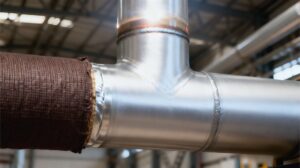
Fireproof Coating System (When Fire Rating Is Required)
Fireproofing is a separate system layer group (often passive fire protection) that may be specified to achieve 60/90/120-minute ratings (project-dependent). Fireproof coatings require correct system selection, documentation, and application control to meet approval requirements.
If your project includes structural steel fire protection requirements, start here:
Anchor: [Fire-Resistant Coating Series] ->
Key Factors to Consider When Choosing Coating
Environment (corrosivity category)
ISO 12944 is used to relate the environment (corrosivity) to coating system selection and performance planning. Higher corrosivity generally demands higher system robustness and tighter execution control.
Standards and durability
ISO 12944 uses durability as “time to first major maintenance,” which affects coating type choice and minimum film thickness directionally (final by spec/TDS).
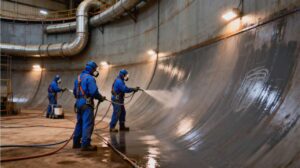
Application method and constraints
New build vs maintenance repaint
Surface preparation capability (full blasting vs limited power-tool work)
Climate constraints (humidity/condensation risk)
ISO 12944 includes parts focused on surface preparation and technical writing of coating specifications, underscoring that execution controls are essential to performance.
For a system-based overview of how ISO 12944 links environment and durability to coating system choice, see our ISO guide article (use this if it exists on your site; otherwise replace with your ISO 12944 post URL):
Anchor: [ISO 12944 C3 C4 C5 Explained] ->
Common Failures + Troubleshooting (What we see on job sites)
Rusting at edges and welds: typically low DFT on sharp geometry; add stripe coats and verify DFT at details.
Blistering near coast: often salt contamination under the film; improve washing/cleanliness before coating.
Intercoat delamination: missed recoat window or surface contamination; track recoat intervals and condition surfaces.
ISO 12944 emphasizes that design, surface preparation, and specification details exist to minimize premature coating failure risk.
Quality/Inspection Checklist (DFT, recoat, surface prep)
Use this to reduce rework and accelerate handover.
Surface preparation
Confirm steel condition and required prep method (per project spec).
Verify cleanliness (oil/grease, dust, salts where relevant).
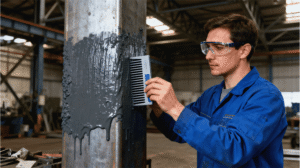
DFT control
Measure DFT by layer (primer / intermediate / topcoat).
Record readings on high-risk areas (edges, welds, bolts).
Accept DFT by range and confirm targets by TDS/project specification.
Recoat interval
Track time/temperature/humidity.
If exceeded, follow surface conditioning procedure (project-dependent).
RFQ Checklist (Send this for a fast, accurate quote)
To receive a project-based recommendation and quotation, include:
Project location and application (industrial building, bridge, power plant, offshore)
Environment description or ISO category target (if specified)
Durability target (years to first major maintenance)
Steel condition: new build or maintenance repaint
Surface preparation method available
Application method: shop/site, shutdown windows, climate constraints
Required systems: anti-corrosion only or anti-corrosion + fireproof
Documents requested: TDS/SDS, system recommendation, QC checklist
CTA: Send Your Project Details
Send your environment (industrial/coastal/offshore), durability target, steel schedule, and application constraints. HUILI will recommend a project-based coating system (anti-corrosion and, if required, fireproof) with TDS/SDS and a quotation aligned to your execution reality. ISO 12944 is widely used as a guide for selecting coating systems based on corrosivity and durability needs.
Contact Us
We would love to speak with you.
Feel free to reach out using the below details.