A uv resistant polyurethane coating manufacturer should be evaluated by outdoor weathering performance, coating system compatibility, technical documents, and project supply ability. For procurement managers, EPC contractors, coating distributors, outdoor equipment manufacturers, and steel structure buyers in the Middle East, Southeast Asia, and Central Asia, the key decision is not only which manufacturer gives a lower price, but which supplier can support the full coating system.
This guide helps buyers check TDS, SDS, UV and weathering requirements, gloss retention, color retention, epoxy compatibility, export packaging, and RFQ data before selecting a polyurethane coating manufacturer for outdoor steel, machinery, coastal assets, and infrastructure projects.
Start with Manufacturer Qualification, Not Only Product Color
A UV resistant polyurethane coating manufacturer should be evaluated by weathering performance, technical documents, coating system compatibility, and project supply ability, not only by color options or unit price. A bright color sample may look acceptable in the office, but outdoor steel projects need coating data, system logic, application limits, and reliable production support.
In real industrial projects, we often see buyers compare only color, gloss, and price per kg. That is not enough for outdoor steel, port equipment, machinery housings, or infrastructure exposed to sunlight, rain, salt, and temperature cycling. The manufacturer should help confirm whether the coating is an aliphatic polyurethane, acrylic polyurethane coating, or another polyurethane topcoat system suitable for the actual exposure.
Why UV Resistance Matters for Outdoor Steel
UV resistance matters for outdoor steel because sunlight can cause coating chalking, fading, gloss loss, and surface degradation. A polyurethane coating used as a final topcoat should resist weathering better than epoxy when long-term color and appearance are required.
For outdoor steel structures, machinery, storage tank exteriors, and coastal facilities, UV exposure is not a cosmetic issue only. Once the topcoat chalks or degrades, the system may lose appearance value, become harder to clean, and expose the lower layers to faster environmental attack.
Why Manufacturer Support Matters More Than a Product Name
Manufacturer support matters more than a product name because “UV resistant polyurethane” does not define DFT, recoat interval, gloss level, color tolerance, application temperature, or compatible primer system. These details come from TDS, SDS, coating system proposals, and technical communication.
A qualified polyurethane coating manufacturer should ask about substrate, outdoor exposure, color and gloss requirement, existing primer, epoxy intermediate coat, DFT target, application method, quantity, and destination market. If the manufacturer only quotes a unit price without asking project conditions, the risk of wrong system selection increases.
Use This Manufacturer Evaluation Checklist
The fastest way to compare UV resistant polyurethane coating manufacturers is to check their product data, system compatibility, weathering support, and RFQ response quality. This checklist helps buyers separate a real industrial coating supplier from a generic product seller.
| Buyer Checkpoint | What to Ask the Manufacturer | Why It Matters | Risk If Missing |
|---|---|---|---|
| Product type | Is it aliphatic PU, acrylic PU, or another polyurethane system? | Determines UV stability and outdoor weathering behavior | Chalking, fading, poor finish life |
| TDS / SDS | Can they provide full TDS and SDS? | Confirms DFT, drying, recoat, safety, and handling | Wrong application or unsafe use |
| UV/weathering support | What data, standard, or specification supports outdoor use? | Helps compare weathering resistance | Early gloss loss and color fading |
| Epoxy compatibility | Can it be applied over epoxy primer or epoxy intermediate? | Ensures full anti-corrosion system compatibility | Peeling or intercoat adhesion failure |
| Color/gloss control | Can color code and gloss level be specified? | Important for visible steel, equipment, and brand color | Appearance mismatch |
| Application conditions | What temperature and humidity limits apply? | Prevents curing, surface, and film defects | Orange peel, poor cure, blistering |
| Export supply | What packaging, MOQ, lead time, and documents are available? | Important for overseas buyers and distributors | Delivery delay or document gap |
| RFQ response | Do they ask for project environment, DFT, and system layers? | Shows technical selection ability | Generic quote and wrong system |
This table should be used before comparing price. A manufacturer with stronger technical support can reduce rework, delivery confusion, and coating mismatch, even when the unit price is not the lowest.
Check UV and Weathering Performance Before Comparing Price
UV and weathering performance should be checked before price because outdoor coating failure often appears as chalking, fading, gloss loss, or topcoat breakdown. A low-cost polyurethane coating may look similar when freshly applied, but its outdoor performance depends on resin chemistry, pigmentation, curing, DFT, and system compatibility.
Gloss Retention and Color Retention
Gloss retention and color retention show whether the polyurethane coating can maintain appearance under sunlight, rain, and outdoor exposure. For visible steel structures, machinery, equipment, and infrastructure, these properties affect both aesthetics and maintenance planning.
Buyers should ask how color and gloss are specified, whether the coating is designed for outdoor exposure, and whether the manufacturer can match required color codes. If color consistency is important, confirm sample panels before bulk order.
Chalking Resistance in Outdoor Exposure
Chalking resistance is important because UV exposure can break down the surface of some coatings and leave a powdery layer. Polyurethane topcoat is often selected over epoxy as the final outdoor layer because epoxy is more likely to chalk under sunlight.
For industrial projects, chalking resistance should be reviewed with exposure environment, coating thickness, topcoat chemistry, and maintenance cycle. A UV resistant polyurethane coating manufacturer should explain whether the product is intended for outdoor steel, coastal exposure, or mainly indoor finish use.
Marine and Coastal Above-Water Conditions
Marine and coastal above-water conditions require stronger UV and weathering resistance because steel may face salt spray, humidity, sunlight, and wet-dry cycling at the same time. In these areas, polyurethane topcoat usually works above epoxy primer or epoxy intermediate coat, not directly on bare steel.
If the project is near the coast, buyers should provide distance from sea, humidity level, salt exposure, asset type, and maintenance access. For marine exposure zones or offshore steel, the full coating system should be reviewed instead of choosing PU by color alone.
Confirm Coating System Compatibility
UV resistant polyurethane coating should be selected as part of a coating system, usually over primer or epoxy intermediate layers, rather than as a standalone corrosion barrier. Compatibility is especially important for outdoor steel, coastal assets, machinery, and export projects where rework is expensive.
Epoxy Primer and PU Topcoat Compatibility
Epoxy primer and PU topcoat compatibility means the polyurethane topcoat can bond properly to the epoxy layer within the approved recoat window and curing condition. This combination is common because epoxy provides adhesion and barrier protection, while polyurethane provides UV and weathering resistance.
For buyers who need the system logic first, the polyurethane top coat guide explains how PU topcoat works as the final weathering layer. For product selection, the polyurethane anti-corrosion coating series can be reviewed with the project environment and finish requirements.
Recoat Window and Surface Cleanliness
Recoat window and surface cleanliness decide whether the polyurethane coating can bond correctly to the primer or epoxy intermediate coat. If the topcoat is applied too early, trapped solvent or incomplete cure may cause defects; if applied too late, sanding or surface activation may be needed.
Common site problems include dust, oil, salt deposits, condensation, transport damage, and amine blush on epoxy surfaces. These can cause peeling, blistering, intercoat adhesion failure, or uneven finish even when the coating products are chemically compatible.
Bare Steel and Primer Requirement
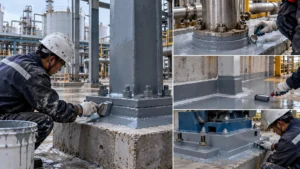
Bare steel usually needs primer before polyurethane coating because topcoat is not designed to be the main anti-corrosion layer. For C3–C5 outdoor steel, marine above-water structures, or industrial equipment, the coating system normally needs surface preparation, primer, barrier coat where required, and then polyurethane topcoat.
A reliable polyurethane coating manufacturer should not recommend PU topcoat directly on bare steel unless the TDS specifically allows it for that condition. In most heavy-duty steel projects, the safer route is primer + epoxy intermediate + polyurethane topcoat.
Match the Manufacturer to the Application
The right manufacturer should understand whether the project involves outdoor steel, machinery, marine above-water assets, infrastructure, or export distribution. UV resistant polyurethane is a product category, but each application requires different color, gloss, weathering, compatibility, and documentation support.
Outdoor Steel Structures
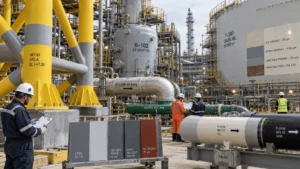
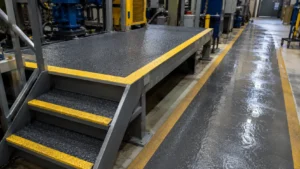
Outdoor steel structures need polyurethane coatings that can resist UV exposure, rain, humidity, and temperature cycling. Typical assets include pipe racks, workshops, bridges, platforms, steel frames, and power plant structures.
For outdoor steel structure coating systems, the manufacturer should help confirm primer, intermediate coat, polyurethane topcoat, DFT, surface preparation, and maintenance target. Color and gloss are important, but the system layers below the topcoat decide corrosion durability.
Machinery and Equipment
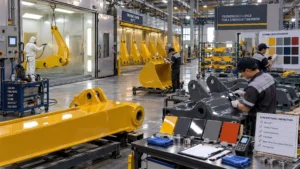
Machinery and equipment need polyurethane coating for appearance, weathering, handling resistance, and cleanability. Equipment frames, pumps, valves, housings, construction machinery, and industrial machines may use polyurethane topcoat over epoxy primer or other compatible base layers.
A polyurethane coating manufacturer should ask about factory coating process, handling time, packaging, transport, outdoor storage, color code, and repair method. These factors affect whether the coating can survive production, shipping, and installation.
Coastal and Marine Above-Water Steel
Coastal and marine above-water steel needs UV resistant polyurethane coating that can handle sunlight, humidity, salt spray, and wet-dry cycling. Examples include port equipment, ship upper structures, deck equipment, railings, and offshore above-water steel.
For marine and offshore coating applications, the polyurethane layer is normally only the final weathering coat. The system may still require zinc-rich primer, epoxy barrier coat, stripe coating, and salt contamination control.
Export and Distributor Supply
Export and distributor supply requires more than product performance because overseas buyers need packaging, labeling, documents, lead time, and stable batch supply. Buyers in the Middle East, Southeast Asia, and Central Asia may need TDS, SDS, COA if required, packing details, sample panels, and export-ready communication.
A manufacturer should be able to respond with product options, application notes, package size, MOQ, lead time, and shipping-related documents. For distributors, consistent color, stable supply, and technical support are especially important.
Prepare RFQ Data Before Contacting the Manufacturer
A useful RFQ for a UV resistant polyurethane coating manufacturer should include exposure environment, primer system, color/gloss requirement, DFT target, order quantity, and destination market. The more complete the RFQ, the easier it is for the manufacturer to recommend the correct polyurethane topcoat system.
Before contacting a manufacturer, prepare:
- Asset type: steel structure, machinery, equipment, port steel, marine above-water structure, or infrastructure
- Service environment: outdoor, coastal, marine, high humidity, chemical splash, or indoor finish
- Substrate: carbon steel, galvanized steel, aluminum, stainless steel, or existing coating
- Existing primer or intermediate coat, such as epoxy primer or epoxy intermediate coat
- Recoat window or current surface condition
- Color code and gloss level
- Target DFT and total system DFT
- UV resistance and weathering requirement
- Application method: airless spray, conventional spray, brush, roller, shop coating, or field coating
- Project quantity and packaging requirement
- Destination country and delivery schedule
- Required documents: TDS, SDS, COA, sample panel, or coating system proposal
For outdoor steel systems that combine epoxy primer and PU topcoat, the epoxy primer and polyurethane topcoat system can help buyers understand how the topcoat fits into the full anti-corrosion structure.
FAQ About UV Resistant Polyurethane Coating Manufacturer
How do I choose a UV resistant polyurethane coating manufacturer?
Choose a UV resistant polyurethane coating manufacturer by checking product type, TDS, SDS, UV/weathering support, gloss and color control, epoxy compatibility, RFQ response quality, and export supply ability. For outdoor steel, the manufacturer should confirm whether the product is an aliphatic polyurethane or acrylic polyurethane coating and whether it works over the specified primer system.
What documents should a polyurethane coating manufacturer provide?
A polyurethane coating manufacturer should provide TDS, SDS, recommended coating system, DFT range, recoat window, color/gloss information, packaging data, and COA if required by the project. For industrial export projects, buyers should also request shelf life, batch information, and application guidance.
Is UV resistant polyurethane coating suitable for outdoor steel?
UV resistant polyurethane coating is suitable for outdoor steel as the final weathering topcoat, especially where color retention, gloss retention, and chalking resistance matter. For C3–C5 outdoor environments, it normally works over primer and epoxy intermediate layers instead of directly on bare steel.
What should I ask before buying UV resistant polyurethane coating?
Before buying UV resistant polyurethane coating, ask about resin type, UV/weathering performance, color matching, gloss level, DFT range, drying time, recoat window, compatible primer, application temperature, packaging, and lead time. These checks reduce the risk of color mismatch, peeling, or early chalking.
Can a manufacturer supply PU coating for coastal or marine projects?
A manufacturer can supply PU coating for coastal or marine above-water projects if the product is compatible with epoxy or zinc-rich systems and suitable for salt, UV, and humidity exposure. For C5-M or CX marine conditions, the full coating system should be reviewed, not only the polyurethane topcoat.
What RFQ information helps get an accurate quotation?
Accurate RFQ information includes asset type, exposure environment, substrate, primer/intermediate layer, color code, gloss level, DFT target, quantity, packaging, destination country, and required documents. With this data, the manufacturer can quote a suitable polyurethane topcoat system instead of a generic coating.
Request UV Resistant Polyurethane Coating Manufacturer Support
The safest way to evaluate a UV resistant polyurethane coating manufacturer is to send project exposure, substrate, existing primer, color/gloss requirement, DFT target, and RFQ documents for review. This allows the manufacturer to check whether the project needs aliphatic polyurethane, acrylic polyurethane coating, epoxy-compatible PU topcoat, or a complete outdoor coating system.
For TDS, SDS, sample, system proposal, or quotation support, send your asset type, exposure environment, coating layers, color and gloss requirement, DFT target, quantity, packaging need, destination country, and delivery schedule through the UV-resistant polyurethane coating RFQ form. HUILI can help review the polyurethane topcoat option and supporting coating system before quotation.