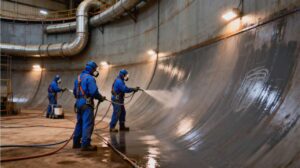
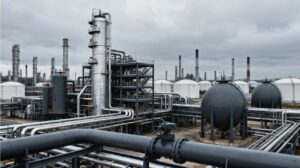
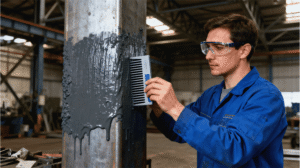
Coatings are engineered layers applied to a substrate to protect it from damage and environmental exposure while also improving appearance.
In industrial and commercial settings, coatings are often selected to extend service life by resisting corrosion, chemicals, UV radiation, abrasion, and moisture—without sacrificing color, gloss, or surface finish.
This guide explains how decorative and functional goals overlap, introduces common coating categories used across the coatings industry, and provides a practical framework for selecting a coating system based on substrate and environment
What Are Coatings?
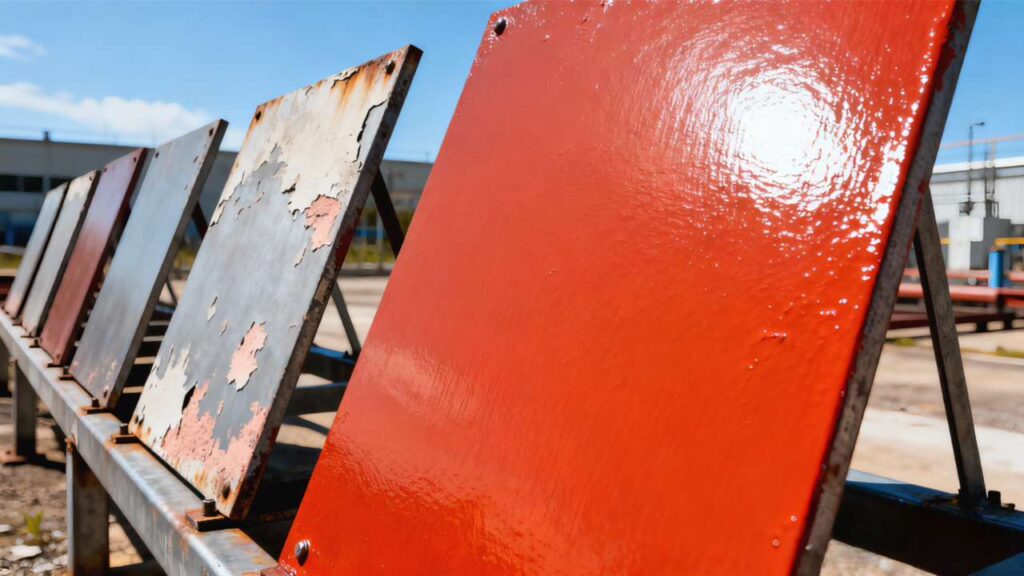
A coating is a covering applied to an object’s surface, and its purpose can be decorative, functional, or both.
In the coatings industry, this “covering” is rarely just a single layer; many real-world applications use a system (primer + intermediate + topcoat) designed around the substrate and exposure conditions.
Common coated substrates include steel, aluminum, concrete, wood, plastics, and composites, and each substrate requires different surface preparation and coating chemistry to achieve long-term adhesion and performance.
Decorative vs Functional Coatings (And Why Most Projects Need Both)
Decorative coatings focus on visual attributes such as color, gloss, texture, and overall “finish quality,” which strongly influences product perception in automotive, architectural, and consumer goods markets.
Functional coatings are formulated to deliver measurable performance—such as corrosion resistance, chemical resistance, weatherability, UV stability, water barrier performance, or easier cleaning and maintenance.
In practice, many industrial and architectural projects require both: a protective barrier for durability plus a stable appearance that resists fading, chalking, staining, or surface damage over time.
The Two Main Jobs of Coatings: Beauty and Protection
Beauty—More Than “Looking Good”
Aesthetic choices such as matte vs high gloss, texture, and color matching help products and structures communicate brand identity and design intent.
For industrial assets, appearance also supports practical needs—clear markings, safety colors, and consistent finish quality can improve recognition, inspection efficiency, and perceived asset value.
Protection—The Performance That Saves Cost
Industrial coatings act as a barrier to moisture, oxygen, chemicals, and UV radiation, which can degrade substrates and shorten equipment or infrastructure life.
For metal substrates in particular, protective coatings are widely used to reduce corrosion risk and maintenance frequency in harsh environments such as marine, industrial, and outdoor exposure.
Major Coating Types in the Coatings Industry
Beauty—More Than “Looking Good”
Below are widely used coating categories, described from an “industry selection” perspective: what they are, where they fit, and what they typically solve.
Paints (Water-Based and Solvent-Based)
Paint is one of the most common coating forms in construction and manufacturing because it can provide coverage, aesthetics, and protection in a scalable application process.
Many projects evaluate water-based versus solvent-based options based on VOC targets, application conditions, drying requirements, and performance needs, especially for large-area architectural and industrial use.
Varnishes (Often for Wood and Clear Finishes)
Varnishes are typically transparent or semi-transparent coatings used to enhance the visual depth of wood grain while providing surface protection.
They are common where appearance is a key requirement and the coating must still resist moisture, staining, and daily wear.
Sealants (Joint and Gap Protection)
Sealants are used to fill joints and gaps to prevent water ingress and air leakage, which is essential for building envelope durability and many assembly processes.
They are often paired with coatings in construction projects so the full system protects both the surface and the weak points—edges, joints, and interfaces.
Anti-Corrosion Coating Systems
Anti-corrosion coatings are designed to reduce oxidation and rust formation on metal by limiting contact with corrosive elements such as moisture, salts, and industrial chemicals.
They are widely associated with steel structures, pipelines, tanks, machinery, and infrastructure where lifecycle cost and uptime matter.
High-Performance Functional and Specialty Coatings
Functional coatings can be engineered for very specific outcomes, such as hydrophobicity (water repellency), anti-fog behavior, reduced friction, or surface property tuning for specialized products.
Specialty coatings may also target extreme temperature exposure, heavy chemical contact, or environments that demand advanced durability beyond standard architectural finishes.
How to Choose the Right Coating System (Practical Checklist)
Selecting coatings in the coatings industry is mainly a “fit” problem: substrate + environment + expected service life + application method.
A good-looking finish that fails adhesion or corrosion tests is costly, and a highly protective coating that cannot meet appearance requirements may not be accepted by end users—so both requirements should be defined early.
Use this checklist:
-
Substrate: steel, galvanized steel, aluminum, concrete, wood, plastic, composite.
-
Exposure: indoor/outdoor, UV, humidity, salt spray/marine, chemicals, abrasion, temperature extremes.
-
Performance target: corrosion resistance, chemical resistance, weatherability, cleanability, slip resistance, fire performance, etc.
-
Application constraints: spray/roller/brush, curing window, production speed, maintenance schedule, downtime tolerance.
-
Sustainability goals: evaluate low-VOC or water-based alternatives where feasible while meeting durability requirements.
The Future of Coating Technologies
The coatings industry is steadily moving toward solutions that improve performance while also supporting sustainability goals, including lower-VOC and more environmentally considerate formulations.
Nanotechnology is also influencing coating development by enabling thinner yet more durable layers with enhanced properties such as abrasion resistance, corrosion resistance, UV resistance, and even self-cleaning behavior in some use cases.
In parallel, multi-functional coatings are gaining attention because they can combine multiple protective features—helping reduce total coating steps or deliver broader protection in demanding industrial environments.
FAQ (Coatings Industry)
Q1: Are coatings always decorative or functional?
Many coatings are both, because industrial and architectural projects often need appearance plus measurable protection in the same system.
Q2: Why are protective coatings important for metal?
Protective coatings reduce exposure to moisture, oxygen, and chemicals that drive corrosion, helping extend service life in harsh environments.
Q3: What is a low-VOC coating and why does it matter?
Low-VOC approaches are often discussed as part of the industry’s push toward more sustainable coatings while still meeting durability needs.
Q4: How do I choose a coating type quickly?
Start with substrate and exposure conditions, then match required performance (corrosion, UV, chemical, abrasion) and application constraints to a coating system.
Talk to a Coatings Manufacturer
For industrial projects, the fastest way to narrow down a coating system is to share the substrate, service environment, and target service life so the coating can be specified for real exposure conditions.
If the goal is anti-corrosion protection, fire performance, or water-based options for industrial projects, align the coating selection with the project’s durability and compliance requirements from the start.