In most industrial projects, coating failure does not happen because the coating product is poor quality. It happens because the steel structure coating system — from epoxy zinc rich primer selection through to topcoat specification — was never properly designed as a coordinated system. A primer selected by habit, a topcoat chosen for appearance, and surface preparation treated as a cost reduction opportunity rather than an engineering requirement. On paper, the specification looks acceptable. In practice, the system has no internal logic, and corrosion finds its way in.
Epoxy zinc rich primer is the foundation of most correctly designed industrial steel structure coating systems in C4–C5 environments — but selecting the right primer is only one decision in a sequence of interdependent engineering choices. This guide is written for engineers, project managers, and technical buyers who need to understand what a steel structure coating system is, how it should be designed, and why system-level thinking produces better outcomes than individual product selection.
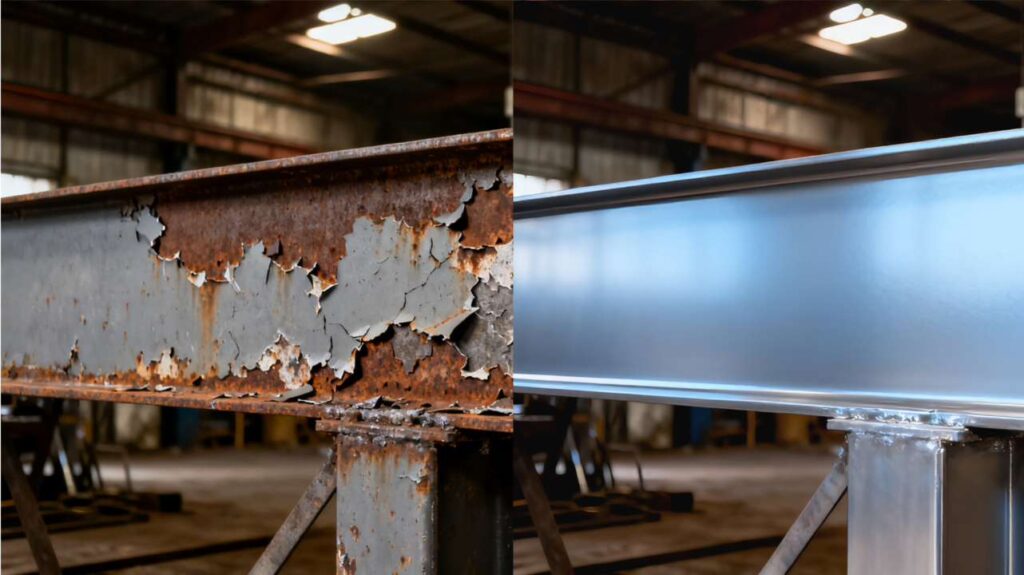
What Is a Steel Structure Coating System
A steel structure coating system is a coordinated combination of surface preparation and multiple coating layers, designed as a unit to protect steel under defined service conditions for a specified period. It is not a list of individual products — it is an engineered industrial coating system where each component performs a defined function and must be compatible with every other component.
In real engineering practice, a correctly designed system includes:
-
Defined surface preparation standard: the blast grade, surface profile, and salt contamination limit that the primer requires to achieve its specified adhesion and corrosion resistance
-
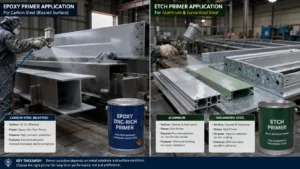
Primer selected for the corrosion mechanism: epoxy zinc rich primer for sacrificial cathodic protection in aggressive environments; epoxy primer for barrier protection in moderate service
-
Intermediate coat for barrier performance: building total DFT and reducing film permeability between primer and topcoat
-
Topcoat for environmental resistance: UV stability, weathering resistance, chemical splash resistance, or color retention — matched to actual service exposure
The system is judged by how it performs as a whole under service conditions, not by the specification of any single layer. A premium topcoat over an incompatible primer on inadequately prepared steel will fail before a correctly designed system using standard products.
For steel structure anti-corrosion solutions across industrial facility types, see anti-corrosion coating for steel structures.
Why Correct Industrial Coating System Design Matters
Protective coating engineering is part of project risk control — not just surface protection. A poorly designed coating system introduces risks that often remain invisible until the cost of correction is far higher than the cost of correct design at the specification stage.
Service life risk: without a system matched to the actual corrosion environment, corrosion can initiate beneath the coating within a few years — far earlier than the structural design life. The failure is typically invisible until blistering, rust bleed, or delamination becomes visible at the surface, by which point underfilm corrosion has already progressed significantly.
Maintenance and repair cost: recoating steel structures after installation involves scaffolding or elevated access equipment, production shutdowns in operating plants, and complex surface preparation on steel that may now be corroded or contaminated. These costs frequently exceed the original coating system cost several times over — and they repeat at every recoat event if the replacement system is also incorrectly designed.
Project and safety risk: in industrial plants, coating system failure can affect the integrity of fireproofing systems applied over the primer, structural reliability of load-bearing members, and compliance with owner specifications and insurance requirements.
Key Engineering Factors in Industrial Coating System Design
Industrial coating system design requires four parameters to be defined in sequence before any product is selected — skipping or assuming any parameter produces a system that looks specified but is not engineered.
Exposure Environment
The environment defines the corrosion mechanism, which determines resin chemistry, layer count, and DFT requirement. Engineers must assess:
-
Atmospheric corrosivity category per ISO 12944-2 (C1 through CX) — industrial, marine, or standard atmosphere
-
Presence of specific contaminants: chemical fumes, chloride salts, SOx/NOx, or process splash
-
UV exposure level and temperature cycling range
-
Whether the service is atmospheric, splash zone, or immersion
Ignoring or underestimating environmental severity is the most common root cause of systems that appear technically adequate on paper but fail prematurely in service.
Surface Preparation
Surface preparation is the foundation of every coating system — not a cost variable. For long-term industrial protection:
-
Abrasive blasting to Sa 2.5 per ISO 8501-1 is the standard minimum for industrial anti-corrosion systems in C3 and above environments
-
Lower preparation grades reduce coating adhesion and service life in direct proportion to the preparation shortfall
-
Even correctly selected epoxy zinc rich primer cannot deliver its specified cathodic protection on inadequately prepared steel — the zinc-to-steel contact required for sacrificial protection does not exist below Sa 2.5
Primer Selection Logic
Primers are selected based on how corrosion is controlled at the steel interface — not on price or brand familiarity:
-
Epoxy zinc rich primer provides sacrificial cathodic protection — zinc particles corrode preferentially to protect the steel substrate, making it the standard primer choice for industrial and coastal steel in C4–C5 environments. Requires Sa 2.5 minimum preparation
-
Epoxy primer (non-zinc) provides adhesion and a corrosion-inhibiting barrier without cathodic protection — correct for C2–C3 environments and maintenance repainting where full blast is not achievable
Using the wrong primer chemistry for the environment produces underfilm corrosion or adhesion loss that the intermediate coat and topcoat cannot compensate for. For zinc-rich primer product options matched to specific corrosivity categories, see the zinc-rich primer for steel series.
Layer Compatibility and DFT Control
Each layer in the coating system must be compatible in three dimensions: chemical bonding between coats, curing window compliance (minimum and maximum recoat intervals), and DFT within the specified range for each coat. Incompatible layers — or layers applied outside their recoat window — produce delamination, blistering, and cracking under thermal cycling or mechanical stress.
Design Life and Maintenance Strategy
A coating system should be designed around the full lifecycle strategy, not just initial construction cost. Engineers must define the target service life using ISO 12944-5 durability categories (Low up to 7 years, Medium 7–15 years, High 15+ years), planned inspection and maintenance intervals, and accessibility for future spot repairs.
Industrial Coating Failure Analysis: Common System Design Mistakes
Industrial coating failure analysis consistently identifies the same recurring design errors — all avoidable at the specification stage:
Treating coating layers as independent products: selecting primer, intermediate, and topcoat without system compatibility verification is the most consistent route to intercoat adhesion failure. System compatibility must be confirmed from TDS data or supplier written confirmation before specification is finalised.
Reducing surface preparation to control cost: under-preparing steel saves a fraction of total project cost and guarantees early failure. The coating material cost is essentially the same regardless of preparation quality — the only variable is whether the system achieves its design life or fails prematurely.
Ignoring edges, welds, and bolted connections: these areas experience higher corrosion stress, geometric film thinning, and mechanical stress concentration. Stripe coating at all edges, weld toes, bolt heads, and connections before each full-area spray coat is mandatory — not optional.
Overdesigning or underdesigning for the environment: specifying a C5 offshore system for a sheltered indoor application wastes cost. Specifying a C3 system for a coastal C4–C5 application produces early failure. Both are avoidable with a correct ISO 12944-2 corrosivity assessment at the start of the design process.
Applying indoor epoxy systems to outdoor exposure: standard epoxy coatings degrade under UV radiation if used as the final coat on exterior steel — aromatic epoxy topcoats chalk and lose film integrity within 12–24 months of outdoor UV exposure. Aliphatic polyurethane topcoat is the correct exterior finish.
Epoxy Zinc Rich Primer and Recommended Coating Systems for Steel Structures
While each project requires individual assessment, these system architectures cover the majority of industrial steel structure applications:
For the full industrial anti-corrosion coating range covering all corrosivity categories, see industrial anti-corrosion coating solutions.
Standards, Practical Notes, and Engineering Tips
Commonly referenced standards for steel structure coating system specification:
-
ISO 12944 (Parts 1–9): corrosion protection of steel structures by protective coating systems — corrosivity categories, system selection, and application requirements
-
ISO 8501-1 / 8502 / 8503: surface preparation standards — visual cleanliness grades, soluble salt testing, and surface profile measurement
-
SSPC standards: surface preparation and coating application standards for projects following American engineering specifications
Practical engineering tips:
-
Define coating systems completely in the project specification — primer, intermediate, topcoat, DFT by layer, surface preparation standard, and inspection hold points — before issuing the RFQ
-
Never mix coating layers from different systems without written compatibility confirmation from the manufacturer
-
Require documented inspection records for surface preparation acceptance before primer application begins
-
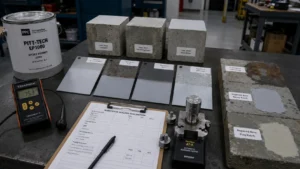
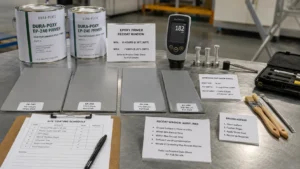
Conduct test areas on representative substrate sections before full-scale application when a new system is being introduced
FAQ
What is the difference between epoxy zinc rich primer and standard epoxy primer?
Epoxy zinc rich primer contains a high loading of zinc dust (typically 80%+ zinc by weight in the dry film) that provides sacrificial cathodic protection — zinc corrodes preferentially to protect the steel substrate, including at holidays and damaged areas. Standard epoxy primer provides adhesion and a corrosion-inhibiting barrier without cathodic protection — correct for C2–C3 environments and maintenance applications where full blast preparation is not achievable. Epoxy zinc rich primer requires Sa 2.5 blast preparation to establish the zinc-to-steel electrical contact that enables cathodic protection.
Why does coating system compatibility matter more than individual product quality?
A coating system performs as a single unit under service conditions — thermal cycling, mechanical stress, and moisture exposure act on the interfaces between layers, not just on individual films. Incompatible layers delaminate at their interface regardless of individual product quality, because the intercoat adhesion failure occurs at a chemical or mechanical mismatch between cured films. System compatibility must be verified from TDS data and supplier confirmation before specification is finalised.
What is the minimum surface preparation for epoxy zinc rich primer on structural steel?
Sa 2.5 per ISO 8501-1 (equivalent to SSPC-SP10 Near-White Blast) is the minimum required surface preparation for epoxy zinc rich primer. Below Sa 2.5, the zinc-to-steel contact required for cathodic protection is not established — the primer functions only as a standard barrier primer with significantly lower corrosion resistance. Surface profile should be confirmed against the primer TDS, typically 40–75 µm Rz for epoxy zinc rich systems.
How do you specify design life for a steel structure coating system?
Design life is specified using the ISO 12944-5 durability categories: Low (L, up to 7 years), Medium (M, 7–15 years), and High (H, more than 15 years). The durability category, combined with the ISO 12944-2 corrosivity category, defines the minimum system requirements — primer type, total DFT, and surface preparation standard. Specifying design life explicitly prevents bidders from substituting lower-performance systems that appear equivalent on a cost-per-litre basis.
When should stripe coating be specified in a steel structure coating system?
Stripe coating should be specified as a mandatory requirement in every industrial steel structure coating system. Edges, weld toes, bolt heads, and connections are subject to geometric film thinning during spray application, producing areas of insufficient DFT that initiate corrosion before the rest of the system reaches its design life. Manual brush stripe coating at all details before each full-area spray coat ensures adequate film build at all high-risk locations.