On most structural steel projects, intumescent paint is not applied to bare steel — it is applied as part of a tested, approved coating system that includes an anti-corrosion primer and, in most outdoor or semi-exposed conditions, a protective topcoat. System performance under fire exposure depends entirely on those layers being compatible and approved together, not assembled ad hoc on site from separately sourced products.
This guide is written for project engineers, EPC contractors, and procurement teams in the Middle East, Southeast Asia, and Central Asia who need to specify, apply, and inspect intumescent fire protection coatings correctly — from primer selection through topcoat sealing.
![Intumescent fireproof coating system over anti-corrosion primer with topcoat]](https://huilicoating.com/wp-content/uploads/2026/01/intumescent-system-primer-topcoat-layers.webp-1024x575.jpg "How to Apply Intumescent Paint over Anti-Corrosion Primer: Compatibility Guide for Structural Steel 1")
Why Primer Compatibility Matters for Fire Performance and Adhesion
Intumescent paint forms an insulating char layer under fire exposure, but the system fails if the primer loses adhesion at elevated temperature and the expanding char detaches from the steel surface. The primer must be tested and approved as part of the complete intumescent system — not selected independently based on corrosion performance alone.
Compatibility controls three performance outcomes that are all required simultaneously:
-
Adhesion under fire exposure: the primer must maintain bond to the steel surface as temperature rises, so the char stays in contact with the steel and continues insulating
-
Intumescent expansion without cracking or delamination: the primer surface must allow the intumescent layer to expand freely and uniformly — incompatible primers can restrict expansion or cause the char to fracture and fall away
-
Topcoat sealing in humid and outdoor environments: the topcoat must seal the intumescent layer without impeding char formation — topcoat thickness and chemistry are both regulated within the approved system
Primer DFT is also a critical system variable. Most intumescent systems approve primers only up to a maximum DFT — excessive primer thickness increases the risk of adhesion loss under fire exposure because the primer film itself becomes a failure plane between the steel and the char.
The Correct Layer Order for Intumescent Coating Systems
The layer sequence in an intumescent coating system is fixed by the system approval — field substitution of any layer invalidates the fire rating. Two standard configurations cover the majority of structural steel applications:
Two-coat system — interior, low corrosivity (C1–C2):
-
Anti-corrosion primer (epoxy or alkyd, within approved DFT range)
-
Intumescent paint (applied in multiple passes to reach specified DFT for the required fire rating)
Three-coat system — exterior, semi-exposed, or higher corrosivity (C3–C5):
-
Anti-corrosion primer (typically epoxy, within approved DFT range)
-
Intumescent paint (applied in multiple passes to reach specified DFT)
-
Topcoat / sealer coat (polyurethane or approved sealer — protects the intumescent layer from moisture ingress and UV degradation)
In corrosive environments common across Middle East coastal industrial zones and Southeast Asia high-humidity sites, the three-coat system is the standard baseline. The epoxy primer provides corrosion resistance, the intumescent fire protection coatings layer delivers the fire rating, and the polyurethane topcoat seals the system against moisture-driven degradation.
![Sweep blasting primed steel before applying intumescent coating]](https://huilicoating.com/wp-content/uploads/2026/01/sweep-blast-primed-steel-before-intumescent.webp-1024x575.jpg "How to Apply Intumescent Paint over Anti-Corrosion Primer: Compatibility Guide for Structural Steel 2")
Primer Selection Rules for Intumescent Paint Systems
The correct primer for an intumescent paint system must satisfy three simultaneous requirements — corrosion performance for the service environment, compatibility approval from the intumescent system supplier, and application within defined DFT and recoat interval limits.
Common Primer Families Used Under Intumescent Coatings
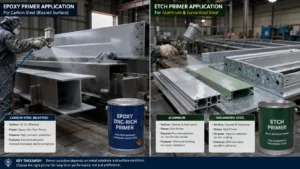
Epoxy and alkyd primers are accepted under many intumescent systems for standard corrosivity environments. Zinc-rich primers — both inorganic zinc silicate and organic zinc epoxy — require explicit approval from the intumescent supplier before use, because zinc-rich films can affect char adhesion and intumescent expansion behaviour. Never substitute a zinc-rich primer into an intumescent system based on corrosion performance alone without confirming system approval.
Primer DFT Limits: Why They Are Controlled
Most intumescent systems set a maximum primer DFT — typically in the range of 75–100 µm for epoxy primers, confirmed by the specific system approval document. Applying primer above the approved maximum DFT increases the risk of cohesive failure within the primer film under fire exposure, which causes the char to detach before it can provide insulation. Always verify the approved primer DFT range from the intumescent supplier’s system approval, not from the primer TDS alone.
For a compatible anti-corrosion primer selection matched to your corrosivity category and intumescent system, see the anti-rust and primer coatings series.
Surface Preparation and Primer Condition Checks Before Applying Intumescent Paint
A primer that is correct on paper can still cause system failure if its condition at the time of intumescent application is not verified. Two scenarios require different condition checks:
New Steel — Freshly Primed
Before applying intumescent paint over a freshly applied primer, confirm:
-
Primer is fully cured to “dry to overcoat” per the TDS — not just surface-dry
-
No contamination is present: dust, oil or grease, overspray, or powder debris from subsequent fabrication operations
-
DFT is within the approved specification tolerance — not over the maximum permitted build
-
Any damaged, thin, or holidays-affected areas are repaired and reinspected before intumescent application begins
Primed Steel After Extended Site Storage
Project delays between primer application and intumescent application are common — and the primer surface condition after outdoor storage is one of the most frequently overlooked failure drivers for intumescent paint systems. When extended time has passed between primer and intumescent application:
-
Wash off surface contamination: oils, greases, debris, and chalking from UV-degraded primer surface
-
Apply a uniform abrasive sweep blast to the primer surface to restore a mechanical profile for intumescent adhesion
-
Feather transition margins at any repaired or patch-blasted areas
-
Repair fractured, lifted, or corroded primer back to the original surface preparation standard before proceeding
![Wet film thickness measurement for intumescent fireproof coating]](https://huilicoating.com/wp-content/uploads/2026/01/wft-comb-intumescent-thickness-check.webp-1024x575.jpg "How to Apply Intumescent Paint over Anti-Corrosion Primer: Compatibility Guide for Structural Steel 3")
Intumescent Paint Application: Thickness Control and Multi-Pass Rules
Intumescent paint performance is thickness-driven — the DFT directly determines the char volume available under fire exposure, which controls how long the steel stays below the critical temperature. However, applying excessive thickness in a single pass causes sagging, mud-cracking, and uneven cure, all of which compromise the char structure under fire.
Multi-pass application is the standard method for reaching high DFT targets required by 90-minute and 120-minute fire ratings:
DFT ranges are indicative — actual requirements depend on the steel section factor (Hp/A), fire exposure type (cellulosic or hydrocarbon), and the specific product system approval. Always confirm against the system approval document and TDS.
Practical thickness control steps:
-
Measure WFT during each pass using a wet film comb to control build rate and predict DFT
-
Allow adequate cure between passes per the product TDS — overcoating before adequate cure causes inter-pass adhesion failure
-
Measure DFT after full cure using a calibrated magnetic DFT gauge
-
Apply additional passes as required to reach the specified system DFT — do not attempt to make up shortfall in a single heavy pass
For the complete fire-resistant coating series including system options for different fire ratings and exposure categories, confirm the section factor and fire rating requirement with the technical team.
Topcoat over Intumescent: When It Is Mandatory
A topcoat over intumescent paint is not decorative — it is a functional sealer that protects the intumescent layer from moisture ingress, UV degradation, and mechanical damage that would reduce fire performance before the structure is ever exposed to fire.
A topcoat is required when any of the following conditions apply:
-
The steel is exterior or semi-exposed to weather
-
Humidity is consistently high — typical of Southeast Asia industrial and coastal sites where RH exceeds 80% for extended periods
-
The surface will be subject to washdown, cleaning, or mechanical abrasion during service
-
There is any risk of moisture ingress into the intumescent film, which causes premature softening, blistering, and loss of char integrity
Topcoat Thickness: Controlled Within Limits
Topcoat thickness over intumescent paint is regulated in both directions within the system approval:
-
Too thin: insufficient sealing protection allows moisture to penetrate the intumescent layer
-
Too thick: excessive topcoat DFT can impede char expansion under fire exposure, reducing the insulation volume and shortening the effective fire duration
Always confirm the approved topcoat DFT range from the system approval document — not from the topcoat TDS alone. For outdoor and semi-exposed structural steel, a polyurethane anti-corrosion topcoat is commonly specified as the sealer coat, providing UV resistance and moisture sealing within the approved DFT window.
Common Compatibility Failures and How to Prevent Them
The three most frequently observed intumescent paint system failures on site all trace back to specification or application errors that are preventable with correct system discipline:
Intumescent Delamination from Primer
Root causes: primer not on the approved system list; primer DFT applied above the approved maximum; primer surface contaminated or over-aged before intumescent application.
Prevention: obtain the intumescent supplier’s approved primer list before specifying the primer; verify primer DFT against the system approval maximum, not just the primer TDS maximum; sweep blast and clean aged primer surfaces before applying intumescent — do not rely on visual assessment of an aged primer surface.
Cracking, Mud-Cracking, or Sagging of Intumescent Film
Root causes: over-thickness applied in a single pass; application outside permitted temperature or humidity windows; overcoating before adequate inter-pass cure.
Prevention: apply in multiple passes with WFT monitoring per pass; follow the temperature and RH limits stated in the product TDS; allow full inter-pass cure per TDS before the next pass — especially critical for 2 hour intumescent paint applications where total DFT is high and cure time between passes is extended.
Exterior Intumescent Degradation Before Fire Event
Root causes: missing or incompatible topcoat in high-humidity or outdoor conditions; topcoat applied below the minimum approved sealing DFT.
Prevention: specify a compatible sealer or topcoat for any exterior or semi-exposed application; confirm topcoat DFT is within the approved range from the system approval document.
RFQ Checklist: Data Required for System Approval and Quotation
To receive a technically correct system approval package — recommended primer, intumescent paint, and topcoat with DFT limits, recoat windows, and full TDS/SDS — provide the following project data via the steel structure coating solutions inquiry page:
-
Country and region: Middle East / Southeast Asia / Central Asia — humidity and corrosivity profile
-
Steel member schedule: beam and column sizes, section factors (Hp/A values if available)
-
Required fire rating: 30 / 60 / 90 / 120 minutes, and fire exposure type (cellulosic or hydrocarbon)
-
Service exposure: interior dry / semi-exposed / exterior; corrosion category if defined per ISO 12944
-
Existing or planned primer: type, DFT range, application date, and blast standard used
-
Site rework plan: whether sweep blasting or full reblast is planned before intumescent application
-
Topcoat requirement: UV and weathering resistance needed, or interior only
-
Required certifications or standards: applicable fire test standard and any regional approval requirements
Do not assume system compatibility. Request a complete system confirmation package before procurement — all coats in an intumescent fire protection coatings system must be approved and tested together to guarantee fire rating performance.
FAQ
What primer should be used under intumescent paint on structural steel?
Epoxy primers are the most commonly approved primer type under intumescent paint for structural steel in C3–C5 corrosivity environments — but the specific primer must appear on the intumescent supplier’s approved system list. Zinc-rich primers require explicit system approval before use because they can affect char adhesion and expansion behaviour. Never select the primer based on corrosion performance alone without confirming intumescent compatibility.
What is the maximum primer DFT allowed under intumescent coating systems?
Most intumescent paint systems approve epoxy primers up to a maximum of 75–100 µm DFT — applying primer above this limit increases the risk of cohesive failure within the primer film under fire exposure, causing the char layer to detach before it provides insulation. Always verify the approved primer DFT maximum from the intumescent system approval document, not from the primer TDS, as the limits differ.
How many coats of intumescent paint are needed for a 2 hour fire rating?
A 2 hour intumescent paint specification requires multiple application passes — total DFT typically falls in the range of 3,500–6,000+ µm depending on the steel section factor (Hp/A) and the specific product system. This cannot be applied in one or two passes without causing sagging, cracking, or uneven cure. The number of passes depends on the per-pass WFT limit stated in the product TDS and the inter-pass cure requirement.
Does intumescent paint need a topcoat in Southeast Asia and Middle East environments?
Yes — in Southeast Asia high-humidity environments (RH consistently above 80%) and Middle East coastal industrial zones, a compatible topcoat is required over intumescent paint to prevent moisture ingress into the intumescent film. Moisture-saturated intumescent film softens, blisters, and loses char integrity before fire exposure occurs. The topcoat must be within the approved DFT range from the system approval — too thick a topcoat impedes char expansion and reduces effective fire duration.
Can intumescent paint be applied over existing primer that has been stored outdoors for several months?
Not without surface preparation. Primer stored outdoors accumulates contamination — oils, salts, chalking, and UV degradation — that prevents intumescent adhesion. Before applying intumescent paint over aged primer, wash the surface to remove contamination, apply a uniform abrasive sweep blast to restore mechanical profile, repair any corroded or fractured primer areas to the original blast standard, and verify DFT is still within the approved range. Applying intumescent over contaminated or over-aged primer without preparation is one of the most common causes of intumescent delamination on site.