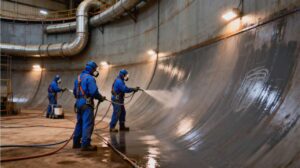
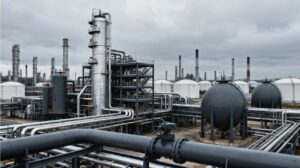
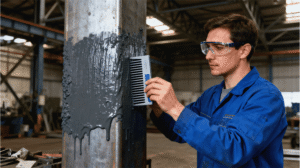
Middle East assets often see a difficult combination: extreme heat, high UV, coastal/offshore salinity, and wind-driven sand abrasion—conditions that can shorten coating life if the system is not specified by exposure zone and durability target. Industry commentary highlights that large variations in temperature/humidity and erosion by salt and sand make the region one of the harshest environments for metals.
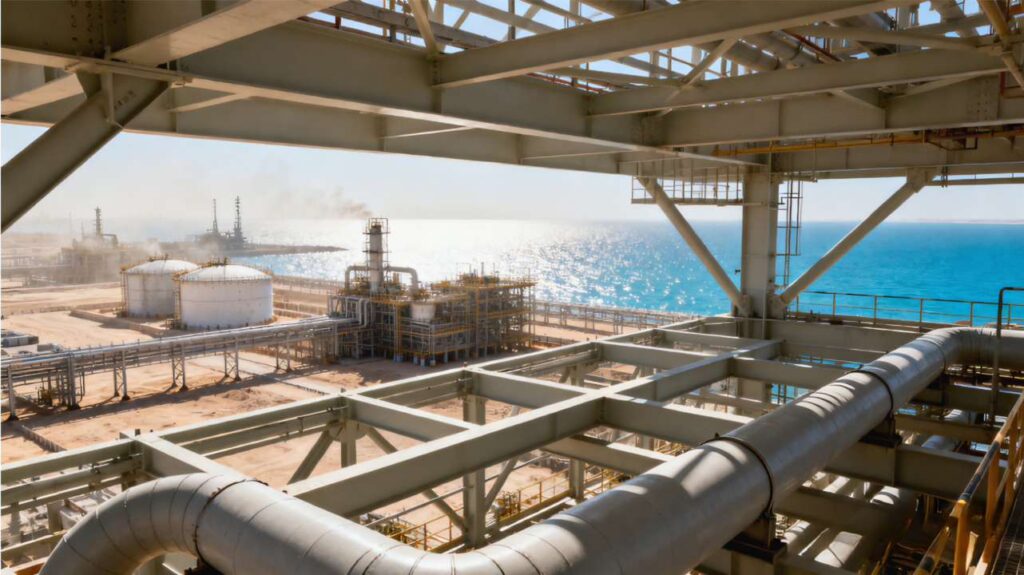
Quick Guide: How EPC teams should select a Middle East coating system
- Define exposure zones: inland industrial vs coastal vs offshore (atmospheric / splash / immersion).
- Choose the standard basis: use ISO 12944 for corrosivity and offshore categories; document the required durability and zone assumptions.
- Start with proven system architecture: zinc-rich primer + high-build epoxy barrier + durable topcoat for UV/weathering.
- Upgrade for offshore zones: follow ISO 12944-9 thinking for CX/Im4 and splash/tidal severity.
- Demand submittals upfront: system recommendation, TDS/SDS, inspection checklist, and repair procedure.
Key environmental challenges in Middle East projects
Extreme temperature cycling
Day–night temperature swings stress coating films through repeated expansion/contraction, and Middle East conditions are frequently described as having large variations in temperature and humidity. These cycles amplify weaknesses at edges, welds, and bolted connections if the system build and QC are not robust.
High UV exposure
Strong sunlight accelerates weathering of many organic coatings and pushes projects to specify UV-stable topcoats and tighter appearance/performance requirements for outdoor steel. Middle East performance discussions commonly emphasize UV as a major durability driver.
Salinity (coastal / offshore)
ISO 12944 defines corrosivity categories and specifically addresses offshore environments; it describes CX as an extreme offshore atmospheric category and Im4 as seawater/brackish immersion with cathodic protection. These categories matter for Gulf coastal infrastructure and offshore energy assets.
Sand abrasion (wind-driven erosion)
Sand and salt erosion is repeatedly cited as a regional stressor, physically wearing coatings and exposing defects over time. This pushes selection toward tougher systems and maintenance planning, not just “thicker paint.”
Anti-corrosion coating systems suitable for Middle East (proven building blocks)
The systems below reflect what EPC specs commonly converge on for hot/UV/salt service when executed with correct surface preparation and QC.
System 1: Epoxy zinc-rich primer (corrosion control foundation)
Where it fits: steel structures, pipe racks, and industrial steel where strong corrosion protection and spec acceptance are required.
Why it matters: zinc-rich primers support corrosion control at defects and are frequently used in heavy-duty systems before epoxy barrier builds and durable finishes.
System 2: High-build epoxy intermediate (barrier thickness for salt + humidity)
Where it fits: coastal industrial plants, refineries, ports, and zones with frequent wetting or condensation risk.
Why it matters: higher barrier build reduces moisture transport and delays underfilm corrosion when the environment is aggressive.
System 3: Polyurethane / fluorocarbon topcoat (UV & weathering layer)
Where it fits: outdoor steel with strong UV and heat exposure, especially where color/gloss retention matters for asset identification and appearance.
Why it matters: the topcoat is the “weather shield” that protects the epoxy barrier from UV degradation and slows maintenance cycling.
One selection table (fast RFQ alignment)
| Middle East exposure | Dominant damage drivers | Recommended system direction | Notes to include in RFQ |
|---|---|---|---|
| Inland industrial (outdoor) | UV + heat cycling + dust | Zinc-rich + epoxy barrier + UV-stable topcoat | Require DFT by layer and edge stripe coat plan |
| Coastal industrial (onshore) | Chlorides + humidity + UV | Higher-build epoxy barrier + durable topcoat | Add salt contamination controls & tighter QC |
| Offshore / near-splash | Constant wetting + chlorides + mechanical impact | Zone-based spec (atmospheric/splash/immersion) | Specify zones and maintenance access assumptions |
Applicable standards for Middle East projects
ISO 12944 (onshore + offshore logic)
ISO 12944 is widely used for corrosion protection selection, and it explicitly adds offshore-related environments: CX (offshore atmosphere), Im4 (immersion with cathodic protection), and splash zone specifications. This is directly relevant for Middle East coastal and offshore assets.
ISO 12944-9 specifically covers protective paint systems and performance test methods for offshore and related structures exposed to CX and Im4 environments as defined in ISO 12944-2. This is the right reference point when your scope includes offshore or near-offshore infrastructure.
NACE / client specifications (Saudi Aramco / ADNOC mindset)
Many Middle East owners and EPCs use NACE/AMPP practices and detailed client specs to control risk, including surface preparation, inspection hold points, and documentation submittals. Treat the client spec as the controlling requirement and align your coating system and QC plan to it.
Onshore vs offshore coating selection in the Middle East
Onshore: tanks, pipelines, steel structures
Onshore assets often fail first at details (edges, welds, supports) and in water-trap areas created by design. Strong systems and disciplined QC can extend time between shutdown maintenance cycles, which is usually the owner’s real KPI.
Offshore: atmospheric / splash / immersion zoning
Marine environments are widely described as aggressive due to chloride-rich salt exposure, UV, high humidity, wet/dry cycles, and abrasion. The splash zone typically has the highest corrosion rate because it is intermittently wetted, well aerated, and can concentrate chlorides as water films dry.
For offshore and related structures, ISO 12944-9 is specifically written to address CX and Im4 exposures and is therefore a strong anchor reference for system selection and documentation.
Why Middle East clients choose overseas coating suppliers
- Project execution support: fast submittals (TDS/SDS), system recommendation, inspection checklist, and troubleshooting response to avoid approval delays.
- System discipline: supplier can propose a complete system (primer + barrier build + topcoat) matched to Middle East drivers (UV/salt/sand/heat).
- Stable supply: consistent batches and predictable lead times so the site doesn’t “substitute products” mid-job.
[Heavy Duty Anti-Corrosion Coatings] ->
[Steel Structure Coating Solutions] ->
[Marine & Offshore Coating Solutions] ->
Common failures + troubleshooting (Middle East patterns)
- Chalking and early topcoat degradation: usually tied to UV exposure and topcoat selection; specify UV-stable finishes and verify application thickness.
- Underfilm corrosion near coastal plants: often driven by chloride contamination and wetting cycles; strengthen barrier build and tighten surface cleanliness controls.
- Erosion at windward faces: sand abrasion gradually thins coatings; plan inspection frequency and touch-up strategy around high-erosion zones.
Quality / inspection checklist (DFT, recoat interval, surface prep)
- Surface preparation standard and verification method clearly defined in the spec (hold point before priming).
- Soluble salt control plan included for coastal/offshore assets (test method + acceptance limit + remediation steps).
- DFT targets defined by layer; extra readings at edges/welds/bolts; document results in QC dossier.
- Recoat intervals and environmental conditions logged (temperature/humidity), with batch traceability.
RFQ checklist (get a project-ready recommendation fast)
- Location (UAE/Saudi/etc.), distance to coast, onshore vs offshore, and zone map (if offshore)
- Asset type: tanks / pipelines / steel structures / marine works
- Required standard basis: ISO 12944 (and whether ISO 12944-9 applies)
- Surface preparation capability and site constraints (blast vs power tool, access, shutdown windows)
- Durability target / maintenance interval expectation
- Application method and climate window (humidity/temperature)
- Documents requested: system recommendation, TDS/SDS, inspection checklist, repair procedure
Technical note / disclaimer
System selection, surface preparation level, DFT targets, and acceptance criteria must be confirmed by the applicable standards, TDS, and project specifications. Final requirements vary with exposure severity, asset zone (onshore/offshore), substrate condition, and application constraints.
ISO 12944-9:2018 overview (offshore & related structures, CX/Im4): ISO 12944-9:2018 overview
CTA
Need anti-corrosion coating systems proven in Middle East environments? Contact us with your exposure (industrial/coastal/offshore), asset type, and surface preparation constraints—we’ll provide a project-based coating system recommendation plus TDS/SDS and RFQ documentation support.