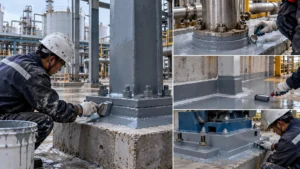
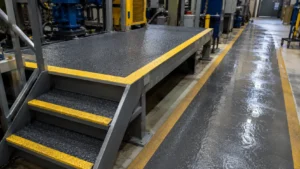
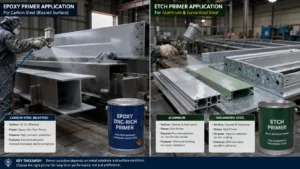
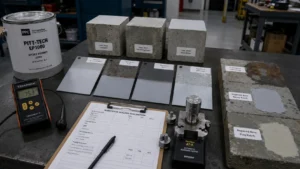
General industrial finishes are coating systems used on machinery, equipment, vehicles, fabricated components, and steel parts to provide appearance, color, durability, and practical protection during service. In industrial projects, a finish is not only a color layer. It must also match the substrate, service environment, handling process, cleaning method, weathering exposure, and maintenance plan.
For equipment manufacturers, fabrication shops, machinery suppliers, and procurement teams, the key question is not simply which industrial finish looks better. The correct finish depends on whether the asset will be used indoors or outdoors, whether it will face oil or chemical splash, whether it needs gloss and color retention, and whether the coating is applied in a shop or on site.
This guide explains how to compare industrial finishes products, including epoxy, polyurethane, acrylic, chlorinated rubber, and alkyd systems, and how to prepare the right RFQ data before requesting a coating recommendation.
What General Industrial Finishes Mean
General industrial finishes are coating systems designed for the surface finishing of machinery, equipment, industrial vehicles, frames, panels, fabricated components, and general metal parts. They provide appearance, brand color, gloss, handling resistance, weathering performance, and moderate protection.
Common applications include:
- construction machinery;
- mining equipment;
- pumps and compressors;
- industrial equipment frames;
- control cabinets;
- steel panels;
- fabricated parts;
- machine housings;
- port machinery;
- maintenance repainting areas;
- export equipment and components.
For many buyers, the term “industrial finish” sounds similar to “industrial coating.” The difference is the focus. A finish usually emphasizes final appearance and service durability, while a heavy-duty protective coating may focus more on corrosion, immersion, chemicals, temperature, or long-term exposure.
Industrial Finish vs Protective Coating
An industrial finish normally provides color, gloss, surface appearance, and practical durability. A protective coating focuses more strongly on corrosion resistance, chemical resistance, abrasion protection, high temperature resistance, or immersion performance.
In real projects, these functions often overlap. For example, an outdoor machine may need:
- epoxy primer for adhesion and corrosion resistance;
- epoxy intermediate coat for barrier protection;
- polyurethane topcoat for color and gloss retention;
- correct DFT for durability;
- suitable cure time before packaging.
This means an industrial finish may still be part of a protective coating system. The difference is that finish selection must balance appearance and protection together.
For equipment-related projects, HUILI’s machinery and equipment coating systems can be used as a starting point for finish selection.
Why Finish Selection Is Not Only About Color
Finish selection is not only about color because two coatings with the same color can perform very differently in outdoor exposure, oily environments, chemical splash, abrasion, cleaning, and transport handling.
Before selecting a finish, check:
- indoor or outdoor service;
- gloss requirement;
- color retention requirement;
- UV exposure;
- corrosion exposure;
- oil, fuel, or chemical splash;
- abrasion and handling damage;
- cleaning method;
- application method;
- drying and packaging schedule;
- maintenance and touch-up requirements.
A low-cost finish may be acceptable for indoor light-duty equipment, but it may fail early on outdoor machinery, port equipment, or fabricated parts exposed to weathering and transport damage.
Where Industrial Finishes Are Commonly Used
Industrial finishes are commonly used on machinery, equipment panels, fabricated parts, industrial components, and maintenance repainting areas. The finish must match how the asset is made, handled, transported, installed, and used.
Construction Machinery and Mining Equipment
Construction machinery and mining equipment often need stronger industrial finishes because the coating faces sunlight, rain, mud, dust, abrasion, hydraulic oil, and handling damage. A decorative coating is usually not enough.
Common finish requirements include:
- color matching for brand identity;
- outdoor weathering resistance;
- abrasion resistance;
- oil resistance;
- easy touch-up repair;
- good adhesion to steel;
- resistance to transport damage.
For outdoor machinery, a common approach is an epoxy primer or epoxy intermediate layer followed by a polyurethane topcoat. The epoxy layer supports adhesion and corrosion resistance, while the PU finish improves color and gloss retention.
Industrial Equipment Panels and Frames
Industrial equipment panels and frames usually need a balance of appearance, durability, and production efficiency. These parts may be coated in a workshop before assembly and must resist handling, packing, installation, and service cleaning.
Typical assets include:
- equipment housings;
- machine frames;
- pump bases;
- compressor frames;
- electrical cabinets;
- steel panels;
- access covers;
- fabricated brackets.
For these parts, finish selection should consider film smoothness, gloss level, drying speed, repairability, and compatibility with the production line.
Industrial Components and Fabricated Parts
Industrial components coatings are often selected for fabricated parts that must be coated, stored, packed, shipped, and installed before entering service. The finish should survive handling and transportation as well as normal operation.
Important considerations include:
- edge coverage;
- scratch resistance;
- packing damage;
- stacking marks;
- cure before shipment;
- compatibility with touch-up coating;
- color consistency between batches.
If parts are exported, coating cure and packaging timing become especially important. A finish that is still soft during packing may block, mark, or lose gloss.
Maintenance Repainting and Touch-Up Areas
Industrial maintenance coatings are used when existing equipment, machinery, or components need repainting after wear, weathering, or local damage. Maintenance finishes often need easier application, good compatibility, and practical drying under site conditions.
Maintenance repainting may involve:
- old coating cleaning;
- spot repair;
- primer touch-up;
- local sanding;
- field application;
- limited downtime;
- color matching to existing coating.
The coating system should be selected after checking the existing surface condition. A new finish cannot solve poor adhesion, rust under old coating, oil contamination, or incompatible old layers.
Compare Industrial Finish Options
Different industrial finishes products serve different project needs. Epoxy, polyurethane, acrylic, chlorinated rubber, and alkyd systems each have useful applications, but they should not be selected only by price or color.
Epoxy-Based Finish Systems
Epoxy-based systems are often used when adhesion, corrosion resistance, and durability are more important than long-term exterior gloss retention. Epoxy primers and epoxy intermediate coats are common base layers for steel equipment and fabricated parts.
Epoxy systems are useful for:
- steel equipment frames;
- machinery bases;
- industrial components;
- moderate chemical splash;
- primer and intermediate layers;
- indoor industrial assets.
However, epoxy coatings can chalk under UV exposure, so outdoor equipment often needs a polyurethane or another suitable topcoat for better weathering and appearance.
For projects needing a stronger base layer, epoxy anti-corrosion coating systems can be reviewed as part of the finish design.
Polyurethane Industrial Topcoat Systems
Polyurethane industrial topcoat systems are widely used when color retention, gloss retention, UV resistance, and outdoor appearance are important. PU topcoats are common on construction machinery, equipment panels, outdoor steel components, and industrial vehicles.
Polyurethane finishes are suitable for:
- outdoor machinery;
- equipment panels;
- export equipment;
- steel structures requiring color retention;
- machinery exposed to sunlight;
- finished components requiring better appearance.
For many projects, polyurethane industrial topcoat systems are paired with epoxy primers to combine corrosion protection and appearance performance.
Acrylic and Chlorinated Rubber Finishes
Acrylic and chlorinated rubber finishes can be useful for maintenance, fast-dry applications, port machinery, and selected atmospheric exposure areas. They may be selected where easier repair, shorter downtime, or single-component application is important.
These finishes may be considered for:
- maintenance repainting;
- installed equipment;
- port machinery;
- low-temperature application in selected systems;
- areas needing practical repair rather than maximum durability.
For maintenance and general atmospheric projects, acrylic and chlorinated rubber industrial finishes may be reviewed where their application advantages match the service condition.
Alkyd Industrial Finishes
Alkyd industrial finishes are often used for general-duty equipment, indoor steel parts, machinery frames, and economical finishing projects. They can provide useful appearance and practical protection in less aggressive environments.
Alkyd systems may fit:
- indoor machinery;
- general steel components;
- light-duty equipment;
- non-critical steel frames;
- economical maintenance work.
They are usually not the first choice for severe corrosion, strong chemicals, immersion, high temperature, or long-term outdoor durability.
For general-duty applications, alkyd industrial coating systems can be reviewed when the exposure level and durability target are suitable.
Match Finish Requirement to Coating Choice
General industrial finishes should be selected by finish requirement, not by product name alone. The table below gives a practical selection framework.
| Finish Requirement | Coating Direction | Typical Industrial Use | Selection Note |
|---|---|---|---|
| Good color and gloss retention | Polyurethane topcoat system | Outdoor machinery, equipment panels | Better for UV and weathering |
| General indoor equipment finish | Alkyd or acrylic system | Light-duty machinery, frames | Economical and easier maintenance |
| Strong primer base under finish | Epoxy primer system | Steel equipment and components | Supports adhesion and corrosion resistance |
| Fast maintenance repainting | Acrylic or chlorinated rubber system | Port machinery, installed equipment | Useful where downtime is limited |
| Chemical splash resistance | Epoxy / PU system | Process equipment, pump areas | Confirm chemical exposure and cleaning |
| High handling durability | Epoxy + PU system | Fabricated parts, export equipment | Check cure, packing, and transport risk |
This table should be used as a starting point. Final selection should be confirmed according to substrate, service environment, application method, DFT, and project specification.
Shop-Applied vs Field-Applied Industrial Finishes
Shop-applied and field-applied finishes have different risks. A coating that works well in a controlled workshop may be harder to apply on site, while a maintenance coating that works in the field may not provide the same appearance as a factory-applied finish.
Why Shop Application Improves Finish Control
Shop application usually improves finish control because the applicator can manage surface preparation, temperature, humidity, film thickness, drying time, dust control, and inspection more easily.
Shop-applied finishes offer advantages such as:
- better color consistency;
- cleaner surface preparation;
- controlled spraying environment;
- easier DFT inspection;
- better drying control;
- lower contamination risk;
- more consistent appearance.
OEM coating and factory finishing often depend on repeatable process control. This is why equipment manufacturers usually need a coating system that works with their production schedule, drying area, and packaging process.
When Field Application or Maintenance Repainting Is Needed
Field application or maintenance repainting is needed when equipment is too large to coat in a workshop, when installed machinery needs repair, or when transport and installation damage must be touched up on site.
Field application may involve:
- limited access;
- weather changes;
- dust and contamination;
- shorter downtime windows;
- old coating compatibility;
- spot repair;
- local primer and topcoat application.
For field work, finish selection should consider repairability and surface tolerance. A beautiful shop finish may not be practical if it cannot be repaired under site conditions.
Handling, Packaging and Transport Damage
Handling, packaging, and transport damage are major concerns for industrial equipment finishes. A coating may be correctly applied but still fail visually if the equipment is packed too early, stacked poorly, or damaged during transport.
Common risks include:
- blocking between coated surfaces;
- packing marks;
- scratches during lifting;
- edge damage;
- gloss loss;
- coating dents;
- damaged bolt areas;
- abrasion during shipment.
For export equipment, the coating schedule should include enough cure time before packaging and a practical touch-up procedure for installation damage.
Avoid Common Finish Selection Mistakes
Finish selection mistakes usually happen when color is chosen before exposure, when a decorative finish is used where corrosion protection is required, or when coating is applied over poor surface preparation. A finish should be selected as part of a complete coating system.
Choosing Gloss Before Checking Exposure
Choosing gloss before checking exposure can lead to poor performance. High gloss may look attractive, but the coating must also resist UV, weathering, oil, cleaning, and handling damage.
Before confirming gloss, check:
- indoor or outdoor service;
- UV exposure;
- required color retention;
- cleaning method;
- abrasion risk;
- chemical splash;
- repair expectations.
Outdoor machinery usually needs better gloss and color retention than indoor frames or hidden equipment components.
Using a Decorative Finish Where Corrosion Protection Is Required
A decorative finish may not provide enough corrosion protection for steel equipment in outdoor, coastal, chemical, or industrial environments. If the substrate needs corrosion resistance, the finish should be built over a suitable primer and intermediate layer.
Warning signs that a stronger system may be needed include:
- outdoor exposure;
- rain and humidity;
- salt or coastal air;
- chemical splash;
- frequent washing;
- damaged edges;
- long maintenance interval requirement.
In these cases, the finish layer should be part of a protective system rather than a single appearance coat.
Ignoring Oil, Fuel or Chemical Splash
Industrial equipment often faces oil, fuel, coolant, cleaning chemicals, or mild chemical splash. A finish selected only for appearance may soften, stain, lose gloss, or peel if chemical exposure is not considered.
Before selecting the coating, confirm:
- type of liquid exposure;
- frequency of contact;
- cleaning chemicals;
- spill duration;
- temperature;
- whether the exposure is splash or immersion.
Splash resistance and immersion resistance are not the same. A finish suitable for occasional cleaning may not be suitable for continuous chemical exposure.
Applying a Finish Over Poor Surface Preparation
A finish cannot perform well over oil, rust, dust, weak old coating, or poor surface profile. Surface preparation is still critical even when the final layer is selected mainly for appearance.
Common preparation failures include:
- oil contamination;
- insufficient sanding;
- poor blast profile;
- dust after grinding;
- loose old coating;
- underfilm rust;
- moisture on the surface.
The final appearance depends on the base. A smooth topcoat over a weak or contaminated substrate can still fail early.
Prepare RFQ Data for General Industrial Finishes
A general industrial finishes RFQ should include equipment type, substrate, environment, color, gloss, corrosion exposure, chemical splash, abrasion risk, application method, DFT requirement, and packaging schedule. Without this data, the supplier can only quote a product, not recommend a suitable finish system.
Equipment and Service Information the Manufacturer Needs
The manufacturer needs practical service and production information to recommend the correct industrial finish.
Useful RFQ data includes:
- equipment type;
- machinery, vehicle, panel, frame, or component;
- substrate material;
- indoor or outdoor service;
- corrosion exposure;
- oil, fuel, or chemical splash;
- abrasion or handling risk;
- required color;
- required gloss;
- expected DFT;
- shop or field application;
- drying time requirement;
- packaging and transport condition;
- maintenance or touch-up requirement;
- drawings, photos, or coating specification.
This information helps match finish appearance with real industrial service.
When HUILI May Recommend Another Coating System
HUILI may recommend another coating system when a general industrial finish is not strong enough for the service condition. If the equipment faces severe corrosion, strong chemicals, immersion, high temperature, heavy abrasion, or long outdoor exposure, a specialty or higher-performance system may be safer.
Possible alternatives include:
- epoxy primer plus PU topcoat system;
- high-build epoxy system;
- chemical-resistant coating;
- heat-resistant coating;
- acrylic or chlorinated rubber maintenance system;
- alkyd finish for light-duty indoor service;
- specialty industrial coating system.
The goal is to match the finish to the equipment’s real service environment rather than using one general-purpose finish everywhere.
FAQ
What are general industrial finishes used for?
General industrial finishes are used on machinery, equipment, industrial vehicles, panels, frames, fabricated parts, and components to provide color, gloss, appearance, handling durability, and moderate protection during service.
What is the difference between an industrial finish and a protective coating?
An industrial finish focuses on appearance, color, gloss, weathering, handling resistance, and practical durability. A protective coating focuses more strongly on corrosion resistance, chemical resistance, abrasion, temperature, or immersion service. In many equipment projects, both functions are combined in one coating system.
Which finish is suitable for outdoor machinery?
Outdoor machinery often uses an epoxy primer or epoxy intermediate layer with a polyurethane topcoat. The epoxy layer supports adhesion and corrosion protection, while the polyurethane finish improves UV resistance, color retention, and gloss retention.
Can epoxy and polyurethane be used together for equipment finishes?
Yes, epoxy and polyurethane are commonly used together for equipment finishes. Epoxy primer or intermediate coating provides adhesion and corrosion resistance, while polyurethane topcoat provides color, gloss, UV resistance, and weathering performance.
What data should I provide for an industrial finish quotation?
You should provide equipment type, substrate, indoor or outdoor exposure, required color and gloss, corrosion environment, oil or chemical splash, abrasion risk, application method, DFT requirement, packaging condition, and photos or drawings.
Request a General Industrial Finish Recommendation
General industrial finishes should be selected by equipment type, substrate, appearance requirement, exposure environment, durability target, application method, and maintenance needs. HUILI can review whether your project needs epoxy, polyurethane, acrylic, chlorinated rubber, alkyd, or another industrial finishing system.
For a more accurate recommendation, send:
- equipment type;
- machinery, vehicle, panel, frame, or component details;
- substrate material;
- indoor or outdoor exposure;
- required color and gloss;
- corrosion exposure;
- oil, fuel, or chemical splash;
- abrasion or handling risk;
- shop or field application;
- DFT requirement;
- drying and packaging schedule;
- photos, drawings, or coating specification.
Send your details through the industrial finish project inquiry page so the technical team can support coating system selection, color/gloss planning, TDS review, and RFQ preparation.