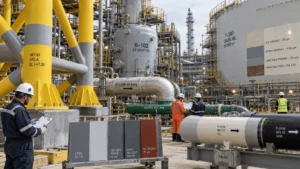
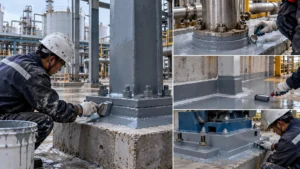
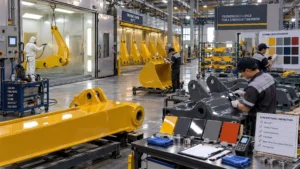
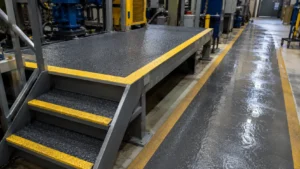
Metal corrosion protection is the process of selecting the right method to prevent steel, galvanized steel, aluminum, stainless steel, tanks, pipelines and equipment from losing performance through rust, pitting, underfilm corrosion or chemical attack. For EPC contractors, corrosion engineers, project owners and procurement teams, the key decision is not only which coating to buy, but whether coating, galvanizing, cathodic protection, material selection or design changes should be used alone or together.
This guide compares practical corrosion protection methods for industrial projects in the Middle East, Southeast Asia and Central Asia. After reading, buyers should be able to decide when a protective coating system is enough, when galvanizing or zinc-rich primer makes sense, when cathodic protection is required, and what project data should be prepared before requesting a technical recommendation.
What Is Metal Corrosion Protection?
Metal corrosion protection is a group of engineering methods used to slow or prevent corrosion by controlling moisture, oxygen, salts, chemicals, electrical potential, temperature or material exposure. In industrial projects, this usually means combining coating systems, zinc-based protection, cathodic protection, corrosion-resistant materials, drainage design and regular inspection.
Corrosion is not only a surface appearance problem. On carbon steel, it can cause section loss, pitting, rust creep, coating blistering, weld corrosion and structural weakening. On pipelines and tank bottoms, hidden corrosion can continue for years before it becomes visible.
A complete metal corrosion protection plan usually considers:
- Metal type and surface condition
- Atmospheric, immersion, buried, marine or chemical exposure
- Corrosion category such as C3, C4 or C5
- Surface preparation and cleanliness
- Coating or galvanizing feasibility
- Cathodic protection requirement
- Inspection access and maintenance cycle
- Fabrication stage and installation sequence
- Required durability and project budget
For steel structures in atmospheric environments, ISO 12944 is commonly used to guide protective coating system selection by corrosivity category and durability range.
Compare the Main Metal Corrosion Protection Methods
Metal corrosion protection methods should be compared by service condition, not by product name alone. A coating system may be the best choice for a tank exterior, while cathodic protection may be required for a buried pipeline and galvanizing may be more practical for small fabricated steel parts before installation.
| Protection Method | Best Use Case | Main Limitation | Typical Asset | Buyer Decision |
|---|---|---|---|---|
| Protective coating system | Steel structures, tanks, equipment, pipelines | Requires surface preparation, DFT control and inspection | Carbon steel, machinery, tank shell, pipe exterior | Choose system by environment and durability |
| Hot-dip galvanizing | Small or medium fabricated steel before installation | Size limits, repair difficulty, coating compatibility issues | Frames, handrails, supports, bolts | Decide before fabrication |
| Zinc-rich primer | Site-applied or shop-applied sacrificial protection | Needs abrasive blasting and correct zinc loading | Bridges, steel structures, coastal steel | Compare with galvanizing for large steel |
| Cathodic protection | Buried, submerged or tank-bottom steel | Requires design, monitoring and electrical continuity | Pipelines, tank bottoms, marine structures | Usually used with coating, not alone |
| Stainless steel or alloy selection | Severe chemical or hygiene-related environments | Higher material cost and chloride sensitivity | Process parts, fasteners, chemical equipment | Decide during design stage |
| Corrosion allowance | Pressure vessels, tanks, pipelines, structural design | Does not stop surface corrosion | Tanks, pipes, vessels | Combine with inspection and coating |
| Design control | Areas with water traps, crevices or poor drainage | Requires early engineering coordination | Steel structures, platforms, brackets | Reduce corrosion before coating |
A coating system is usually the most flexible solution for large industrial steel, but it is not the only corrosion protection method. The right choice depends on whether the asset is new or existing, fabricated or installed, visible or buried, atmospheric or immersed, and accessible or difficult to maintain.
When Protective Coating Is the Best Practical Method
A protective coating system is usually the best practical method when large steel surfaces need corrosion resistance, weather protection, chemical resistance or maintainable long-term protection. It is widely used for steel structures, tank exteriors, machinery, pipeline sections, marine steel, power plant steel and petrochemical equipment.
A protective coating system is suitable when the project requires:
- Large-area application on carbon steel
- C3, C4 or C5 atmospheric protection
- Different systems for primer, intermediate coat and topcoat
- Repairable and maintainable protection
- Color, gloss or UV resistance
- Chemical splash resistance in selected areas
- DFT and inspection control
- Site or workshop application flexibility
For outdoor steel, a common approach is epoxy primer or zinc-rich epoxy primer, epoxy intermediate coat and polyurethane topcoat. For immersion service, a dedicated lining system such as solvent-free epoxy, epoxy phenolic, epoxy novolac or glass flake epoxy may be required.
For steel structures exposed to industrial or coastal atmospheres, HUILI’s steel structure coating solutions can support system selection by environment, substrate condition and expected durability.
When Galvanizing Makes More Sense
Hot-dip galvanizing makes more sense when steel parts can be galvanized before installation and when the project needs factory-applied zinc protection on accessible fabricated components. It is commonly used for handrails, gratings, brackets, small frames, bolts, supports and other steel parts that fit the galvanizing process.
Galvanizing is useful because it provides zinc-based sacrificial protection. If a small area is scratched, the surrounding zinc can help protect exposed steel. However, galvanizing is not always practical for large installed structures, complex tank shells, heavy machinery or maintenance repair projects.
Key limitations include:
- Part size limited by galvanizing bath dimensions
- Possible distortion on thin steel sections
- Repair needed at cut edges, welds or damaged areas
- Surface preparation required before overcoating
- Reduced control over final appearance compared with coating
- Compatibility checks required if a duplex coating system is applied over galvanized steel
Galvanizing should be selected early in the design or fabrication stage. If the steel is already installed, a coating system or zinc-rich primer system may be more practical than trying to galvanize the structure later.
When Zinc-Rich Primer Is Better Than Galvanizing
Zinc-rich primer is better than galvanizing when large steel structures need sacrificial protection but cannot be hot-dip galvanized because of size, fabrication sequence, installation status or repair requirements. It is often used for bridges, petrochemical steel structures, port steel, power plant steel and coastal industrial projects.
A zinc-rich epoxy primer is a coating that contains high levels of zinc dust in an epoxy binder, allowing the zinc particles to provide sacrificial protection when the coating film is damaged. This makes it useful in C4, C5 and marine atmospheric environments when surface preparation is strong enough.
Zinc-rich primer requires:
- Abrasive blasting to clean steel
- Suitable surface profile
- Dry and contamination-free substrate
- Correct DFT range from product TDS
- Proper topcoat compatibility
- Careful control on welds and edges
Zinc-rich primer is not a shortcut for poor surface preparation. If zinc particles do not contact clean steel, sacrificial protection is reduced and the system may behave more like a weak barrier film.
When Cathodic Protection Is Required
Cathodic protection is required when buried, submerged or tank-bottom steel faces continuous electrochemical corrosion risk that coating alone cannot fully control. It is commonly used on buried pipelines, storage tank bottoms, marine structures, offshore assets and submerged steel.
Cathodic protection works by making the protected steel surface act as a cathode in an electrochemical circuit. This can be done with sacrificial anodes or impressed current systems. It is often combined with coating because coating reduces exposed steel area and cathodic protection controls corrosion at coating defects.
Cathodic protection is usually considered when:
- Pipelines are buried in soil
- Tank bottoms are exposed to soil-side corrosion
- Steel is submerged in water
- Marine structures face continuous electrolyte exposure
- Coating defects cannot be fully avoided
- Long-term monitoring is possible
- Electrical continuity can be controlled
Cathodic protection is not normally a replacement for coating. In many pipeline and tank-bottom projects, coating and cathodic protection are designed together because coating reduces current demand and cathodic protection helps protect holidays or damaged areas.
Select Protection by Metal Type
Metal corrosion protection should be selected by metal type because carbon steel, galvanized steel, stainless steel and aluminum fail in different ways. A system designed for carbon steel may not bond correctly to galvanized steel, and stainless steel may still corrode in chloride-rich environments.
Carbon Steel
Carbon steel usually needs protective coating, galvanizing, zinc-rich primer or cathodic protection because it rusts quickly when exposed to moisture and oxygen. For large industrial projects, coating systems are widely used because they can be applied to tanks, steel structures, equipment and pipelines.
Common carbon steel risks include:
- Rusting in humid air
- Pitting under deposits
- Underfilm corrosion after coating damage
- Salt-driven corrosion in coastal environments
- Weld and edge corrosion
- Soil-side corrosion on buried or tank-bottom steel
Galvanized Steel
Galvanized steel already has zinc protection, but it may still need coating when appearance, chemical resistance, color, UV performance or extended durability is required. Coating over galvanized steel requires surface preparation and compatibility checks because smooth zinc surfaces can cause adhesion problems.
A duplex system, meaning coating over galvanizing, can be useful in some atmospheric environments. However, the coating product must be compatible with the zinc surface and the surface must be prepared according to project specification.
Stainless Steel
Stainless steel resists many corrosion conditions, but it is not immune to corrosion. Chloride exposure, crevices, deposits, welding defects and high temperatures can cause pitting or crevice corrosion, especially in marine or chemical environments.
Stainless steel may require protection when:
- Chloride exposure is high
- Insulation traps moisture
- Chemical splash is present
- Crevices cannot be avoided
- Surface contamination occurs during fabrication
- Galvanic contact with other metals is possible
Aluminum
Aluminum forms a natural oxide layer, but it may need protection in alkaline environments, marine exposure, chemical splash or contact with dissimilar metals. Coating selection for aluminum requires suitable surface preparation and primer compatibility.
Aluminum protection is often more about adhesion, galvanic isolation and chemical compatibility than standard rust prevention.
Use Design Control Before Choosing Coating
Good design control reduces corrosion risk before any coating is applied. Many corrosion failures start because water, salts or chemicals accumulate in crevices, sharp corners, weld defects or poorly drained areas.
Design details that reduce corrosion include:
- Avoiding water traps and horizontal ledges
- Designing drainage paths
- Reducing crevices
- Rounding sharp edges before coating
- Sealing overlapping plates
- Allowing inspection access
- Avoiding direct contact between dissimilar metals
- Minimizing damaged coating during installation
- Planning coating repair after welding or erection
A coating system cannot fully compensate for poor drainage or severe crevice design. If water remains on a steel surface for long periods, coating stress and corrosion risk increase even when the nominal DFT meets specification.
Compare Protection Methods by Project Stage
Metal corrosion protection decisions should be made as early as possible because some methods must be selected before fabrication, while others can be applied during maintenance. Galvanizing is usually a pre-installation decision, while coating can support both new construction and maintenance repair.
| Project Stage | Practical Protection Choices | What to Decide Early | Risk if Delayed |
|---|---|---|---|
| Design stage | Material selection, corrosion allowance, drainage design | Metal type, durability target, access | Expensive redesign or maintenance issues |
| Fabrication stage | Galvanizing, shop primer, zinc-rich primer, coating | Welding sequence, surface preparation, handling | Damaged protection during installation |
| Construction stage | Field coating, repair coating, joint protection | Recoat windows, weather control, DFT inspection | Poor adhesion or delayed curing |
| Operation stage | Maintenance coating, cathodic protection monitoring, repair | Inspection intervals, damage repair, coating breakdown | Hidden corrosion and shutdown cost |
| Retrofit stage | Surface cleaning, spot repair, full recoating, CP upgrade | Existing coating condition, access, contamination | Short repair life or repeated failure |
For storage tanks and pipelines, early planning is especially important because internal lining, external coating and cathodic protection may need to be coordinated. HUILI’s storage tank and pipeline coating systems can help buyers separate atmospheric coating needs from immersion, soil-side and pipeline protection requirements.
Check Inspection Requirements Before Specification
Inspection requirements should be defined before coating or corrosion protection work begins because each method has different acceptance checks. Coatings need DFT and adhesion control, galvanizing needs zinc thickness and repair checks, and cathodic protection needs electrical monitoring.
For coating systems, common checks include:
- Surface cleanliness
- Soluble salt contamination
- Surface profile
- Wet film thickness
- Dry film thickness
- Adhesion testing
- Holiday testing for immersion or pipeline service
- Curing before service exposure
- Repair of damaged areas
For abrasive blast-cleaned steel, ASTM D4417 covers field methods for measuring surface profile. For coating adhesion, ASTM D4541 is commonly used for pull-off strength testing on metal substrates.
For cathodic protection, inspection should include potential measurement, electrical continuity, anode condition and monitoring records. For galvanizing, inspection should focus on coating continuity, zinc thickness, damaged areas and repair after cutting or welding.
Avoid Common Metal Corrosion Protection Mistakes
Most metal corrosion protection mistakes come from selecting a method without checking exposure, fabrication stage, inspection access and maintenance reality. The wrong method may look acceptable at purchase stage but fail during installation or service.
Mistake 1: Treating Coating, Galvanizing and Cathodic Protection as Interchangeable
Coating, galvanizing and cathodic protection are not interchangeable methods because each one protects metal through a different mechanism. Coating provides barrier protection, galvanizing provides zinc sacrificial protection, and cathodic protection controls electrochemical corrosion in buried or submerged service.
Mistake 2: Choosing Galvanizing After Fabrication Is Already Complete
Galvanizing should usually be decided before fabrication because the steel must fit the galvanizing process and tolerate heat, handling and drainage requirements. If the structure is already installed, coating or zinc-rich primer is usually more practical.
Mistake 3: Using Coating Alone for Buried Pipelines
Buried pipelines often need coating plus cathodic protection because coating defects, soil moisture and electrical corrosion risks are difficult to eliminate completely. Coating reduces exposed steel area, while cathodic protection protects defects and holidays.
Mistake 4: Ignoring Dissimilar Metal Contact
Dissimilar metal contact can cause galvanic corrosion when two metals are electrically connected in the presence of an electrolyte. Stainless steel fasteners, aluminum parts, galvanized steel and carbon steel should be reviewed together in wet or marine environments.
Mistake 5: Requesting a Product Price Without Service Data
A supplier cannot recommend the right metal corrosion protection method from a message such as “need corrosion protection for steel.” The technical team needs metal type, asset type, exposure environment, surface condition, temperature, chemical contact, inspection requirement and durability target.
Prepare RFQ Data for a Metal Corrosion Protection Project
A complete RFQ should describe the metal, asset, exposure and required protection method before asking for price. This helps the manufacturer recommend whether coating, zinc-rich primer, galvanizing-compatible coating, lining or other support is suitable.
Prepare the following project data:
- Metal type: carbon steel, galvanized steel, stainless steel, aluminum or mixed metals
- Asset type: steel structure, tank, pipeline, machinery, platform, vessel or equipment
- Project stage: design, fabrication, construction, maintenance or retrofit
- Exposure: indoor, outdoor, coastal, marine, buried, submerged, immersion or chemical splash
- Corrosion category: C3, C4, C5, marine, chemical or project-defined condition
- Surface condition: new steel, rusted steel, galvanized steel, old coating or contaminated surface
- Surface preparation: abrasive blasting, power tool cleaning, degreasing or existing treatment
- Protection target: coating, galvanizing overcoat, zinc-rich primer, lining or repair system
- DFT requirement: per coat and total system if coating is required
- Inspection requirement: DFT, adhesion, holiday testing, surface profile or CP monitoring
- Required documents: TDS, SDS, coating system proposal, method statement or RFQ sheet
For projects that need coating support, send your drawings, photos and service conditions through the industrial coating project inquiry form so HUILI can review system options and provide TDS or quotation support.
FAQ
Is coating or galvanizing better for metal corrosion protection?
Coating is better for large installed steel, tanks, equipment and surfaces that need color, chemical resistance or maintainable protection, while galvanizing is often better for smaller fabricated steel parts before installation. For C4–C5 atmospheric steel, coating systems may use epoxy primer, zinc-rich primer and polyurethane topcoat, while galvanizing must be planned before fabrication.
The best method depends on asset size, project stage, exposure environment, repair access and durability target.
Can coating replace galvanizing?
Coating can replace galvanizing when hot-dip galvanizing is not practical because of part size, installation status, repair needs or appearance requirements. A zinc-rich primer system can provide sacrificial protection similar in concept to zinc protection, but it still requires abrasive blasting, correct DFT and compatible topcoats.
Coating should not be treated as a direct one-to-one substitute without checking corrosion category, surface preparation and inspection requirements.
When does steel need cathodic protection?
Steel usually needs cathodic protection when it is buried, submerged or exposed to continuous electrolyte conditions where coating defects cannot be fully avoided. Buried pipelines, tank bottoms and marine structures often use coating and cathodic protection together.
Cathodic protection is usually not used alone; coating reduces exposed steel area, and cathodic protection helps protect holidays, defects and damaged zones.
How does metal type affect corrosion protection?
Metal type affects corrosion protection because carbon steel rusts readily, galvanized steel needs zinc-compatible surface preparation, stainless steel can pit in chloride environments, and aluminum may need galvanic isolation or special primers. A coating system for carbon steel should not be copied directly onto galvanized steel or aluminum without checking adhesion and compatibility.
For mixed-metal assemblies, galvanic corrosion risk should be reviewed before coating or installation.
What causes metal corrosion protection systems to fail?
Metal corrosion protection systems commonly fail because of poor surface preparation, wrong method selection, low DFT, salt contamination, damaged galvanizing, incompatible coating layers, missed holidays or lack of cathodic protection monitoring. Typical failure modes include blistering, rust creep, pitting, underfilm corrosion and coating delamination.
Failures often start at welds, edges, supports, crevices, buried zones and areas where water or chemicals collect.
What information should I send before choosing a corrosion protection method?
You should send the metal type, asset type, exposure environment, project stage, surface condition, operating temperature, chemical or marine exposure, inspection requirement, durability target and drawings. This information helps determine whether coating, galvanizing, zinc-rich primer, lining or cathodic protection support is appropriate.
For tanks and pipelines, also include whether the steel is internal, external, buried, submerged, insulated or exposed to immersion service.
Request a Metal Corrosion Protection Recommendation
Metal corrosion protection should be selected as an engineering method, not only as a coating product. Coating, galvanizing, zinc-rich primer, cathodic protection, material selection and design control each solve different corrosion problems.
For a practical recommendation, send your metal type, asset type, project stage, exposure environment, surface preparation condition, service temperature, chemical or coastal exposure, inspection requirement, drawings and RFQ documents through the industrial coating project inquiry form.
HUILI can help review whether your project is better suited for a protective coating system, zinc-rich primer system, tank lining, pipeline coating support or a coating-compatible corrosion protection plan for industrial steel, tanks, pipelines, equipment and marine structures.