Both organic zinc-rich primers (zinc-rich epoxy) and inorganic zinc silicate primers provide galvanic corrosion protection to structural steel. Both contain high levels of metallic zinc dust. And yet they’re meaningfully different products with different performance profiles, different application requirements, and different appropriate uses.
In practice, organic zinc-rich epoxy is specified for the vast majority of industrial building and structural steel projects. Inorganic zinc silicate is specified for specific situations — offshore topsides, high-temperature equipment, and structures where the primer will be exposed for long periods before overcoating. Knowing when each applies saves money and avoids specification errors.
How Galvanic Protection Works — and Why Zinc Content Matters
Both systems work on the same principle: metallic zinc particles in the dry film are in electrical contact with each other and with the steel substrate. Because zinc is less noble than steel (it has a lower electrochemical potential), it corrodes preferentially — acting as a sacrificial anode. At any point where the coating is damaged and bare steel is exposed, the surrounding zinc protects the steel galvanically.
For this to work, the zinc particles need to be in physical contact with each other through the film — which requires a minimum zinc loading. ISO 12944-5 sets this at 80% metallic zinc by weight in the dry film for organic binders and 77% for inorganic binders. Below these levels, particle-to-particle contact is insufficient for reliable galvanic protection. A primer marketed as ‘zinc-rich’ with 60% or 65% zinc content provides inhibitive protection, not galvanic protection — a meaningful performance difference. The full context of how zinc-rich primers fit into an anti-corrosion coating system is covered in the zinc-rich primer for steel structures guide.
Organic Zinc-Rich Primer (Zinc-Rich Epoxy)
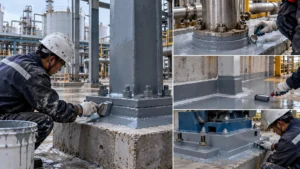
The binder is an epoxy resin — the same resin family as the intermediate and topcoat in a three-coat system. The zinc dust is loaded at 80–85% by weight in the dry film. Cured with an amine or polyamide hardener as a two-component system.
Where It Excels
- Broad application window: tolerates moderate humidity during application; less sensitive to ambient conditions than inorganic zinc silicate
- Adhesion to steel: strong adhesion to Sa 2½ blast-cleaned steel and, with appropriate primers, to some mechanically prepared surfaces
- Compatibility: designed to be overcoated with epoxy intermediate coats as part of a complete system; chemical compatibility between primer and intermediate is well established
- Availability: widely available from multiple manufacturers in a range of formulations; cost-effective for most industrial applications
Limitations
- Temperature limit: maximum service temperature around 120°C for standard formulations — above this, the organic binder degrades
- Not suitable for immersion on its own: zinc-rich epoxy as a standalone system is not an immersion coating; it requires epoxy intermediate and appropriate topcoat for immersion or splash zone service
- DFT window: must be applied at 60–80 µm DFT — too thin reduces galvanic protection; too thick causes brittleness and outgassing pinholes in the overcoat
Inorganic Zinc Silicate (IOZ)
The binder is an inorganic silicate — either ethyl silicate (solvent-borne) or alkali silicate (water-borne). The result is a coating that’s more inorganic than organic — closer to a ceramic in its final cured state. Zinc loading is typically 77–85% in the dry film.
Where It Excels
- Heat resistance: stable to 400°C in atmospheric service — far beyond any organic zinc primer. The preferred primer for structures operating at elevated temperatures: process pipework, equipment in the vicinity of fired heaters, offshore flare structures
- Abrasion resistance: the inorganic silicate matrix is harder and more abrasion-resistant than epoxy — preferred for structures subject to mechanical wear, scour, or abrasive contact
- Long pre-overcoat exposure: IOZ can be left unovercoated for extended periods (months, sometimes years) and still accept overcoating with good adhesion — unlike organic zinc-rich epoxy, which can become difficult to overcoat if left too long
- Self-healing tendency: the zinc corrosion products that form at a scratch or holiday can fill the defect and slow further attack in atmospheric service — more pronounced with IOZ than with organic zinc
Limitations
Moisture-dependent cure: IOZ cures by atmospheric humidity reacting with the silicate binder. It needs relative humidity above approximately 50% to cure properly — the opposite of most coatings. In very dry conditions (desert climates, heated enclosed spaces), cure can be extremely slow. Paradoxically, it also can’t be applied in rain.
Strict surface preparation: IOZ requires Sa 2½ blast with the correct surface profile (Rz 40–70 µm) and is less tolerant of any residual contamination than zinc-rich epoxy. Any organic contamination — oil, grease, or even finger marks — causes adhesion failure.
Mudcracking if applied too thick: IOZ has a maximum DFT of around 75–100 µm per coat. Exceeding this causes mudcracking as the film dries and contracts. A mist coat (thin, diluted first pass) before the full coat is standard practice and is often skipped — don’t let it be.
Overcoating requires care: Overcoating too soon (before full cure) causes solvent entrapment and pinholes. The surface sometimes needs to be ‘mist dampened’ or lightly abraded before overcoating. Follow the manufacturer’s guidance on overcoat interval precisely.
Side-by-Side Comparison
| Property | Zinc-Rich Epoxy (Organic) | Inorganic Zinc Silicate |
|---|---|---|
| Minimum zinc content | 80% by weight (dry film) | 77% by weight (dry film) |
| Binder type | Epoxy resin (organic) | Ethyl or alkali silicate (inorganic) |
| Heat resistance | ~120°C | ~400°C |
| Application conditions | Tolerant — wide humidity and temp range | Sensitive — needs 50%+ RH; no rain; no extreme heat |
| Surface prep requirement | Sa 2½ (less critical than IOZ) | Sa 2½ — very sensitive to contamination |
| Mudcracking risk | Low (at specified DFT) | High if DFT exceeded; mist coat essential |
| Pre-overcoat exposure | 12–24 hours to max recoat window | Can be left months before overcoating |
| Abrasion resistance | Moderate | High |
| Typical DFT | 60–80 µm | 60–75 µm |
| Cost (relative) | Lower | Higher |
| Best for | General industrial C4–C5; most building steel | Offshore topsides; high-temp; long exposure before overcoat |
When to Specify Each
Specify Zinc-Rich Epoxy When:
- Service temperature is below 120°C
- Application conditions are variable (temperature and humidity fluctuate)
- The structure will be overcoated within a few weeks of primer application
- Cost is a significant factor
- The specification is for a standard building, infrastructure, or industrial structure in C3–C5 service
Specify Inorganic Zinc Silicate When:
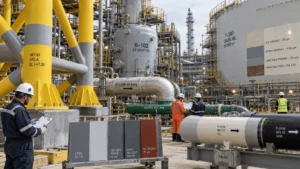
- Service temperature exceeds 120°C (process pipework, equipment near fired heaters, flare structures)
- The structure will be exposed for a long period before overcoating — common in modular fabrication and offshore construction where modules are shop-coated and then sit for months before topcoating at the installation site
- The specification calls for NORSOK M-501 compliance — IOZ is the standard primer for NORSOK System 1 (offshore topsides atmospheric)
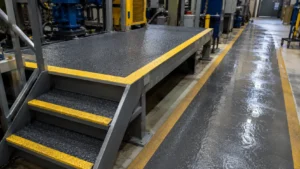
- High abrasion resistance is required — certain deck structures, equipment supports, areas subject to mechanical traffic
For C5 coastal and offshore projects, the choice between zinc-rich epoxy and IOZ is one of several system decisions covered in the anti-corrosion coating guide for coastal and marine steel.
Frequently Asked Questions
Can inorganic zinc silicate be used as a standalone coating without overcoating?
Yes, in appropriate environments. IOZ is used as a standalone system for some structures where the aesthetics of a bare, weathered zinc silicate surface are acceptable — temporary structures, maintenance areas, some industrial tanks and equipment. In atmospheric service, bare IOZ provides good corrosion protection, though it will weather to a chalky, light-grey appearance over time. For long-term service life and colour retention, overcoating with an epoxy intermediate and polyurethane topcoat is standard.
What happens if you apply IOZ in conditions that are too dry?
In very low humidity (below about 40% RH), inorganic zinc silicate cures extremely slowly — the silicate condensation reaction that converts the liquid binder to the hard inorganic film requires atmospheric moisture. An under-cured IOZ film is weak, poorly adhered, and prone to cohesive failure when overcoated. In dry climate applications (Middle East, desert locations), IOZ should either be avoided in favour of zinc-rich epoxy, or the application environment should be humidified artificially. This is one of the most common IOZ application failures on projects in arid regions.
Is there a way to tell if a zinc primer has adequate zinc content?
Yes — request the product TDS and look for the zinc content stated as percentage by weight in the dry film (not wet film or by volume). The TDS should explicitly state this figure. If it doesn’t, ask the manufacturer for clarification. Products that describe themselves as ‘zinc-containing’ or ‘zinc-enhanced’ without stating a specific percentage are often below the galvanic protection threshold. The minimum for genuine galvanic protection is 80% (organic) or 77% (inorganic) by weight in the dry film per ISO 12944-5.
Can zinc-rich epoxy and inorganic zinc silicate be used in the same project on different zones?
Yes, and this is sometimes the right approach. On a petrochemical plant, for example, structural steel in standard atmospheric C4–C5 service gets zinc-rich epoxy (easier to apply, lower cost, adequate performance), while high-temperature equipment supports, piping, and structures near fired heaters get IOZ (heat resistance up to 400°C). Specify each zone separately with the appropriate primer, and confirm that the intermediate and topcoat products are compatible with both primer types if they’re used in adjacent areas.
What’s the risk of exceeding the maximum overcoat interval on zinc-rich epoxy?
Zinc-rich epoxy that has been left unovercoated beyond the maximum recoat window in the TDS (typically days to weeks, depending on product and conditions) develops a zinc carbonate or zinc hydroxide conversion layer on the surface. This layer reduces inter-coat adhesion significantly. The remedy is light mechanical abrasion (scuff sanding or sweep blasting) to expose a fresh zinc surface before overcoating. This step is often missed on projects where shop primer is applied months before site topcoating — specify it explicitly in the coating procedure. For a comparison of zinc-rich epoxy versus standard epoxy primer, the zinc-rich primer vs epoxy primer guide covers the differences in protection mechanism and selection logic.
Zinc-Rich Primer Supply from Huili Coating
Huili Coating manufactures both zinc-rich epoxy and inorganic zinc silicate primers for structural steel applications in C3 through CX environments — designed for compatibility with Huili’s epoxy intermediate coat and polyurethane topcoat systems, with full TDS, SDS, and ISO 9227 salt spray test documentation.
To recommend the right primer type and provide TDS or RFQ support, send your project details via the Huili Coating project inquiry form:
- Service temperature range (distinguishes zinc-rich epoxy from IOZ requirement)
- ISO 12944 environment category or site description
- Project timeline: time between shop primer and site overcoating
- Structure type and any high-temperature or abrasion-exposure zones
- Application location and climate (particularly relevant for IOZ in dry or variable-humidity regions)
- Any project specification standards (ISO 12944, NORSOK M-501, client spec)
The technical team will respond with a primer recommendation, compatibility confirmation with intermediate and topcoat, and full product documentation for your specification.