If you’ve been specifying or sourcing intumescent coatings for steel structure projects in Canada, you’ve probably run into one of two situations: either the specification simply says ‘ULC listed’ without explaining what that means, or you’re importing from outside Canada and trying to figure out whether your product actually meets Canadian requirements.
This guide cuts through the confusion. It explains exactly which certifications matter for fireproof coatings on structural steel in Canada, how they differ from the US and European standards you might already be familiar with, and what the process looks like for an imported product to achieve compliance.
The Short Answer: ULC Listing Is What You Need
In Canada, fire protection products — including intumescent and cementitious fireproofing for structural steel — are typically required to be listed by Underwriters Laboratories of Canada (ULC). ULC is the Canadian equivalent of UL in the United States, and a ULC listing demonstrates that a product has been independently tested and verified to meet relevant Canadian fire performance standards.
The specific ULC standard most relevant to structural steel fireproofing is ULC S101: Standard Methods of Fire Endurance Tests of Building Construction and Materials. This is Canada’s equivalent of UL 263 (ASTM E119) in the US and ISO 834 / EN 1363-1 in Europe — all of which model a cellulosic (standard building) fire curve.
One important clarification upfront: ULC listing and UL listing are not the same thing, even though ULC is affiliated with UL. A product with a UL 263 listing from the United States is not automatically ULC listed for Canadian use. The testing must be conducted specifically to ULC S101, and the product must appear on the ULC certification directory.
For broader fireproofing system selection and the difference between passive and active fire protection, see passive fire protection vs active fire protection.
ULC vs UL vs CE: Understanding the Differences
| Standard | Jurisdiction | Fire Curve | Steel Structure Use |
| ULC S101 | Canada | Cellulosic (standard building) | Required for NBC-governed projects |
| UL 263 / ASTM E119 | United States | Cellulosic (standard building) | Not automatically valid in Canada |
| UL 1709 | USA (+ international) | Hydrocarbon (fast-rise) | Petrochemical/offshore — not NBC use |
| EN 13501-2 / BS 476 | Europe / UK | Cellulosic | Not valid in Canada without retesting |
| ISO 834 | International reference | Cellulosic | Referenced but not a certification scheme |
The practical implication: if you’re importing a product that has UL 263, BS 476, or EN 13501-2 certification, that documentation is useful evidence of performance — but it won’t satisfy a Canadian project specification that requires ULC listing. The product needs to be separately tested to ULC S101 and listed by ULC.
The National Building Code of Canada and Fire Resistance Requirements
The requirement for ULC-listed fireproofing stems from the National Building Code of Canada (NBC). The NBC sets out fire resistance ratings for building elements based on occupancy, building height, and construction type — and it requires that fire resistance ratings be established through testing to recognised Canadian standards.
Provincial building codes (Ontario Building Code, BC Building Code, etc.) adopt or adapt the NBC. In practice, project specifications in Canada will typically state one of the following:
- ‘ULC listed’ or ‘ULC certified’— the product must appear in the ULC Product Listing Directory
- ‘Tested to ULC S101’— the product has fire endurance test data to the Canadian standard
- ‘Listed by an accredited certification body’— ULC is the dominant body, but CSA Group and Intertek also operate in Canada
If a project specification doesn’t specify the standard, it’s worth clarifying with the specifying engineer or the authority having jurisdiction (AHJ) — typically the local building department — before ordering product.
What the ULC Certification Process Looks Like for an Imported Product
If you’re manufacturing or sourcing a fireproof coating outside Canada and want to achieve ULC listing, the process typically follows these steps:
- Submit the product to ULC for evaluation — ULC will review technical documentation and determine which standard(s) apply
- Conduct fire endurance testing to ULC S101 at a ULC-accredited testing laboratory — testing must cover the required assembly configurations (beam sizes, column sections, fire resistance periods)
- ULC reviews test results and issues certification if the product meets the standard requirements
- The product appears in the ULC Product Listing Directory — accessible online and verifiable by engineers and inspectors
- Annual follow-up inspections of the manufacturing facility to maintain the listing
The timeline from application to listing is typically 6–18 months, depending on the testing laboratory’s schedule and the complexity of the product system. Cost varies significantly based on the number of assemblies tested. For a manufacturer looking to establish a ULC listing for a new intumescent product, budgeting for multiple test assemblies across different section factors and fire resistance periods is essential.
Huili Coating can provide UL 1709 and BS 476 Part 21 certified intumescent systems with third-party test documentation. For Canadian projects requiring ULC S101 certification, contact our technical team — we can advise on available certified systems and discuss the certification pathway for your specific project requirements.
Practical Scenarios: What This Means for a Project
Scenario 1: You’re a Canadian engineer specifying a new commercial building
The NBC requires a 90-minute fire resistance rating on the structural steel. Your specification should state ‘ULC listed intumescent coating’ or ‘fire resistance assembly tested to ULC S101, 90-minute rating’. When reviewing product submittals, verify the product is listed in the ULC directory — don’t accept a UL 263 certificate as equivalent without specific confirmation from the authority having jurisdiction.
Scenario 2: You’re importing fireproof coating from outside Canada for a project
If the product has UL 263 but not ULC S101 listing, it is not automatically compliant. You have two options: find a supplier whose product already has a ULC listing, or work with the AHJ to obtain an alternative compliance path — some jurisdictions will accept non-listed products if the manufacturer provides test data demonstrating equivalent performance to ULC S101. This requires engagement with the local building department and is project-specific.
Scenario 3: Petrochemical or industrial facility in Canada
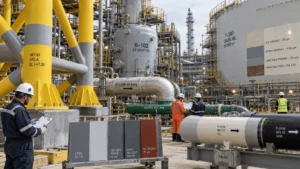
For petrochemical plants, offshore modules, or LNG facilities in Canada where a hydrocarbon fire scenario applies, the relevant standard shifts. UL 1709 (hydrocarbon fire curve) is the applicable performance standard — and ULC S101 (cellulosic) is not sufficient for this application. Many Canadian industrial and energy projects reference UL 1709 performance data alongside NBC compliance for the structural fire resistance framework. Clarify the applicable fire curve with the project fire engineer at the outset.
Frequently Asked Questions
Can a UL 263 listed product be used on a Canadian project?
It depends on the AHJ. Strictly speaking, UL 263 is a US standard and is not equivalent to ULC S101 for Canadian building code compliance. However, some authorities having jurisdiction will accept UL 263 test data as an alternative means of compliance, particularly if the product is identical to a tested assembly. This must be confirmed with the specific AHJ on a project-by-project basis — don’t assume equivalency.
Is there a publicly searchable ULC product directory?
Yes — ULC maintains an online product listing directory at ulc.ca. Engineers and inspectors can search by product category, manufacturer, and standard to verify that a specific product holds a current ULC listing. A listing can be revoked if the manufacturer fails a follow-up inspection, so it’s worth checking the directory directly rather than relying solely on a certificate document.
Do provincial codes add requirements beyond the NBC?
Yes, sometimes. Ontario, British Columbia, and Quebec in particular sometimes have requirements that go beyond or differ from the national code. For projects in these provinces, always check the applicable provincial code in addition to the NBC. The Ontario Building Code, for example, may have specific fire resistance provisions for certain occupancy types that are more stringent than the NBC baseline.
What’s the difference between a fire resistance rating and a fire protection rating?
A fire resistance rating (expressed in minutes or hours — 45 min, 1 hour, 2 hour) describes how long a building element maintains its structural integrity, prevents fire passage, or limits temperature rise on the unexposed face during a standardised fire test. A fire protection rating applies specifically to opening protectives (doors, windows, dampers) and is a different measure. For structural steel fireproofing, you’re always dealing with fire resistance ratings, not fire protection ratings.
Fireproof Coating Systems for Canadian Projects
Huili Coating manufactures intumescent coating systems with UL 1709 and BS 476 Part 21 third-party certification. For Canadian projects, we can discuss available ULC-compatible systems and provide full technical documentation to support specification and compliance review.
- Third-party fire test certificates: UL 1709 (60/90/120 min), BS 476 Part 21
- Technical documentation in English: TDS, SDS, fire test reports, application procedures
- Engineering support for project specification and AHJ submission preparation
Send your project fire scenario, required fire resistance period, steel section factors, project location, and whether the job is building-code governed or industrial hydrocarbon service via the project inquiry form so our technical team can review the compliance path and recommend the most suitable documentation set.