Offshore structures need a zone-based coating specification—because atmospheric steel, splash/tidal steel, and immersion steel face different corrosion drivers and require different system builds. ISO 12944 explicitly adds offshore environments (CX, Im4 and splash/tidal zone specifications) and links system selection to exposure and durability (“time to first major maintenance”), with thickness guidance presented as nominal DFT and minimum coats (final confirmation by TDS and project spec).
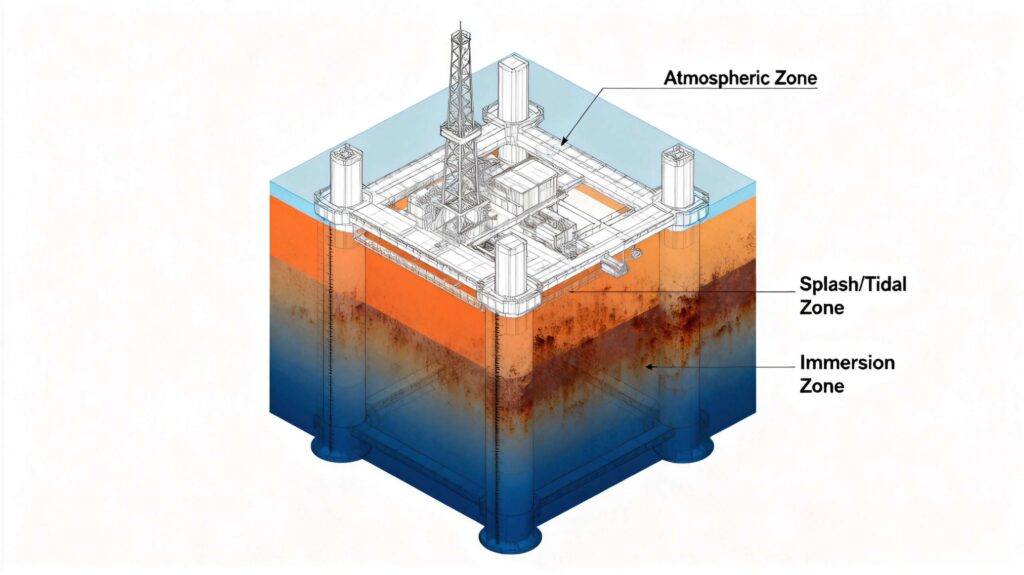
Why Offshore Structures Require Special Coating Systems
Offshore corrosion is severe because salt-laden moisture is continuous, access is limited, and repairs are expensive—so durability planning and correct system build matter more than “paint brand.” ISO 12944 frames durability as the expected lifetime to first major maintenance (L/M/H/VH) and ties durability + environment to coating type and minimum nominal thickness (final by spec).
Offshore also includes non-atmospheric environments and adds specific offshore categories (CX atmospheric offshore, Im4 immersion with cathodic protection, and splash/tidal zone specifications), which is why a single “marine epoxy” line item is usually not RFQ-ready.
Typical Corrosion Zones in Offshore Structures
ISO-style offshore thinking starts with zoning because corrosion mechanisms differ by wetting and oxygen availability. ISO 12944 (2018 update) introduced Part 9 to address offshore environments and a new CX category, plus categories tied to immersion and cathodic protection.
Atmospheric zone (topsides / exterior steel)
Typically driven by UV + salt deposition + intermittent wetting, so systems often need barrier build plus a weathering topcoat. ISO 12944 lists atmospheric categories and includes CX for extreme/offshore atmospheric exposure.
Splash & tidal zone
This is usually the most aggressive painted-zone because cyclic wetting/drying and oxygen availability accelerate corrosion, and ISO 12944 provides separate thickness specifications for splash/tidal scenarios (final by TDS/spec).
Immersion zone
Immersion is treated under “Im” categories in ISO 12944, including Im4 for seawater/brackish immersion with cathodic protection, which impacts system selection and thickness planning.
Recommended Marine Coating Systems (by zone)
These are practical system families; final product selection and DFT ranges must be confirmed by TDS, ISO tables, and project specification.
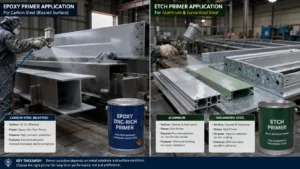
System A: Zinc-rich primer + high-build epoxy + PU/polysiloxane topcoat (atmospheric/topsides)
Typical use: topsides steel, pipe racks, exterior structures needing UV/weathering resistance.
Why it works: ISO 12944 commonly allows zinc-rich primer options in system descriptions, and then builds barrier coats with epoxy followed by a weathering topcoat (technology options may include polyurethane and other suitable technologies depending on project needs).
Buyer pitfall: don’t skip compatibility checks—primer/intermediate/topcoat must be specified as a tested/approved system, not mixed from unrelated datasheets (project-dependent).
System B: Reinforced epoxy barrier build (splash/tidal)
Typical use: splash/tidal zone steel where coating takes the highest mechanical and chemical stress.
Why it works: ISO 12944 includes higher system DFT requirements for offshore CX and splash/tidal conditions than typical onshore atmospheric exposures, reflecting aggressiveness (final by spec).
Buyer pitfall: splash/tidal failures often start at edges, welds, and crevices—include stripe coats and measure DFT in those geometries (acceptance criteria project-dependent).
System C: Immersion-grade epoxy system aligned to Im categories (immersion/CP interface)
Typical use: immersed structures where cathodic protection may be present (Im4).
Why it works: ISO 12944 distinguishes immersion categories and notes coating system requirements for immersion, with Im4 addressed in offshore-related specifications (final by spec).
Buyer pitfall: if CP is used, define it in the RFQ; otherwise suppliers may recommend non-comparable systems and thickness.
[Marine & Offshore Coating Solutions] ->
[Anti-Rust & Primer Coatings Series] ->
[Polyurethane vs Polysiloxane Topcoat (Marine Decks)] ->
Key Performance Standards (ISO 12944, NORSOK, salt spray)
ISO 12944 (baseline selection + offshore categories)
ISO 12944 is a globally recognized framework for selecting protective paint systems based on corrosivity and durability, and it covers atmospheric, immersed, and buried environments. It also added offshore environments and CX, plus categories tied to CP immersion and splash/tidal conditions in the 2018 revision.
NORSOK (when specified by owner/EPC)
If your project spec calls for NORSOK (common in oil & gas), treat it as a contractual requirement and align surface prep, coating system approval route, and inspection documentation accordingly (project-dependent). ISO 12944 notes that local standards may require higher zinc levels for “zinc-rich” terminology, and NORSOK is one example often referenced in that context.
“Salt spray resistance” (don’t over-rely on one test)
ISO 12944 includes laboratory testing concepts intended to confirm suitability of systems, but it is not a substitute for a project-specific system selection and execution control. Always request the applicable test evidence required by the project spec rather than generic marketing claims.
Common Offshore Coating Failures & Solutions
Blistering (often osmotic): usually linked to soluble salts, inadequate surface cleanliness, or applying over damp/contaminated steel; tighten washing/verification and environmental controls (project-dependent).
Delamination between coats: frequently caused by missed recoat windows or incompatible layers; control recoat intervals and specify a complete approved system.
Underfilm corrosion at edges/welds: caused by low film build on sharp edges and complex geometry; require stripe coats and targeted DFT checks at details (project-dependent).
What buyers forget (RFQ reality): Offshore repaint jobs fail when the RFQ doesn’t define “what can’t be blasted” and “what will be power-tool cleaned”—system selection must match realistic surface prep, not ideal conditions.
Quality/Inspection Checklist (Surface prep, DFT, recoat)
ISO 12944 emphasizes that after coating selection, execution and quality control strongly affect performance, and parts of the standard focus on application phase support.
Surface preparation (pre-job + per shift)
Confirm scope by zone (atmospheric/splash/immersion).
Define target surface condition and cleanliness verification method (project-dependent).
DFT and coat count control
Verify nominal DFT targets and minimum coats based on project spec/standard and TDS (final confirmation by TDS/standard/project spec).
Take extra readings at edges, welds, bolts, and cutouts (acceptance criteria project-dependent).
Recoat interval discipline
Record batch numbers, mixing ratios, pot life, and actual recoat times/conditions (project-dependent).
RFQ Checklist (Offshore system recommendation-ready)
Send this to get an accurate system recommendation + quotation + TDS package:
Structure type: platform / jacket / topsides / boat landing / pipe racks
Zone map: atmospheric / splash-tidal / immersion; areas with CP (Im4)
Required durability (L/M/H/VH; time to first major maintenance)
Surface prep capability (blast / UHP waterjet / power tool; access constraints) (project-dependent)
Application method and constraints (shop/site, humidity, night shift, shutdown window)
Required standards: ISO 12944, and NORSOK if specified
Inspection requirements: DFT reporting, hold points, repair procedure, documentation deliverables (project-dependent)
CTA: Request an Offshore Marine Coating System Plan
Send your zone map, durability target, surface prep constraints, and required standard (ISO 12944 / NORSOK if applicable). We will respond with a zone-based offshore coating system recommendation, TDS list, and an RFQ-ready specification outline aligned to offshore categories (final confirmation by TDS and project spec).
Contact Us
We would love to speak with you.
Feel free to reach out using the below details.