ISO 12944 helps engineers select a protective coating system by defining atmospheric corrosivity categories (C1 to C5 and CX) and linking the environment + durability target to coating system performance expectations. If your project spec says “C3/C4/C5,” it’s essentially telling you how aggressive the site is and how robust the coating system needs to be.
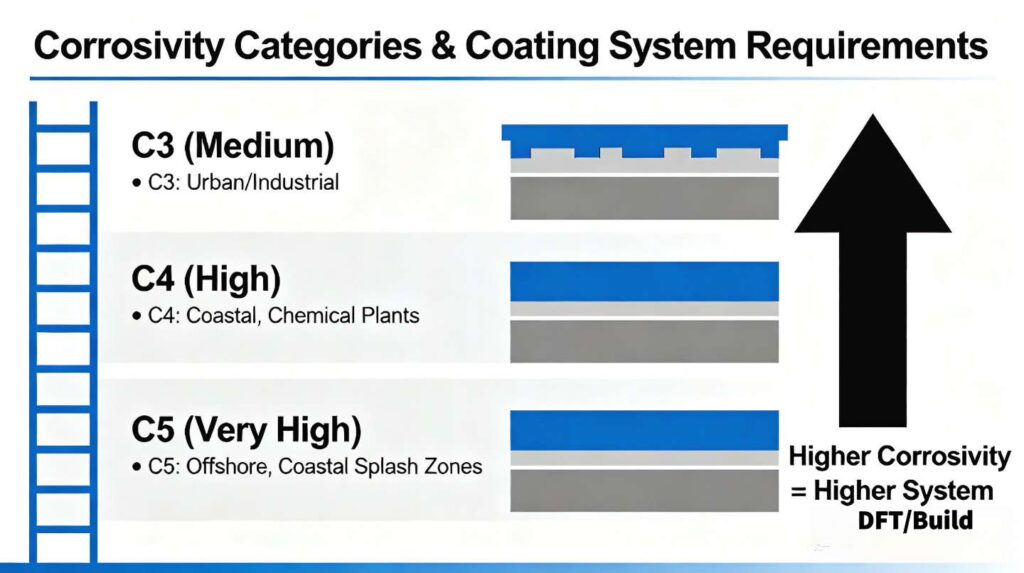
What Is ISO 12944?
ISO 12944 is a widely used standard series for corrosion protection of steel structures by protective paint systems. It classifies atmospheric environments into corrosivity categories (C1 very low through C5 very high, plus CX extreme), providing a common engineering language for owners, EPCs, and coating suppliers.
Why global projects use it
It standardizes how “environment severity” is described in specifications (C3/C4/C5/CX).
It aligns coating selection with durability expectations and performance requirements rather than brand names.
Unique value (what buyers forget): ISO 12944 category is not the whole spec—your RFQ still needs the steel condition, surface prep method, application limitations, and durability target to produce a correct system recommendation.
ISO 12944 C3 Corrosion Category (Medium)
C3 is generally described as medium corrosivity, often associated with urban/industrial atmospheres with moderate pollution and some manufacturing environments with higher humidity.
Typical environments (examples)
Urban/industrial atmospheres with moderate pollution
Warehouses/processing plants and some manufacturing halls with higher humidity
Recommended coating approach (typical)
For C3, many projects use a practical 2–3 coat system:
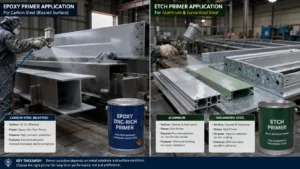
Epoxy or zinc/epoxy primer (project-dependent)
Epoxy intermediate/build coat
Optional polyurethane topcoat for exterior UV exposure (project-dependent)
ISO 12944 C4 Corrosion Category (High)
C4 is generally considered high corrosivity, often linked to industrial zones with significant pollution and coastal areas with moderate salinity (e.g., harbours/shipyards).
Typical environments (examples)
Industrial areas and coastal areas with moderate salinity
Chemical plants, swimming pools, coastal ship/boatyards (examples commonly listed in system guides)
Common system structure (typical)
C4 typically needs higher total film build and stricter QC:
Zinc-rich or epoxy primer
High-build epoxy intermediate(s)
Durable topcoat for exterior exposure (often polyurethane or other suitable topcoat types; final by spec/TDS)
ISO 12944 C5 Corrosion Category (Very High)
C5 is generally described as very high corrosivity, including aggressive industrial environments with high humidity and coastal/maritime areas with high salinity, often with near-permanent condensation and high pollution.
Typical environments (examples)
Coastal and maritime areas with high salinity
Buildings/areas with almost permanent condensation and high pollution
High humidity + aggressive industrial atmospheres
What changes in C5 (engineering view)
Higher total film build and tighter inspection control
Greater emphasis on edge protection, stripe coats, and repair procedures
More attention to topcoat selection for UV/weathering and maintenance interval planning
If you need a project-ready system for C5 exposure (materials + DFT targets + QC plan), start with our steel structure solutions hub:
Anchor: [Steel Structure Coating Solutions] ->
Not sure which system fits your project?
Tell us your ISO 12944 category, site conditions, and durability target — we'll recommend a complete coating system with DFT ranges, product TDS, and a quotation within 24 hours.
Get a System Recommendation →How to Select a Coating System Based on ISO 12944
ISO 12944 selection is not only C3/C4/C5; you also specify durability.
Step 1: Choose durability (L / M / H / VH)
Many ISO 12944 system guides summarize durability ranges as:
Low (L): up to 7 years
Medium (M): 7–15 years
High (H): 15–25 years
Very High (VH): more than 25 years
Important note: Durability ranges are guidance for planning and specification; actual performance depends on design, surface prep, application, and maintenance.
Step 2: Convert environment + durability into system build (DFT)
Higher corrosivity and longer durability generally require higher total DFT and more robust systems (often additional epoxy build). This is why RFQs should request system recommendation rather than guessing thickness.
Step 3: Add execution constraints (site reality)
Surface preparation: blasting availability vs maintenance repaint limitations
Climate: humidity/condensation risk (especially in coastal SE Asia)
Access and maintenance: whether future repainting is feasible or expensive
Unique value (field rule): If your project cannot achieve blast cleaning on site (shutdown constraints), ask for a maintenance-grade recommendation; otherwise, your spec becomes “unbuildable” and fails in execution.
ISO 12944 Coating System from a Manufacturer Perspective
From a manufacturer’s standpoint, ISO 12944 categories are useful because they standardize the “why” behind coating choices. A strong proposal should include:
Coating system layers (primer + epoxy build + topcoat)
DFT targets as ranges (final by TDS/spec)
Surface prep and application method
Inspection checkpoints and repair guidance
ISO 12944-5 also notes that most epoxy coatings chalk in sunlight and that a suitable topcoat should be applied if color/gloss retention is required, which is a key specification point for exterior C3/C4/C5 steelwork.
For epoxy barrier coats typically used to build total DFT in C4–C5 systems, see:
Anchor: [Epoxy Anti-Corrosion Coating Series] ->
For UV/weathering-resistant finishing options commonly used as topcoats in exterior exposure, see:
Anchor: [Polyurethane Anti-Corrosion Coatings] ->
Common failures + troubleshooting (ISO 12944 projects)
Chalking and fade outdoors: epoxy exposed to sunlight without a suitable topcoat; ISO 12944-5 notes this chalking behavior.
Edge rusting and weld corrosion: insufficient stripe coats and low DFT at sharp edges (common field issue).
Blistering in coastal zones: salt contamination trapped under the coating (project-dependent).
Intercoat delamination: recoat windows exceeded or contamination between layers (project-dependent).
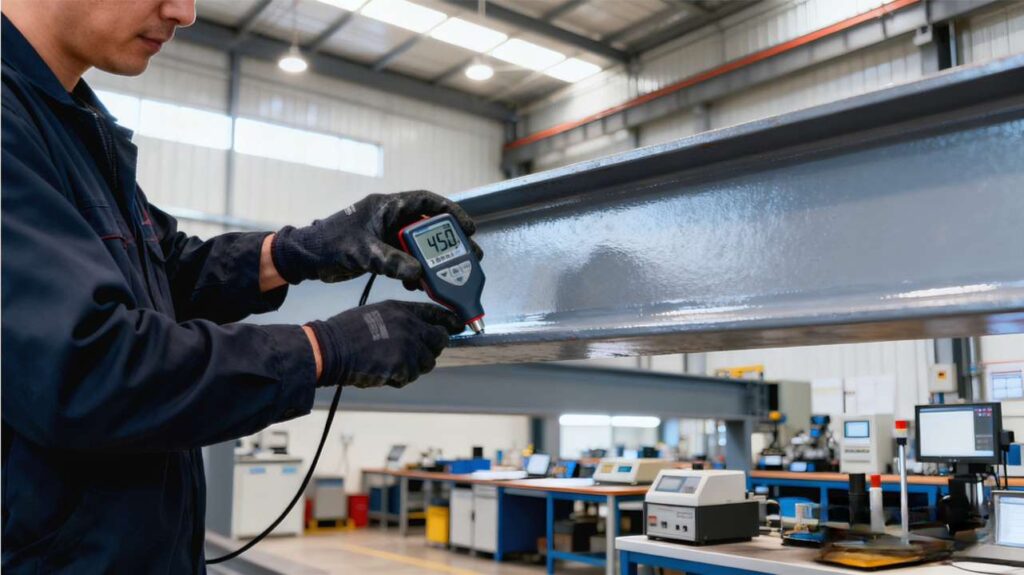
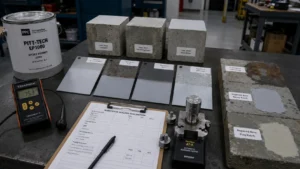
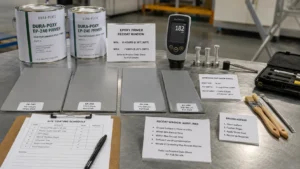
Quality/inspection checklist (DFT, recoat interval, surface prep)
Surface prep
Verify surface cleanliness and prep standard per project spec (blast or other approved method).
Confirm edges/welds receive stripe coats where specified.
DFT control
Measure DFT per layer (primer / epoxy build / topcoat).
Record readings by area and by high-risk details (edges, welds, bolt zones).
Recoat interval control
Track recoat window; if exceeded, follow surface conditioning procedure before recoating (project-dependent).
CTA: Get a project-based coating system
Share your ISO 12944 category (C3/C4/C5), durability target (L/M/H/VH), and site conditions to receive a manufacturer-recommended coating system (primer + epoxy build + topcoat) with DFT ranges, TDS/SDS, and a quotation. ISO 12944-2 defines the corrosivity categories (C1–C5 and CX) and ISO system guides commonly map durability ranges to planning expectations.
Still Unsure About Your Corrosion Category?
Choosing the wrong ISO 12944 category can lead to early coating failure. Get a free project assessment and a customized coating specification from our NACE-certified engineers.
- 24-Hour Specification Response
- Compliant with ISO 12944:2026
- 30+ Years of Field Experience