Introduction
In steel structure projects—whether industrial plants, warehouses, bridges, or offshore facilities—corrosion is rarely an unexpected problem. What often causes serious failure is choosing the wrong anti-corrosion coating system at the beginning.
Many projects rely on “standard practice” or price-driven decisions: a generic epoxy primer, a topcoat that looks acceptable, and minimal surface preparation. These choices may pass short-term inspections but often lead to premature coating failure, rust breakthrough, and costly maintenance within just a few years.
This article focuses on a practical question engineers and project managers face every day:
How do you choose the right anti-corrosion coating for a steel structure—based on real project conditions, not assumptions?
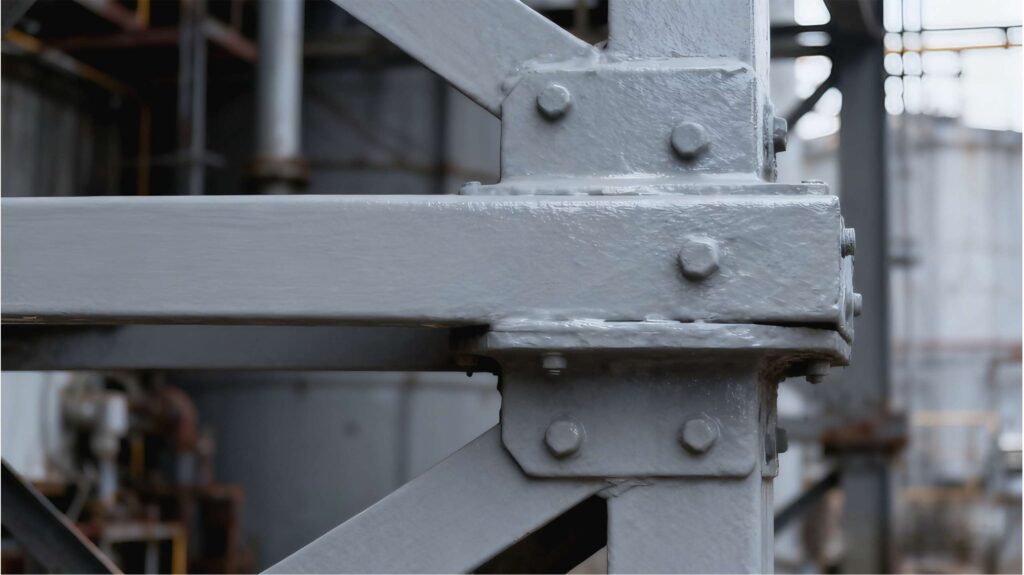
What Is an Anti-Corrosion Coating for Steel Structures?
In real projects, an anti-corrosion coating for steel structures is not a single product, but a system designed to match the service environment, design life, and maintenance strategy.
Rather than thinking in terms of “which paint,” engineers should think in terms of:
How corrosion will occur
Where failure is most likely
How long the coating must perform without major repair
A proper steel structure coating system usually includes:
Surface preparation (often underestimated)
One or more primer layers (e.g. zinc-rich or epoxy)
Intermediate and topcoats selected for exposure conditions
The effectiveness of the system depends far more on compatibility and application logic than on any single coating specification.
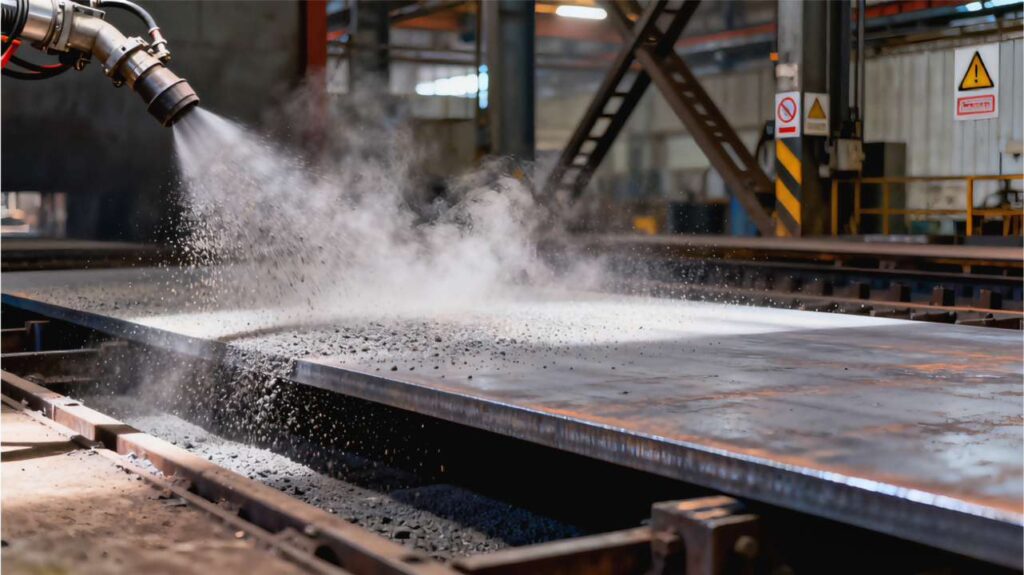
Why Anti-Corrosion Coating Matters in Real Projects
Corrosion protection is not only a technical issue—it is a project risk issue.
Service Life & Structural Integrity
Once corrosion starts beneath a failed coating, steel loss can accelerate rapidly. In load-bearing structures, this directly affects structural safety and long-term reliability.
Maintenance Cost & Downtime
Re-coating a structure after installation is often 5–10 times more expensive than applying the correct system initially. Access, shutdowns, and labor dominate the cost—not the coating itself.
Safety & Compliance Risk
In industrial environments, coating failure may lead to:
Falling rust scale
Fire protection system degradation
Non-compliance with project or insurance requirements
In short, choosing the wrong anti-corrosion coating can quietly turn into a long-term financial and operational liability.
Key Factors Engineers Must Consider
1. Exposure Environment
Not all steel structures face the same corrosion mechanisms.
Key questions include:
Is the structure indoor or outdoor?
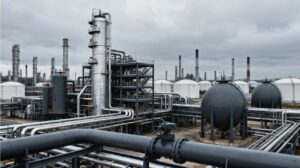
Is it exposed to humidity, chemicals, salt spray, or UV?
Is it located in a coastal, industrial, or normal atmospheric environment?
Ignoring environmental severity often results in under-designed coating systems that fail long before their intended service life.
2. Surface Preparation Level
Surface preparation is one of the most common weak points in steel coating projects.
For long-term protection, especially in industrial environments:
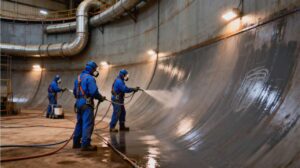
Abrasive blasting to Sa 2.5 (ISO 8501-1) is often required
Hand or power tool cleaning may be insufficient for critical structures
Poor surface preparation reduces coating adhesion and allows corrosion to propagate beneath the film—even when high-performance coatings are used.
3. Coating System Compatibility
Mixing incompatible primers and topcoats is a frequent cause of failure.
For example:
Zinc-rich primers require compatible intermediate layers
Some polyurethane topcoats may not bond well to certain epoxies without proper curing or tie coats
Ignoring system compatibility can lead to delamination, blistering, or intercoat adhesion failure.
4. Design Life vs. Maintenance Strategy
Engineers should clarify:
Required service life (e.g. 5, 10, 20+ years)
Planned maintenance intervals
Accessibility for future repair
A short design life may justify a simpler system, while long-term infrastructure requires heavier-duty anti-corrosion solutions.
Common Mistakes and Failure Scenarios
Using “One-Size-Fits-All” Coatings
Applying the same coating system across different environments often leads to localized failures in high-risk areas.
Underestimating Edge & Weld Protection
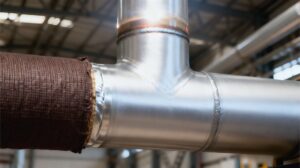
Sharp edges and weld seams are corrosion hotspots and require special treatment or stripe coating.
Choosing Price Over System Performance
Low initial coating cost often results in high lifecycle cost, especially in large steel structures.
Ignoring “Not Suitable” Conditions
Some coatings perform well indoors but degrade rapidly under UV or chemical exposure.
Inadequate Curing Between Coats
Rushing application schedules can compromise intercoat adhesion and long-term durability.
Recommended Solutions and Coating Systems
While no single solution fits all projects, proven anti-corrosion systems for steel structures often include:
Zinc-rich primer for cathodic protection in aggressive environments
Epoxy intermediate coats for barrier protection and thickness build
Polyurethane or acrylic topcoats for UV resistance and durability
The key is to match the system to the environment, surface preparation level, and expected service life, rather than selecting products in isolation.
Standards, Notes & Practical Tips
Relevant international references commonly used in steel structure projects include:
ISO 12944 (Corrosion protection of steel structures by protective paint systems)
ISO 8501 / 8502 / 8503 (Surface preparation standards)
SSPC standards for preparation and coating performance
Practical tips from real projects:
Always evaluate corrosion category before system selection
Document surface preparation clearly in project specifications
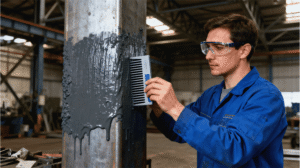
Use test patches for complex environments
Clarify coating inspection criteria early with contractors
Conclusion & CTA
Selecting an anti-corrosion coating for steel structures is fundamentally a risk management decision, not a product choice.
By understanding environmental exposure, surface preparation requirements, and system compatibility, engineers can significantly reduce long-term maintenance costs and avoid premature failures.
If you need support in selecting or optimizing a steel structure coating system for your project conditions, contact us for technical discussion and system recommendations.
Contact Us
We would love to speak with you.
Feel free to reach out using the below details.