C4 is a high atmospheric corrosivity category under ISO 12944, and many industrial or coastal steel structures fall into this range when humidity, pollution, or moderate salinity increase corrosion stress.
Coastal fabrication yard with applicators spraying protective coating onto structural steel frames before shipment
iso-12944-c4-corrosion-protection-steel-yard.webp
Applicators coating structural steel at a coastal fabrication yard
This article stays focused on C4 only, not the full C1-CX framework, so project teams can make better decisions on environment judgment, paint system logic, and specification wording. For the broader framework, see ISO 12944 C3 C4 C5 explained.
- Identify whether the project is truly C4, not just “near the sea.”
- Specify a full paint system, not a vague “C4 paint.”
- Define surface preparation, total DFT, and durability target early.
- Check shop primer condition, salts, and condensation risk before painting.
- Send exposure details and substrate condition with the RFQ.
Understand what a C4 environment means
ISO 12944 C4 refers to high atmospheric corrosivity for steel structures in service.
In practical terms, C4 commonly covers exterior steel in industrial areas and coastal areas with moderate salinity, as well as interior steel in places such as chemical plants, swimming pools, boat yards, and ship interiors where moisture or aggressive air raises corrosion stress.
Typical C4 project situations
Typical C4 exterior cases include process plants with humid emissions, coastal utility steel, terminals, and fabrication yards exposed to salt-laden air and regular wet-dry cycling.
Typical C4 interior cases include buildings or enclosed zones where condensation, cleaning chemicals, or persistent moisture make the environment harsher than a standard warehouse.
Judge whether the project is C3 or C4
The biggest specification mistake is treating C3 and C4 as a simple “distance from the sea” question. C4 judgment is usually better made by looking at combined exposure: humidity, industrial pollutants, salt influence, condensation risk, and how often the structure is cleaned or maintained.
Practical judgment rules
If the steel is near a coastline, but sheltered, well maintained, and not exposed to sustained condensation or process pollution, the project may still remain in C3.
If the steel is inland but sits near humid process zones, corrosive emissions, or washdown conditions, the project can move into C4 even without marine exposure.
For buyers in the Middle East, Southeast Asia, and Central Asia, the most common misread is ignoring humidity cycles and plant contamination while focusing only on location. In coastal Gulf projects, chloride deposition and heat accelerate degradation; in Southeast Asia, condensation and persistent humidity often push indoor or semi-sheltered steel toward C4 behavior faster than teams expect.
Specify a practical C4 paint system
ISO 12944 is used to guide paint-system selection according to corrosivity and durability, and ISO 12944-5 specifically describes paint types and protective paint systems for steel structures. ISO 12944-5
That means a valid C4 specification should describe a full system, not just say “C4 paint” or “anti-rust paint.”
What a practical C4 system usually includes
A practical C4 paint system usually includes:
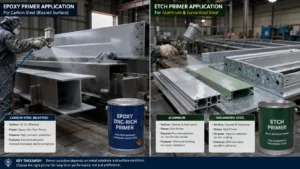
- A primer layer for steel adhesion and primary corrosion control
- An intermediate or build coat for barrier thickness
- A topcoat where UV resistance, weather durability, or colour retention matters
A common logic route is primer plus epoxy intermediate coat plus polyurethane topcoat, especially for exposed steelwork where atmospheric durability and appearance retention both matter. Our steel structure coating system guide shows how primer, intermediate coat, and topcoat work together in a full industrial build-up.
Why system wording matters
A C4 specification should define the number of coats, target total DFT range, surface preparation standard, and the topcoat performance requirement where sunlight or colour retention matters.
If the document only says “C4 coating,” suppliers may quote very different systems, which makes technical comparison weak and approval slower.
Surface preparation for C4 work
High-performance C4 systems usually depend on abrasive blast cleaning rather than minimal mechanical cleaning. ISO 8501-1 uses the designation “Sa” for blast-cleaned surfaces and requires visible oil, grease, and dirt to be removed before blast-cleaning, followed by removal of loose dust and debris after blasting. ISO 8501-1 PDF
In many steel structure projects, Sa 2½ is a common reference point for high-performance atmospheric systems because weak cleanliness, salts, old coating remnants, or poor profile control can undermine even a well-specified C4 paint system.
What buyers should check before approval
- Exposure description, including industrial moisture, coastal influence, and any aggressive interior atmosphere
- Durability target, because C4 alone is not enough for system selection
- Surface preparation standard and who is responsible for blasting
- Number of coats and total DFT target range
- Topcoat need for UV resistance, colour retention, or gloss stability
- Shop primer condition, if pre-primed steel is involved
Prevent the common C4 specification mistakes
Most C4 failures start with weak specification logic rather than bad paint alone. Teams often try to solve a harsh environment with more thickness, but thickness cannot repair poor preparation, wrong system design, or misread exposure.
Frequent mistakes in C4 coating work
- Writing “C4 coating” without a durability target
- Underestimating industrial humidity, condensation, or pollutants
- Looking only at the topcoat and not the full system build
- Trying to compensate for poor surface preparation with higher DFT
- Ignoring salts, damaged shop primer, or edge condition before painting
Quality and inspection checklist
Before overcoating or shipment, check:
- Surface cleanliness and blast profile
- Old shop primer compatibility or removal plan
- DFT range at flats, edges, welds, and repairs
- Recoat interval range between coats
- Salt contamination where coastal handling or storage is involved
- Visible defects such as dry spray, missed areas, or transport damage
If your team needs a field-ready handover reference, use this steel structure coating inspection checklist.
Prepare the RFQ and next step
A better RFQ gives better technical offers. For C4 work, the most valuable RFQs describe the environment clearly enough that suppliers do not have to guess the exposure level or system build.
C4 paint specification checklist
Include these points in the RFQ:
- Project location and whether exposure is industrial, coastal, or aggressive interior
- Steel structure type and service conditions
- Durability target
- Surface preparation standard
- Number of coats
- Total DFT target range
- Topcoat performance needs such as UV resistance or colour retention
- Shop or field application scope
- Inspection requirements, hold points, and documentation needs
- Whether TDS, method statement, or a system recommendation is required
FAQ
What does ISO 12944 C4 mean?
It means a high atmospheric corrosivity category for steel structures, typically associated with industrial atmospheres or coastal areas with moderate salinity.
Is C4 suitable for coastal steel structures?
Yes, many coastal steel structures fall into C4 when salt exposure is moderate rather than extreme, but the final system still depends on exposure details, durability target, and construction conditions.
What is the difference between C3 and C4?
C4 represents higher atmospheric corrosion stress than C3, and the difference is often driven by stronger humidity, pollution, salt influence, or condensation rather than geography alone.
What should a C4 paint specification include?
It should include the exposure description, durability target, surface preparation standard, number of coats, total DFT range, and any topcoat performance needs such as UV resistance or colour retention.
Technical Note
C4 system performance depends on environment classification, durability target, surface preparation quality, coating build, application control, and inspection discipline. Always confirm the selected system against the latest TDS, relevant standards, and the approved project specification before purchase or application.
CTA
Send your project environment, durability target, substrate condition, and current specification to contact our technical team to get a suitable C4 coating system recommendation and TDS package.