Fireproof coating thickness is not a single number for “60/90/120 minutes.” The required DFT depends mainly on fire rating time, the steel section factor (Hp/A), and the tested/certified system—manufacturers use loading tables or calculation tools to determine the correct thickness for each member.
What Is Fireproof Coating?
Fireproof coatings are passive fire protection (PFP) materials applied to steel to slow heat transfer in a fire, helping the steel stay below critical temperature for a required time. Many steel fireproofing systems use intumescent coatings that expand and form an insulating char when heated.
Thin-film vs thick-film vs intumescent (practical distinction)
In field terms, fireproofing is commonly grouped by build and application:
Thin-film intumescent: often used where aesthetics matter; typical DFTs are commonly in the millimeter range (final by design).
Thick-film intumescent / higher-build systems: used where higher build and durability demands exist; thickness may be higher than thin-film systems.
Other fireproofing approaches: may be used depending on spec and exposure (project-dependent).
Unique value (what buyers forget): “Fireproof paint” is not one product category—your standard (UL/BS), exposure (interior/exterior), and member geometry decide the correct system and thickness.
Why Fireproof Coating Thickness Matters
Steel loses strength as temperature rises, so the job of fireproofing is to limit the steel temperature rise long enough to meet the required fire resistance time. Thickness is effectively your “insulation budget” in the PFP design.
If thickness is too low:
Steel heats too fast → rating failure in fire test/design case.
If thickness is too high (applied incorrectly):
Risk of cracking, sagging, poor curing, and adhesion issues (project-dependent), and may violate system approval conditions.
Fireproof Coating Thickness Standards (what the spec is really asking)
Common fire resistance times
Many projects specify a required duration such as 30 / 60 / 90 / 120 minutes, but the correct DFT still depends on Hp/A and the certified system tables. Manufacturers provide loading tables to determine required DFT for each scenario.
Cellulosic vs hydrocarbon rapid-rise (critical)
The required standard depends on the fire scenario:
Cellulosic fire exposure is typical for building-type fire scenarios.
Hydrocarbon rapid-rise exposure is relevant for petrochemical/oil & gas; UL notes UL 1709 adoption for rapid-rise hydrocarbon fire scenarios and stresses that certification details must be followed to maintain rating.
Engineering takeaway: If you specify the wrong scenario, you will select the wrong DFT table and may fail owner approval.
Step-by-step: How to determine required thickness (DFT)
Step 1: Gather the steel member data (Hp/A)
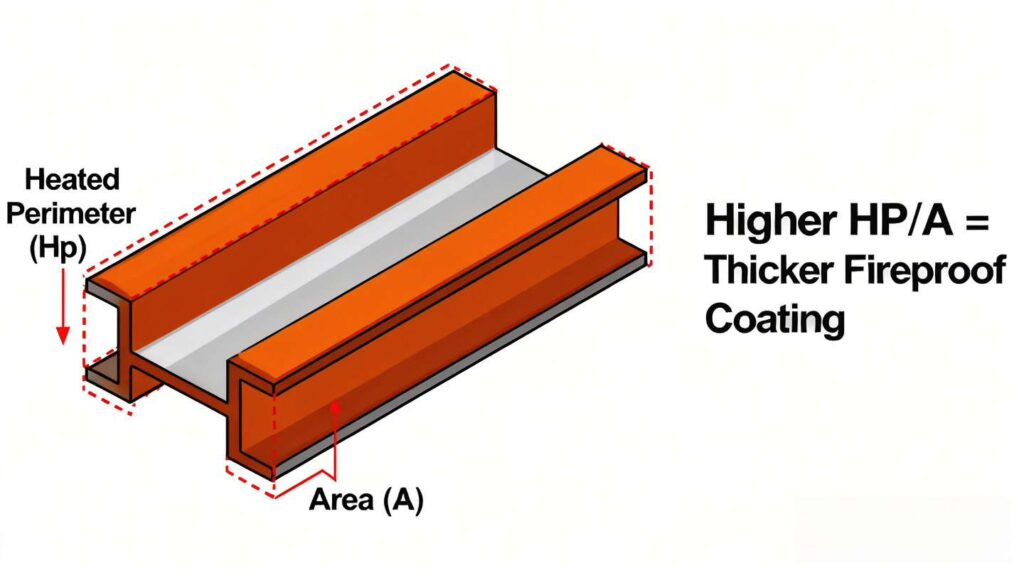
The required DFT depends on steel section factor, also called Hp/A (and sometimes A/V or ksm). Higher Hp/A sections heat faster and typically require more fire protection thickness than lower Hp/A sections for the same rating time.
Step 2: Confirm fire rating time and standard
Provide:
Required time (30/60/90/120 min)
Fire scenario/standard (cellulosic vs hydrocarbon rapid-rise)
Step 3: Use manufacturer loading tables (do not guess)
Manufacturers provide DFT loading tables or calculation tools to determine the required DFT for each steel member and rating requirement.
Typical fireproof coating thickness ranges (guide only)
These ranges help procurement set expectations, but final thickness is always confirmed by certified tables/TDS.
Based on industry discussion of lead practices for intumescent thickness measurement and typical system builds:
Thin film systems: commonly around 2–8 mm DFT (typical range cited; final by design).
Thick film systems: commonly around 4–13 mm DFT (typical range cited; final by design).
Important: Your project could be outside these ranges depending on Hp/A, rating time, and standard.
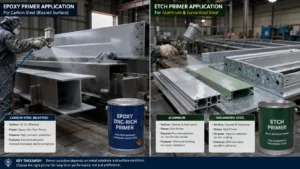
Fireproof coating system for steel structures (don’t ignore the primer)
A compliant fireproofing package is usually a system, not just the fireproof layer. UL stresses that deviations from certification requirements and design details can void the fire rating and certification.
Key system components
Primer (anti-corrosion; compatibility must be confirmed)
Fireproof layer (intumescent / specified system)
Topcoat/sealer (when required for durability; project-dependent)
For project inquiries and system options, start here:
Anchor: [Fire-Resistant Coating Series] ->
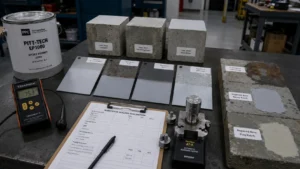
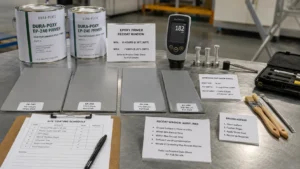
Quality/inspection checklist (WFT/DFT measurement)
Thickness control is a quality-critical step, and you should measure both during and after application.
During application: Wet Film Thickness (WFT)
Installers often measure WFT and then convert to expected DFT using the manufacturer’s guidance (since coatings shrink as they cure).
After cure: Dry Film Thickness (DFT)
DFT measurement should be done using appropriate thickness gauges; resources describing intumescent thickness measurement note gauges designed for thick coatings and discuss accepted measurement methods.
What to record
Member ID/location and readings
Minimum/maximum DFT acceptance ranges per spec
Any areas where DFT cannot be measured and how verified (project-dependent)
Common failures + troubleshooting
Wrong thickness because Hp/A was missing: “one thickness for all beams” is a common RFQ error; Hp/A drives thickness.
Incorrect standard selection: hydrocarbon rapid-rise vs cellulosic confusion; must match the owner’s fire scenario.
Poor adhesion / delamination: often linked to primer compatibility or surface contamination; use approved systems and follow certification details.
Cracking/sagging: often linked to overbuild per coat or improper cure; apply in controlled passes (project-dependent).
RFQ Checklist (to get a correct thickness recommendation)
To receive an accurate thickness calculation and quote, provide:
Fire rating time: 30 / 60 / 90 / 120 minutes
Fire scenario/standard required: cellulosic or hydrocarbon rapid-rise (e.g., UL 1709 where applicable)
Steel schedule: beam/column sizes and quantities
Hp/A (section factor) if available, or drawings to calculate it
Exposure: interior dry / semi-exposed / exterior; humidity and UV
Existing primer/system (if maintenance): coating type, age, condition
Application method: shop or site; access constraints; shutdown window
Documents requested: TDS/SDS, certified DFT tables/loading chart, application & inspection procedure
If you also need corrosion protection under the fireproofing, share your primer requirement and steel exposure here:
Anchor: [Steel Structure Coating Solutions] ->
UL guidance on steel fire protection testing/certification context
CTA: Get a fireproof coating thickness recommendation
Send your steel schedule, Hp/A (or section sizes), required rating time, and the fire scenario (cellulosic vs hydrocarbon rapid-rise). HUILI will provide a project-based fireproof coating thickness recommendation with TDS/SDS and system guidance, aligned with certified DFT tables and approval requirements. UL guidance stresses that certification details must be followed to maintain the rating, so project inputs are essential.
Contact Us
We would love to speak with you.
Feel free to reach out using the below details.