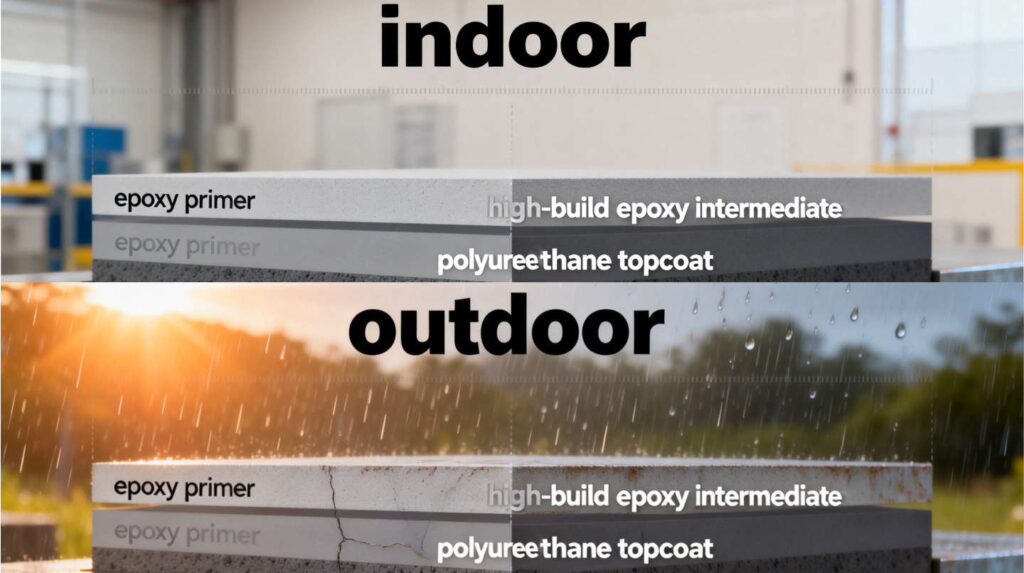
Epoxy and polyurethane are not “either-or” in most steel structure projects—engineers usually specify them together: epoxy for corrosion barrier and build, polyurethane for UV/weathering and appearance as the finish coat. ISO 12944-5 notes that most epoxy coatings chalk when exposed to sunlight and recommends applying a suitable topcoat if color or gloss retention is required, which is why polyurethane is commonly used as a topcoat outdoors.
What Is Epoxy Coating?
Epoxy coatings are widely used in industrial corrosion protection because they provide strong adhesion and form an effective barrier film when applied at the correct thickness. In ISO 12944 context, epoxy is a common coating type in protective paint systems for steel structures.
Key properties (engineering view)
Strong barrier protection (when specified with sufficient DFT and proper surface preparation)
Excellent role as primer or intermediate/high-build layer in multi-coat systems
Many epoxies chalk under sunlight, so exterior appearance typically requires a topcoat.
Typical locations in a steel coating system
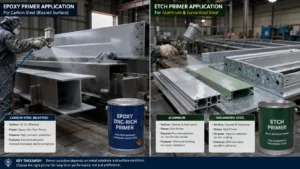
Primer: epoxy primer (often used on blasted steel)
Intermediate: high-build epoxy for barrier thickness and durability build-up
Epoxy vs Polyurethane: Key Differences
This section matches “comparative intent” and helps EPC/procurement choose correctly.
Corrosion resistance (where the barrier is built)
In most steel systems, the corrosion barrier is primarily delivered by the epoxy layers (primer + intermediate) through adhesion and film build, rather than by the topcoat alone. ISO 12944 positions epoxy coatings as standard components in protective paint systems for steel.
UV resistance (why epoxy alone is risky outdoors)
ISO 12944-5 states that most epoxy coatings chalk when exposed to sunlight and that a suitable topcoat should be applied when color or gloss retention is required.
Mechanical strength (impact/abrasion reality)
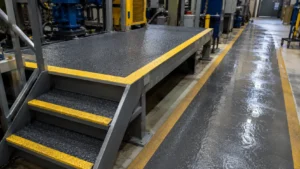
Project experience: abrasion and impact often occur at walkways, handrails, edges, and bolt connections—these details need stripe coats and correct DFT distribution more than “one magic resin.” (Final mechanical performance depends on formulation and TDS.)
Application environment (indoor vs outdoor, shop vs site)
Epoxy and PU can both be applied in shop or field, but curing windows, humidity control, and recoat intervals need management to avoid adhesion issues (project-dependent). ISO 12944 emphasizes that system selection and performance depend on correct application and environment considerations.
Epoxy + Polyurethane Coating System Explained
Most engineering specs use epoxy + polyurethane because it is a balanced system: epoxy provides corrosion resistance and thickness build; polyurethane provides weathering resistance and finish durability. ISO 12944-5 explicitly supports this logic by noting epoxy chalking in sunlight and the need for a suitable topcoat when appearance retention is required.
Typical system structure (guide only; confirm by TDS/spec)
Primer: zinc-rich primer or epoxy primer (project-dependent)
Intermediate: high-build epoxy (barrier thickness)
Topcoat: aliphatic polyurethane topcoat (UV/weathering)
If you want a system-based recommendation for steel structures (primer + intermediate + topcoat), start here:
Anchor: [Steel Structure Coating Solutions] ->
Which One Should You Choose for Your Project?
Choose epoxy (as a primer/intermediate) when:
The structure needs strong corrosion barrier and film build
The environment is industrial/marine and you need a robust undercoat system
The topcoat may be optional for indoor, non-UV exposure (project-dependent)
Choose polyurethane (as a topcoat) when:
The steel is outdoors or exposed to sunlight and appearance retention matters
You need a durable finish coat over epoxy layers
The spec requires a UV-stable topcoat (common for exterior steelwork)
Practical selection by environment, budget, and service life
Higher corrosivity + longer durability targets typically demand more disciplined system design and QC, not just a “better resin.” ISO 12944 links durability expectations to protective paint system selection and environment conditions.
Quality/inspection checklist (DFT, recoat, surface prep)
Use this to reduce rework and speed up approvals.
Surface prep
Confirm prep method per spec (blast/power-tool) and cleanliness
Pay special attention to edges, welds, crevices, bolts (stripe coat)
DFT (Dry Film Thickness)
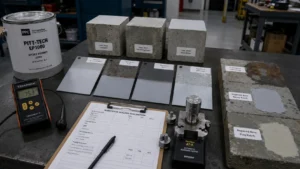
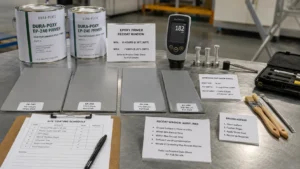
Measure primer, intermediate, and topcoat thickness separately
Use DFT ranges; confirm final targets by project spec and TDS
Record readings with location mapping (QC log)
Recoat interval
Track time/temperature/humidity between coats
If window is exceeded, abrade/clean per procedure before recoating (project-dependent)
RFQ Checklist (near the end)
To get an accurate quote and system recommendation, provide:
Steel structure type (workshop, bridge, power plant, offshore topsides, etc.)
Location and exposure: indoor/outdoor, coastal/marine, industrial pollutants
Target durability/service life expectation (years or L/M/H classification)
Surface preparation capability (blast or power-tool)
Area (m²) and steel complexity (edges/weld density)
Preferred system: epoxy primer + epoxy build + PU topcoat (or request recommendation)
Color/finish requirements
Documents needed: TDS, SDS, application & inspection procedure
CTA: Contact us for system recommendation
Send your environment description, surface prep method, and durability target to HUILI Coating to receive a complete epoxy + polyurethane system recommendation (including DFT ranges by coat, TDS/SDS, and quotation). ISO 12944-5 supports using suitable topcoats when appearance retention is required and provides coating-type guidance for protective systems.
Contact Us
We would love to speak with you.
Feel free to reach out using the below details.