
Marine Anti Corrosion Coating System for Offshore Structures
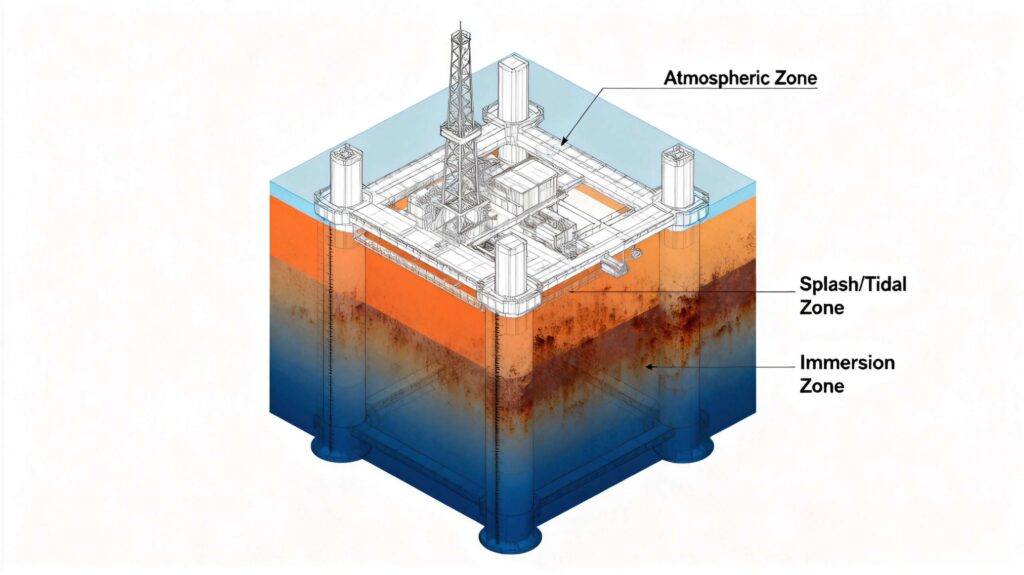
Offshore structures need a zone-based coating specification—because atmospheric steel, splash/tidal steel, and immersion steel face different corrosion drivers and require different system builds. ISO 12944 explicitly adds offshore environments (CX, Im4 and splash/tidal zone specifications) and links system selection to exposure and durability (“time to first major maintenance”), with thickness guidance presented as nominal DFT […]
High Temperature Coatings for Middle East Projects: Heat, UV, Salt, and Sand
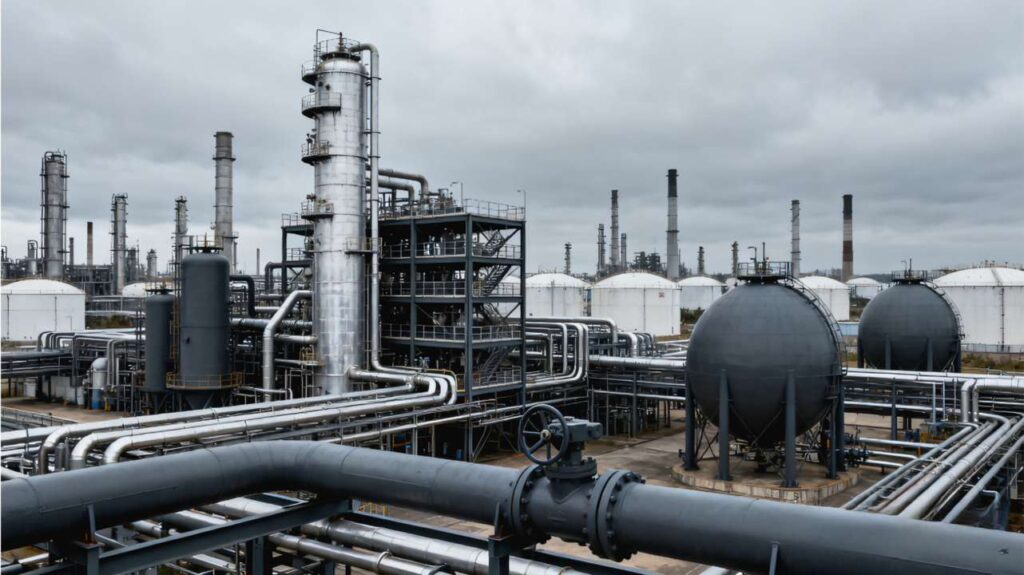
Middle East industrial projects do not have one corrosion environment — they have several, often on the same asset. High temperature coatings are required near stacks, hot piping, and process equipment; UV-stable polyurethane systems are required on outdoor structural steel exposed to direct solar radiation; zinc-epoxy systems are required in coastal salt zones; and sheltered […]
Fireproof Coating Thickness Guide for Steel Structures
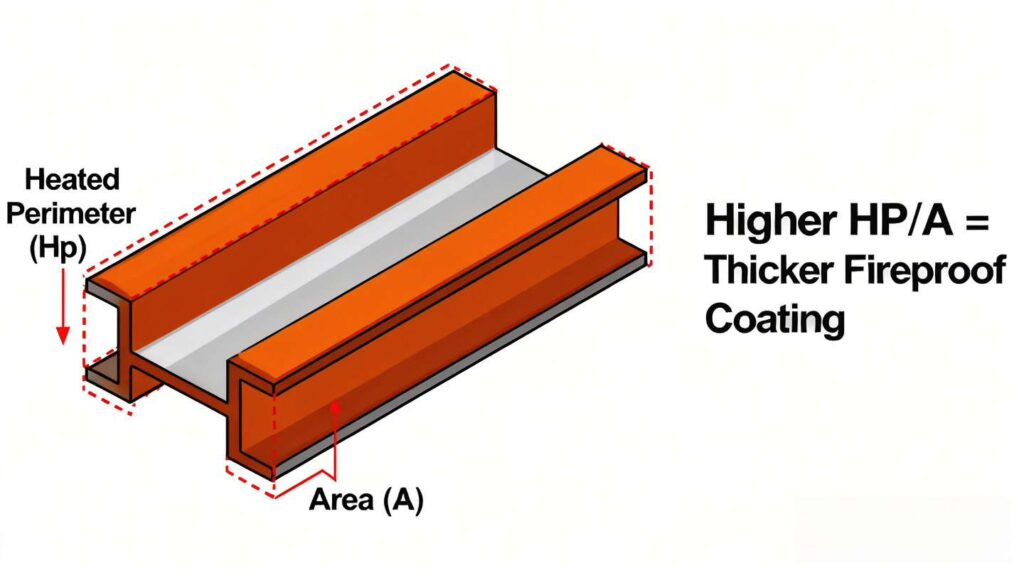
Fireproof coating thickness is not a single number for “60/90/120 minutes.” The required DFT depends mainly on fire rating time, the steel section factor (Hp/A), and the tested/certified system—manufacturers use loading tables or calculation tools to determine the correct thickness for each member. What Is Fireproof Coating? Fireproof coatings are passive fire protection (PFP) materials applied to steel […]
Coating for Steel Structure Projects
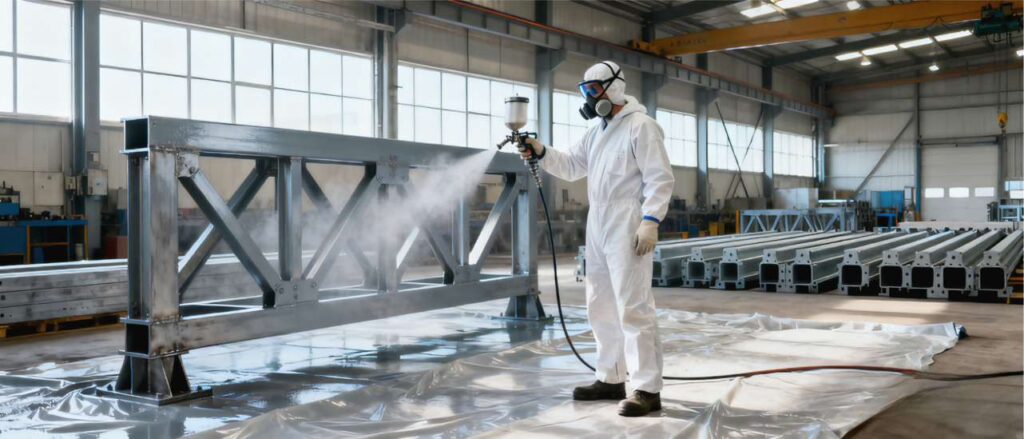
Steel structures fail faster when coatings are under-specified, poorly applied, or selected as a single “paint” instead of a coating system. ISO 12944 is widely used because it guides selection of a coating system based on environmental corrosivity and durability (time to first major maintenance), and it also points to design and surface-prep factors that prevent […]
ISO 12944 Corrosion Categories Explained (C3, C4, C5)
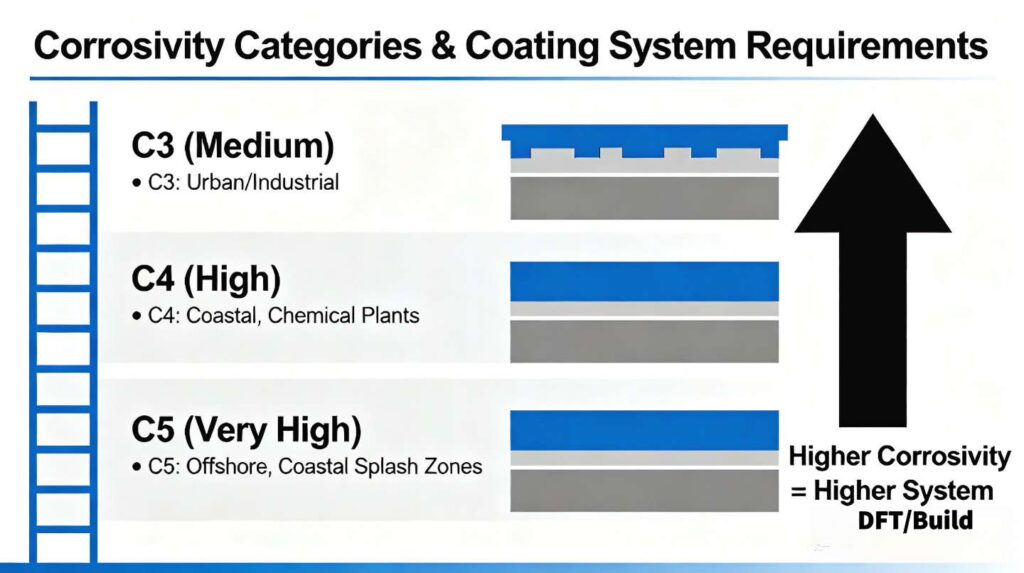
ISO 12944 helps engineers select a protective coating system by defining atmospheric corrosivity categories (C1 to C5 and CX) and linking the environment + durability target to coating system performance expectations. If your project spec says “C3/C4/C5,” it’s essentially telling you how aggressive the site is and how robust the coating system needs to be. […]
Epoxy vs Polyurethane Coating: Which Is Better for Steel Structure Projects?
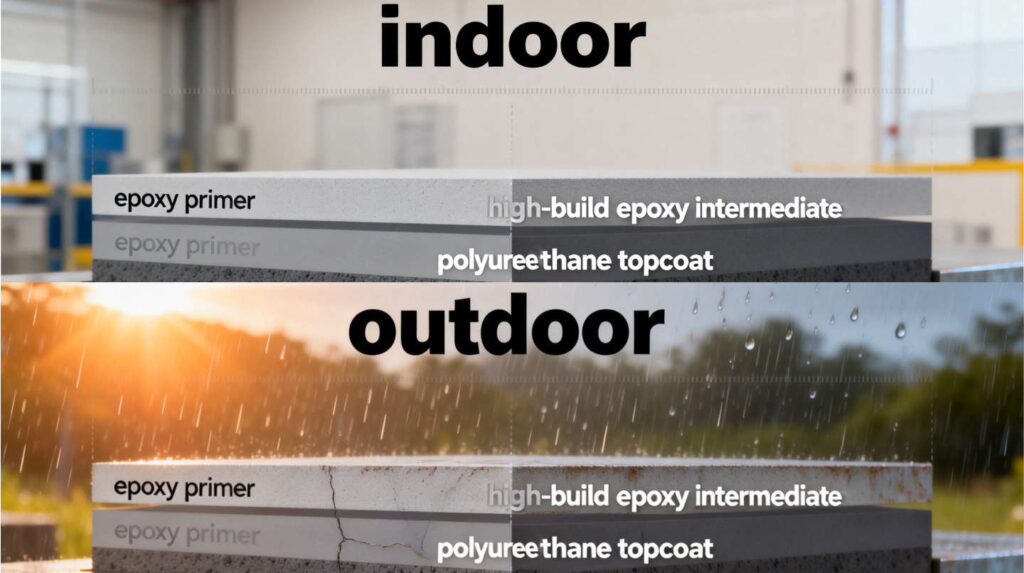
Epoxy and polyurethane are not “either-or” in most steel structure projects—engineers usually specify them together: epoxy for corrosion barrier and build, polyurethane for UV/weathering and appearance as the finish coat. ISO 12944-5 notes that most epoxy coatings chalk when exposed to sunlight and recommends applying a suitable topcoat if color or gloss retention is required, which […]
Corrosion Resistant Coating for Steel Structures: A Complete System Guide
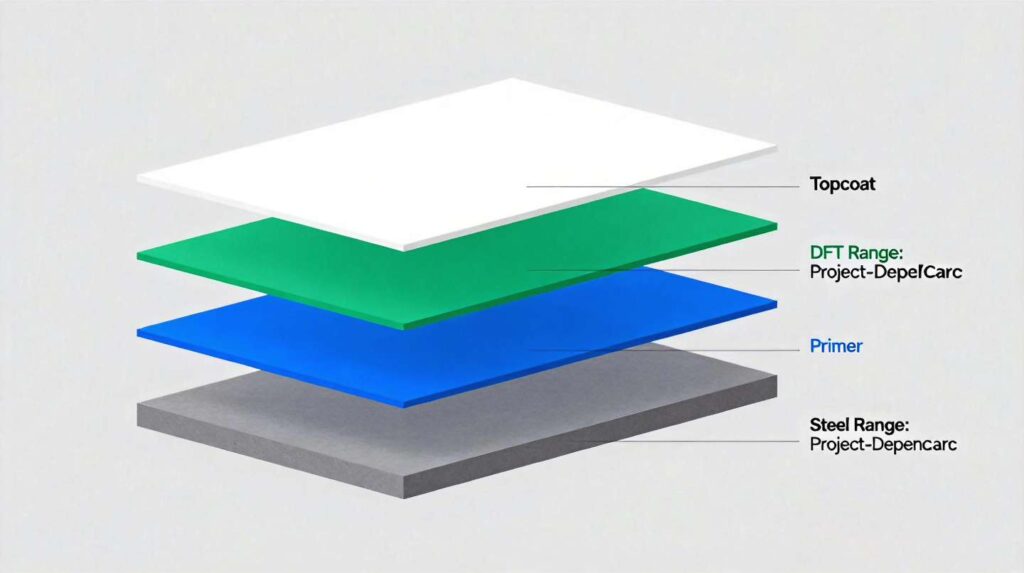
A corrosion resistant coating is not a single product — it is a layered system where each coat performs a defined engineering function, and total performance depends on how those layers work together under real service conditions. Specifying “epoxy coating” without defining whether it serves as primer, intermediate build coat, or topcoat is the most […]
Polyurethane vs. Polysiloxane Topcoat: Which is Best for Marine Decks?
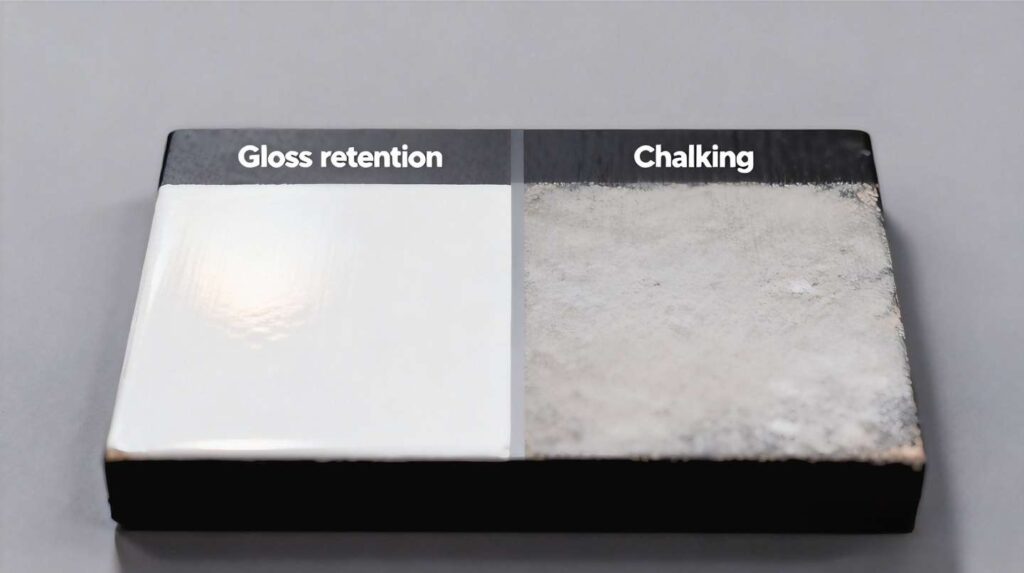
For marine decks and offshore topsides, the “best” topcoat depends on what is killing your coating first: UV weathering, abrasion/traffic, chemical splash, or maintenance access. ISO 12944-5 notes that most epoxy coatings chalk in sunlight and that if color or gloss retention is required, a suitable topcoat should be applied—this is why polyurethane and polysiloxane are common final-coat choices […]
Offshore Coating for Splash Zones: Glass Flake Epoxy vs Standard Epoxy
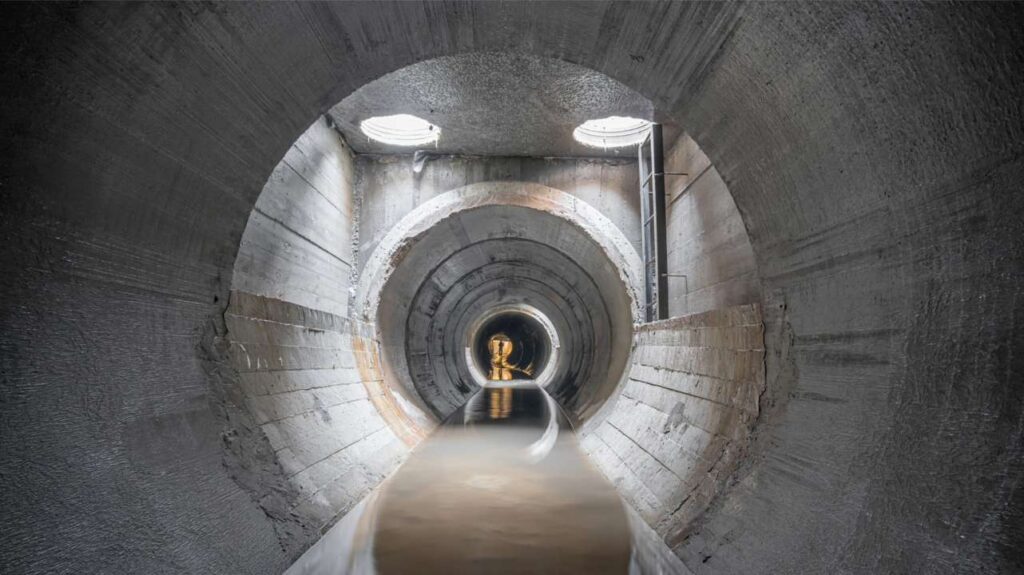
In offshore projects, the splash zone is consistently the highest-risk location for coating failure — and the most frequently under-specified in RFQs. Offshore coating selection cannot be made at the asset level. It must be made zone by zone, because the splash and tidal interface combines wet/dry cycling, chloride concentration, UV exposure, and mechanical abrasion […]
Fire-Resistant Coating Series for Steel Structures (Manufacturer Guide)
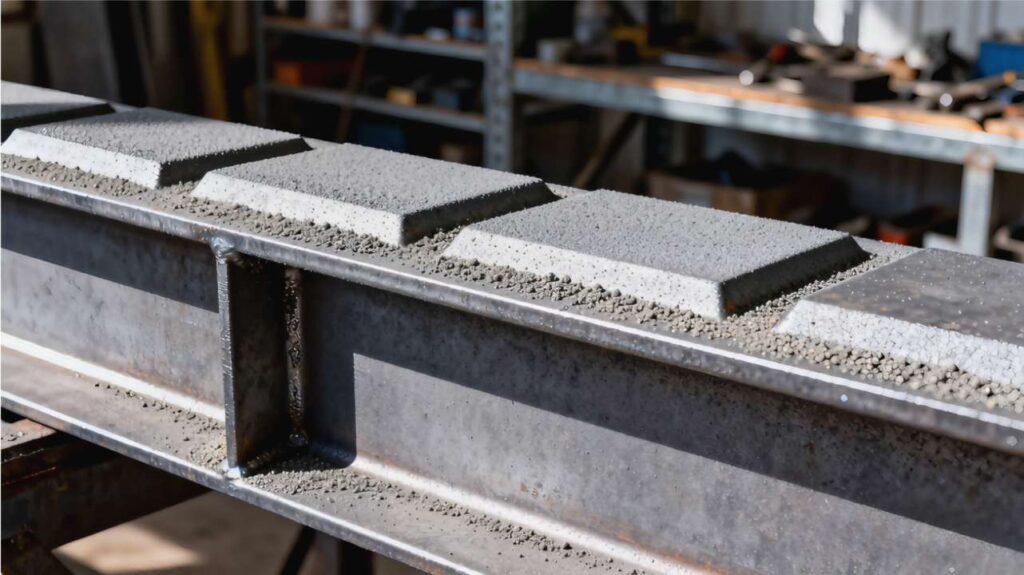
Fire-resistant coating is specified to keep structural steel stable for a required fire rating time (commonly 60/90/120 minutes), and the correct selection depends on fire standard + steel geometry + exposure conditions + system compatibility. This page helps EPC contractors and engineers request the right documents (TDS/SDS) and get an accurate quote without RFQ delays. HUILI […]
Fire-Resistant Coating Series (Steel): How to Specify, Buy & Apply

If your project needs a compliant fire rating (60/90/120 minutes), the fastest way to avoid delays is to choose a tested fireproof coating system and submit an RFQ with the right technical inputs (standard, steel schedule, exposure, primer). This landing-page guide is written to help buyers quickly understand what to order, what documents to request, […]
Heavy Duty Anti-Corrosion Coatings for Industrial Projects
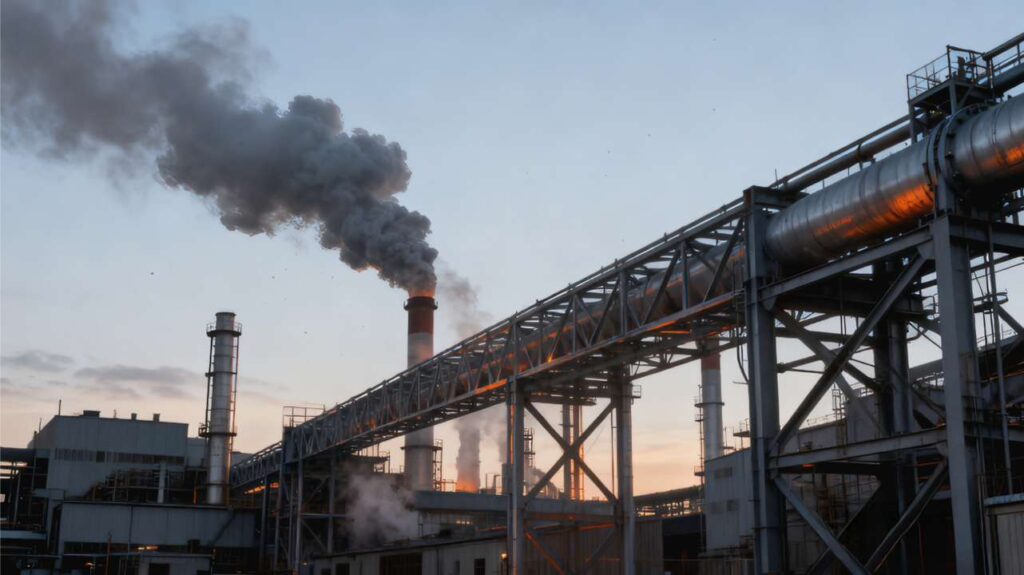
Introduction In industrial projects, corrosion protection decisions are often made too late—or based on assumptions rather than operating reality. Many project teams specify heavy duty anti-corrosion coatings believing they are “safer” or “more durable” by default. In practice, this approach frequently leads to over-engineering, budget waste, or application failure. From our experience working with steel […]